About 4,000 years ago, people learned to melt copper and tin together to make a harder metal, bronze. This was the start of the Bronze Age.
People lived in roundhouses, and when they died they were buried in earth mounds called round barrows. If you walk in the British countryside today, you will often still see these small hills, shaped like an upside-down bowl.
Bronze Age people were very skilled metalworkers. They made many beautiful tools, ornaments and weapons from bronze and gold.
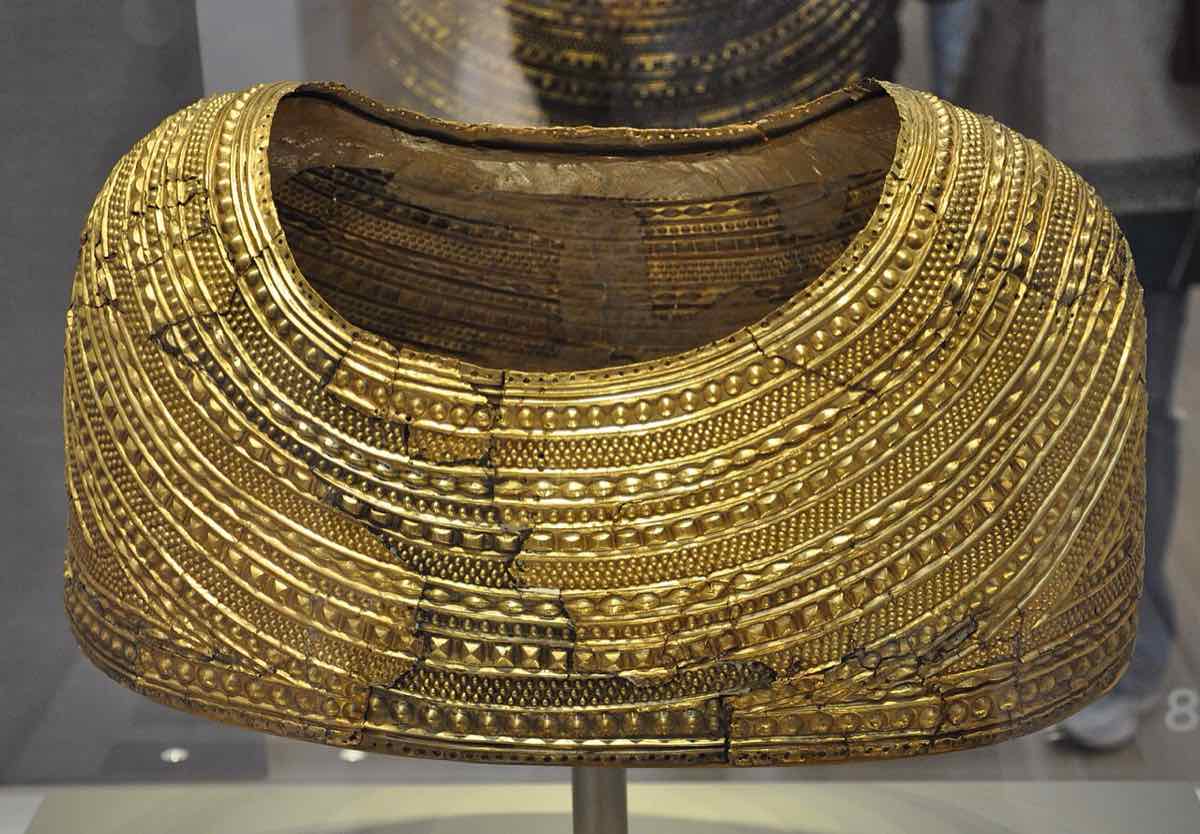
The Mold gold cape, from about 1900–1600 BC, now in the British Museum. The whole cape was hammered out of a single piece of gold. Workmen found it in 1833 in a Bronze Age burial mound near Mold in Wales, still around the shoulders of the person buried there. Local people had always called the mound Bryn yr Ellyllon, "the goblins' hill".
Photo: Andreas Praefcke, public domain, via Wikimedia Commons
Quiz
In the Bronze Age, what were the tombs in which people buried their dead called?
Round barrows were Bronze Age tombs. Hill forts were defended sites in the Iron Age, cathedrals belong to the Middle Ages, and villas to Roman times.