From AD 122
Hadrian's Wall: the northern edge of the Roman Empire
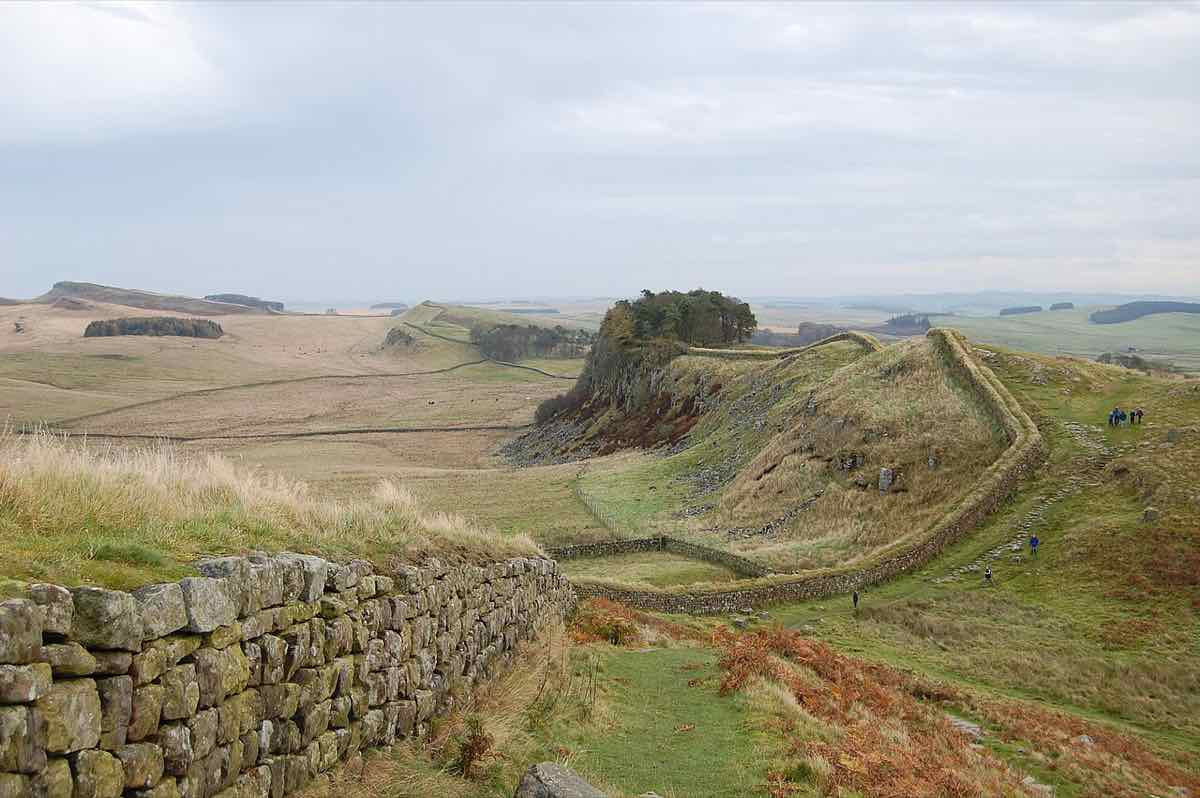
From AD 43 the Romans took over most of Britain, but they never conquered some parts of what is now Scotland. The Picts lived in the north, and they were among the ancestors of the Scottish people. To keep them out, the Emperor Hadrian had a wall built right across the north of England: Hadrian's Wall.
Several forts were built along the wall. Two of them, Housesteads and Vindolanda, can still be seen today. Walkers love the area, and it is a UNESCO World Heritage Site.
Vindolanda has given us a rare look at everyday life on the wall. Archaeologists dug up letters written in ink on thin slices of wood, the Vindolanda tablets, which are among the oldest handwritten documents in Britain. The best known, from around AD 100, is a birthday party invitation from Claudia Severa, a commander's wife, to her closest friend. It may be the oldest Latin we have written in a woman's own hand. Another letter shows that soldiers on the wall were sent underpants: northern England really is cold.
Quiz
Why did the Emperor Hadrian build a wall in the north of England?
Hadrian's Wall was built to keep out the Picts in the north. The Vikings did not appear until AD 789, almost four centuries after the Romans left.