55 BC – AD 61
The Romans arrive
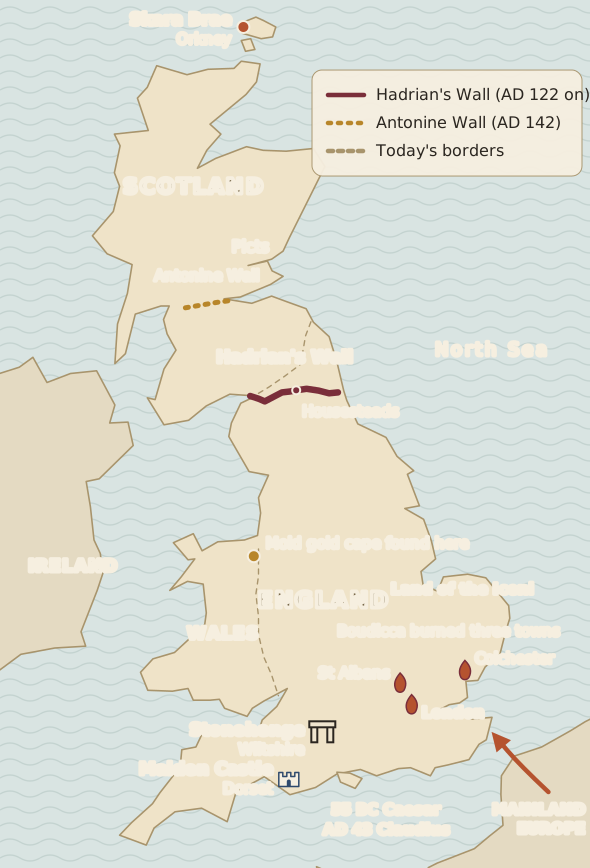
Even before the time of Cunobelinus, an Iron Age king, a much bigger power had reached the far side of the Channel: in the 50s BC the armies of Rome were conquering Gaul, roughly today's France. In 55 BC the Roman general Julius Caesar crossed the sea and invaded Britain, but his invasion failed. For almost a hundred years after that, Rome did not rule Britain.
In AD 43 the Roman Emperor Claudius led a new invasion. This time the Romans succeeded, and they took control of almost all of Britain.
Quiz
Which of the following statements is correct?
Caesar's invasion failed. Rome only took over Britain after Claudius invaded in AD 43.
Quiz
Who led the Roman army in the invasion of AD 43, after which the Romans occupied almost all of Britain?
A way to remember the order: Caesar came first (55 BC, failed), Claudius came next (AD 43, succeeded), then Hadrian built the wall (from AD 122). William the Conqueror belongs to 1066.
Boudicca: the queen who burned London
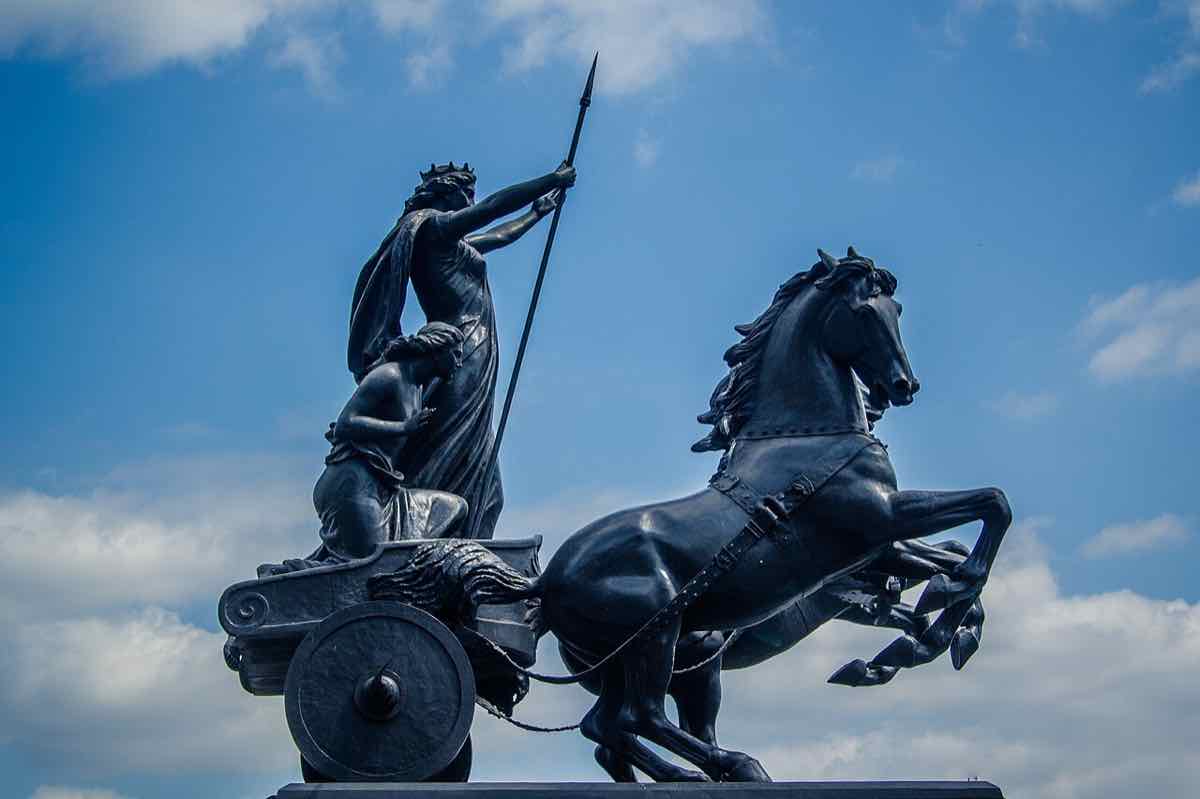
When the Romans invaded, some tribes fought back. The most famous of their leaders was Boudicca, queen of the Iceni, a tribe from the east of what is now England. People in Britain still remember her: in London, there is a statue of her beside Westminster Bridge, close to the Houses of Parliament.
In AD 60 or 61 she led the Iceni and other tribes in a great revolt. They burned three Roman towns: Colchester, St Albans and London (Londinium), which the Romans had founded only 10 to 15 years before. In the end the Roman governor's army defeated her.
Quiz
Which TWO statements about Boudicca are correct?
Boudicca was the queen of the Iceni who fought against the Romans; she was not Roman herself. It was the Roman emperor Hadrian who built a wall to keep out the Picts.