1086
The Domesday Book: the king's great stocktake
In 1066 William, Duke of Normandy, won the Battle of Hastings and became King William I of England, but winning did not end the fighting. For several years William crushed rebellions, most harshly in the north, and built castles across the country to keep control. Once England was firmly his, William I wanted to know exactly what he now owned. He sent officials all over the country to record four things about every town and village:
 Towns and villages
 Who lived there
 Who owned the land
 What animals they had
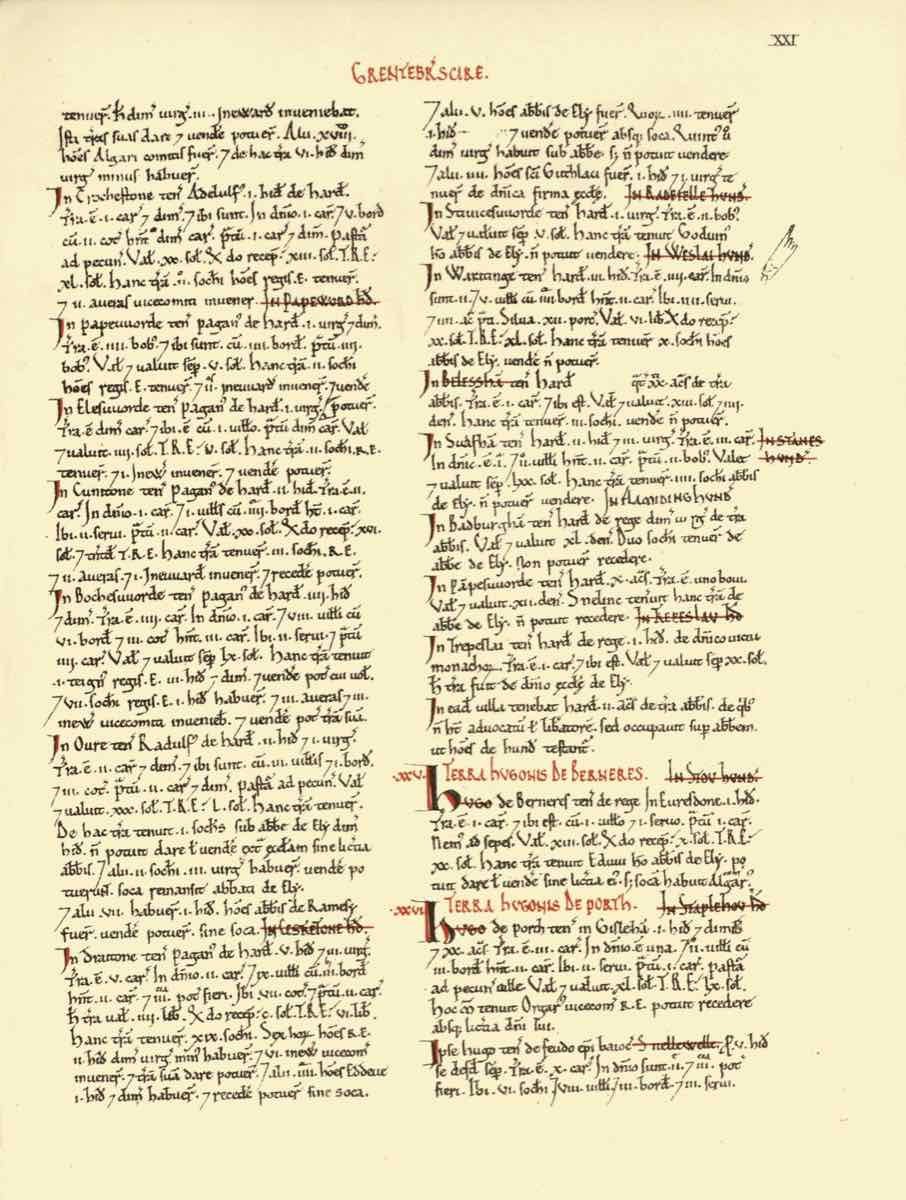
The result was the Domesday Book. It survives to this day, giving us a snapshot of English society just after the Norman Conquest. Its name comes from "doomsday", the Day of Judgement: people felt that, like the Last Judgement, what the book recorded was final, with no appeal and no changing it.
Quiz
What is the Domesday Book?
A describes Chaucer's The Canterbury Tales, B is Magna Carta (1215), and D is linked to William Caxton's printing press. All three belong to later centuries.