The European Convention on Human Rights: drafted with British help
Story 2 of 6
After the Second World War, the countries of Europe wanted to make sure the cruelty seen in the war could never happen again. In 1949, ten western European countries signed a treaty in London that created the Council of Europe. One of its first big tasks was to write a convention to protect human rights.
Its full name is the Convention for the Protection of Human Rights and Fundamental Freedoms, but it is usually called the European Convention on Human Rights. British diplomats and lawyers played an important part in drafting it, and David Maxwell Fyfe, who had been the UK's deputy chief prosecutor at the Nuremberg trials, was one of them. In 1950, the UK was among the first countries to sign it.
The signing took place in Rome on 4 November 1950, but signing is only the first step: each country then has to "ratify" the treaty, formally approving it through its own procedures. The UK did so quickly, on 8 March 1951, under Clement Attlee's Labour government. The Convention came into force in September 1953, once enough countries had ratified it.
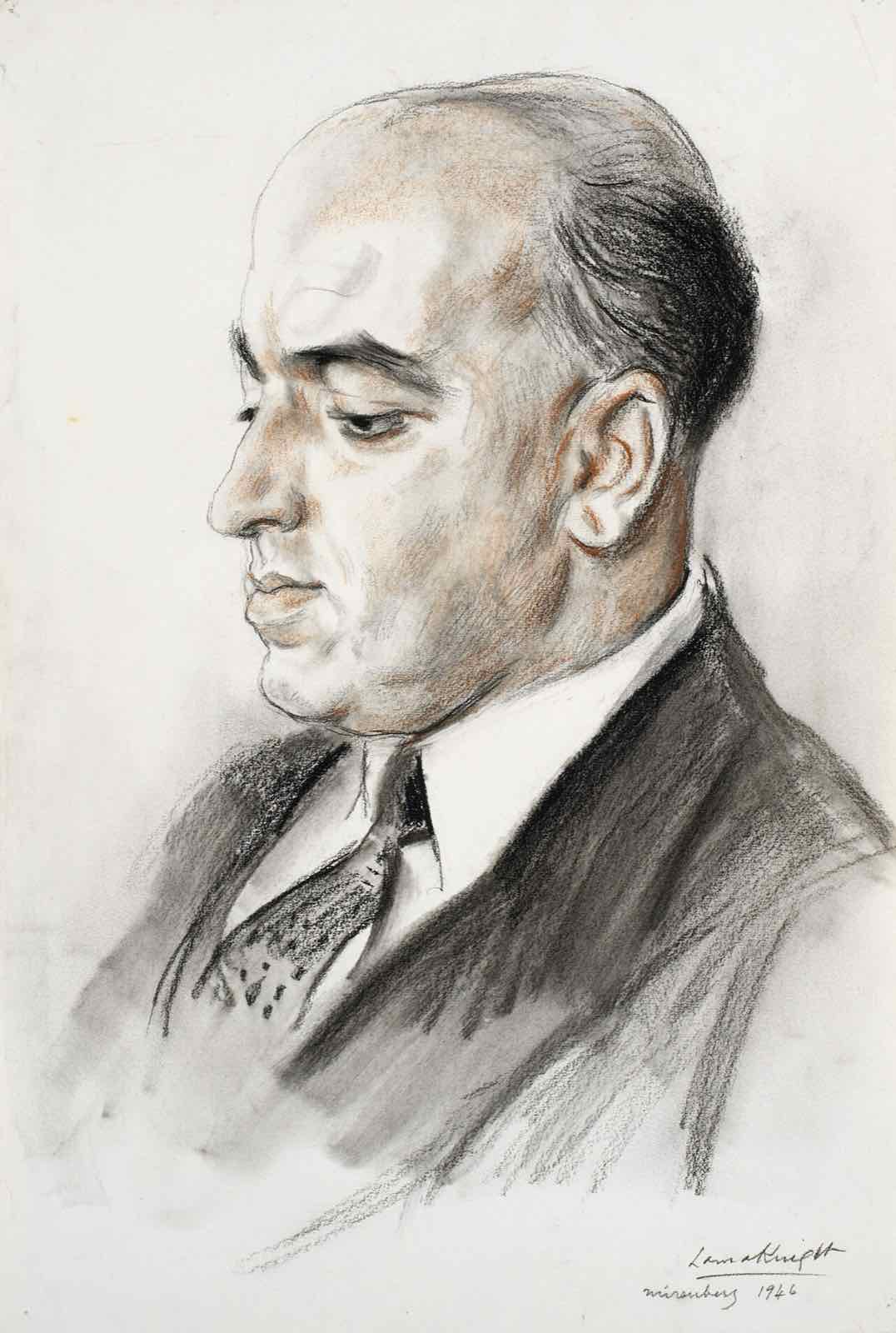
Maxwell Fyfe, drawn in 1946 during the Nuremberg trials by the British war artist Laura Knight.
Drawing by Laura Knight, Imperial War Museums (IWM ART LD 5863), public domain, via Wikimedia Commons
The Convention protects many rights. Here are seven of them:
The right to life
No torture
No slavery or forced labour
Liberty and security
A fair trial
Freedom of thought, conscience and religion
Freedom of expression (speech)
Quiz
In which year did the UK sign the European Convention on Human Rights?
It was signed in 1950. 1689 is the Bill of Rights, 1998 is the Human Rights Act that brought the Convention into UK law, and 1945 is the end of the Second World War. These years are easily confused, so questions often put them together.
Quiz
Which TWO rights are protected by the European Convention on Human Rights?
A fair trial, and freedom of thought, conscience and religion, are both among the seven rights listed above. A free house and a job for life are not rights protected by the Convention.
 The right to life
 No torture
 No slavery or forced labour
 Liberty and security
 A fair trial
 Freedom of thought, conscience and religion
 Freedom of expression (speech)