c. 843–1066
Kenneth in the north, Cnut in the south
In the 9th century, England was not the only place troubled by the Vikings. In the north, the danger from the Vikings made people rally behind a single king: Kenneth MacAlpin, also known as Kenneth I. From this time on, people started to call the country Scotland.
Kenneth I's royal family traced its ancestors back to the area around Iona, the island of St Columba, so Iona later became the burial place of Scottish kings. Dozens of early kings of Scotland are said to lie in its graveyard.
Quiz
Fear of Viking raids led the people of the north to unite behind a single king. Who was he?
It was Kenneth MacAlpin (Kenneth I). Robert the Bruce was the Scottish king at the Battle of Bannockburn in 1314, a figure from the Middle Ages.
Cnut: the Danish king who told the waves to stop
Back in the south: after Alfred the Great, who defeated the Vikings, Anglo-Saxon kings went on ruling what is now England, apart from one short period when Danish kings sat on the throne. The first of them was Cnut, also called Canute. England only ever had one Cnut, so he has no number either; he is often known as Cnut the Great.
Cnut became King of England in 1016. Later he also became King of Denmark and King of Norway, ruling a great kingdom around the North Sea until his death in 1035.
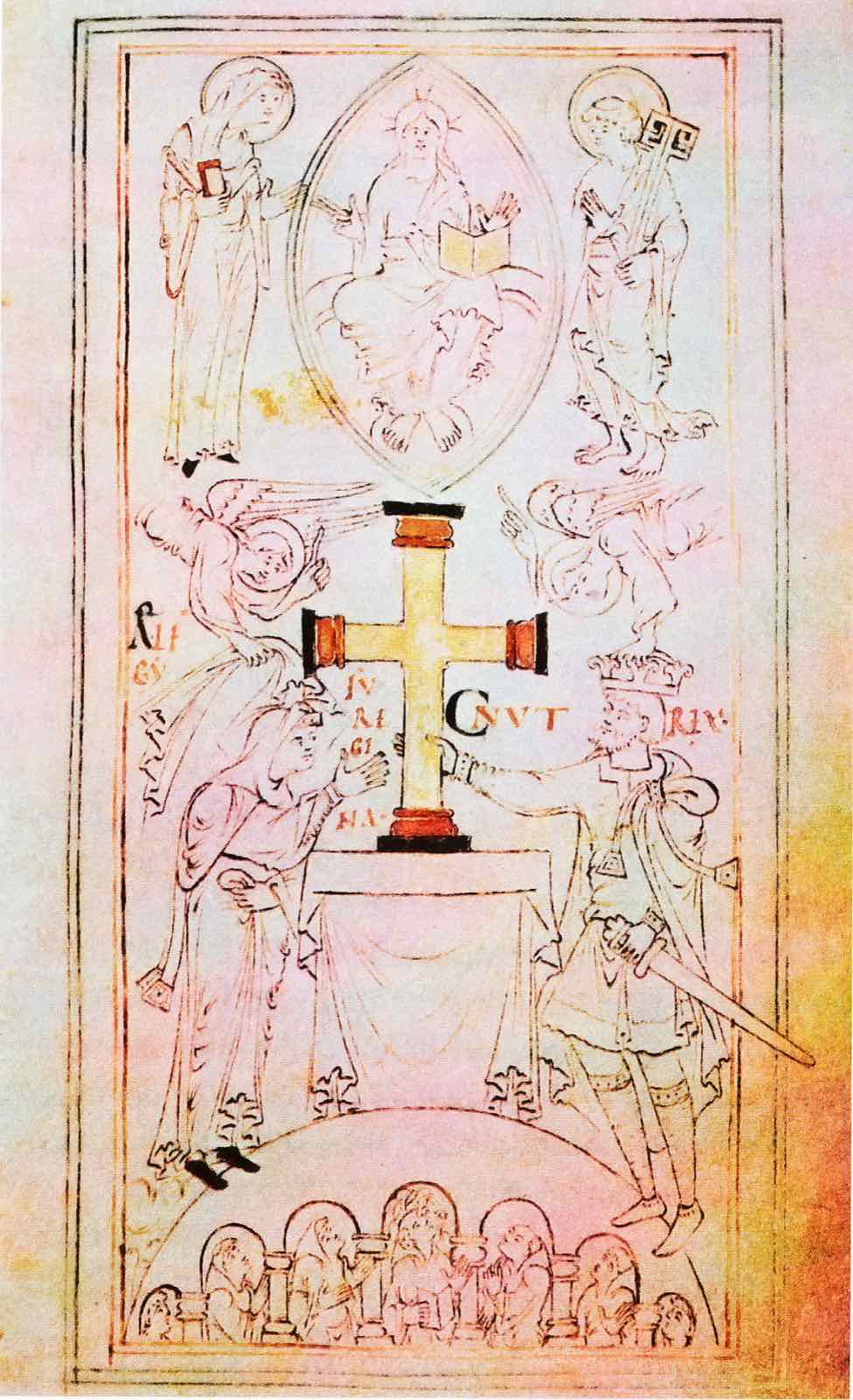
Cnut is best remembered for a story about the sea. He had his throne set down on the shore and ordered the rising tide to stop, and the water came in anyway and wet his feet. People often take this as a joke about his pride, but it originally meant the opposite: he was showing the courtiers who flattered him that a king's power has limits, and that only God can command the sea. The story first appears about a hundred years after his death, in the work of the 12th-century historian Henry of Huntingdon, so it is a legend.
After Cnut and his sons died, the throne went back to the Anglo-Saxons and passed to Edward the Confessor. When Edward died without children in January 1066, three men rushed to claim the crown. That is where the story of the next era begins.
Quiz
Is the statement below TRUE or FALSE? Cnut, also called Canute, was the first of the Danish kings who ruled England for a short period.
True. The test often writes Cnut and Canute as if they were different people, but they are the same person.
Key facts
| Jutes, Angles, Saxons | Invaded from northern Europe after the Romans left; their languages are the basis of modern English |
|---|---|
| By AD 600 | Anglo-Saxon kingdoms set up, mainly in today's England; most of Wales and Scotland stayed outside their rule |
| Sutton Hoo | Suffolk; an Anglo-Saxon king buried in a ship with treasure and armour |
| St Patrick / St Columba | Came from Ireland and worked in the north; Patrick is Ireland's patron saint, Columba founded a monastery on Iona |
| St Augustine | Came from Rome and worked in the south; the first Archbishop of Canterbury |
| AD 789 Vikings | From Denmark, Norway and Sweden; first came in 789 to raid coastal towns |
| Alfred the Great | United the Anglo-Saxon kingdoms and defeated the Vikings |
| Danelaw | The east and north of England; place names such as Grimsby and Scunthorpe come from Viking languages |
| Kenneth MacAlpin | Kenneth I; the north united under him and the name Scotland came into use |
| Cnut / Canute | The first Danish king to rule England |