5th–6th centuries
Christianity arrives from two directions
Christianity had first reached Britain in Roman times, but when the Anglo-Saxons arrived, they were not Christians. In the 5th and 6th centuries, missionaries (people sent to spread a religion) came to Britain to teach the Christian faith. They came by two routes, one in the north and one in the south:
- In the north, from Ireland:
- St Patrick, who later became the patron saint of Ireland.
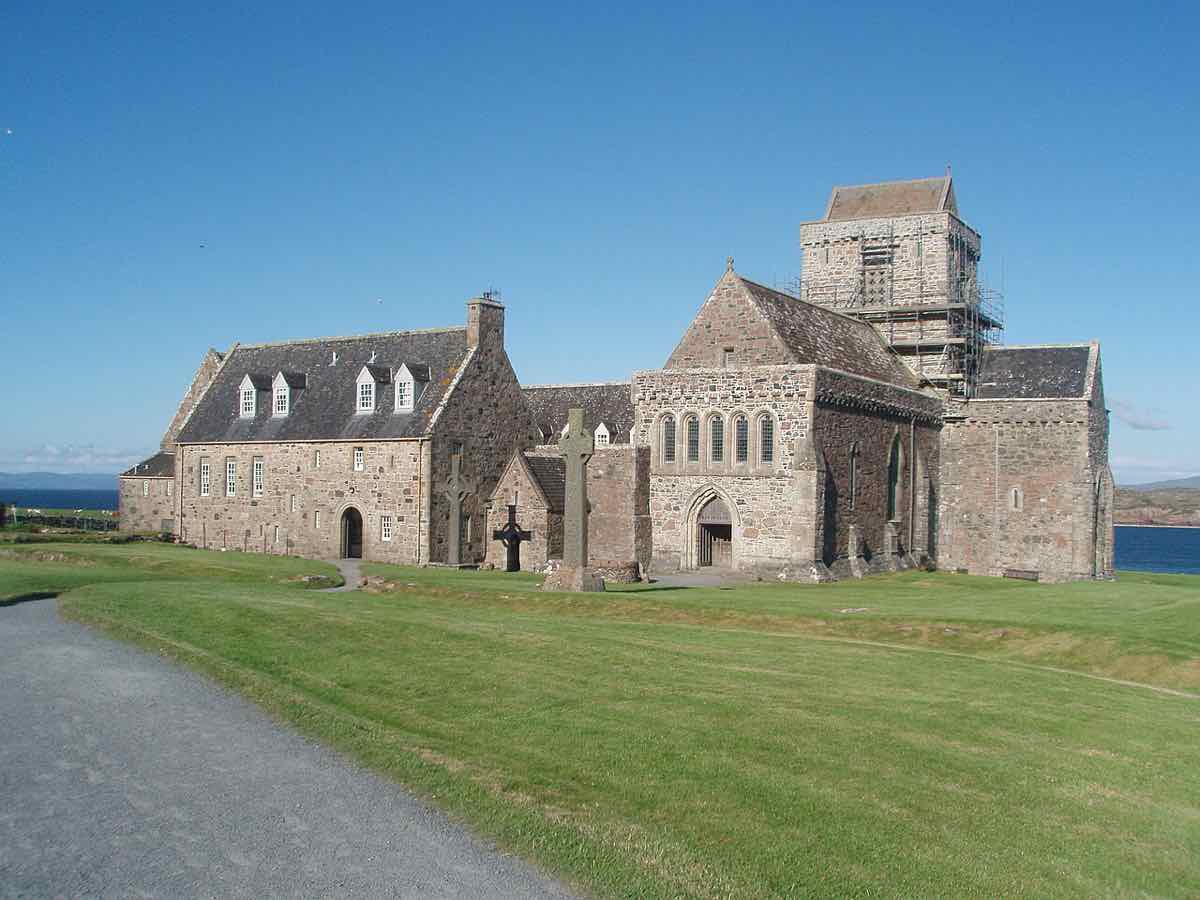
- St Columba, who set up a monastery on Iona, an island off the coast of what is now Scotland.
- In the south, from Rome: St Augustine led a group of missionaries, and he became the first Archbishop of Canterbury.
The handbook lists St Patrick and St Columba together as missionaries from Ireland. In fact Patrick took Christianity from Britain to Ireland; it was Columba who crossed from Ireland to Iona in Scotland. In the test, answer as the handbook groups them.
Why Rome cared about this far-off island is explained by a famous story. Pope Gregory I is said to have seen some fair-haired young slaves in a market in Rome and asked where they came from. Told they were Angles (Angli), he replied: "Not Angles, but angels (angeli)." The story was first written down about a hundred years later, so it is a legend, but it is easy to remember.
Gregory's missionary, St Augustine, landed in the kingdom of Kent in 597. The king's wife was already a Christian, so Augustine made Canterbury his base, and to this day the Archbishop of Canterbury is the spiritual head of the Church of England.
Quiz
Who became the first Archbishop of Canterbury?
St Augustine came from Rome, spread Christianity in the south and became the first Archbishop of Canterbury. St Patrick and St Columba came from Ireland and worked in the north. St David is the patron saint of Wales.
Quiz
Which of the following statements is correct?
A mixes up St Columba with St Augustine. A memory aid: Augustine and Archbishop both begin with A, while Columba and Iona both end in A.