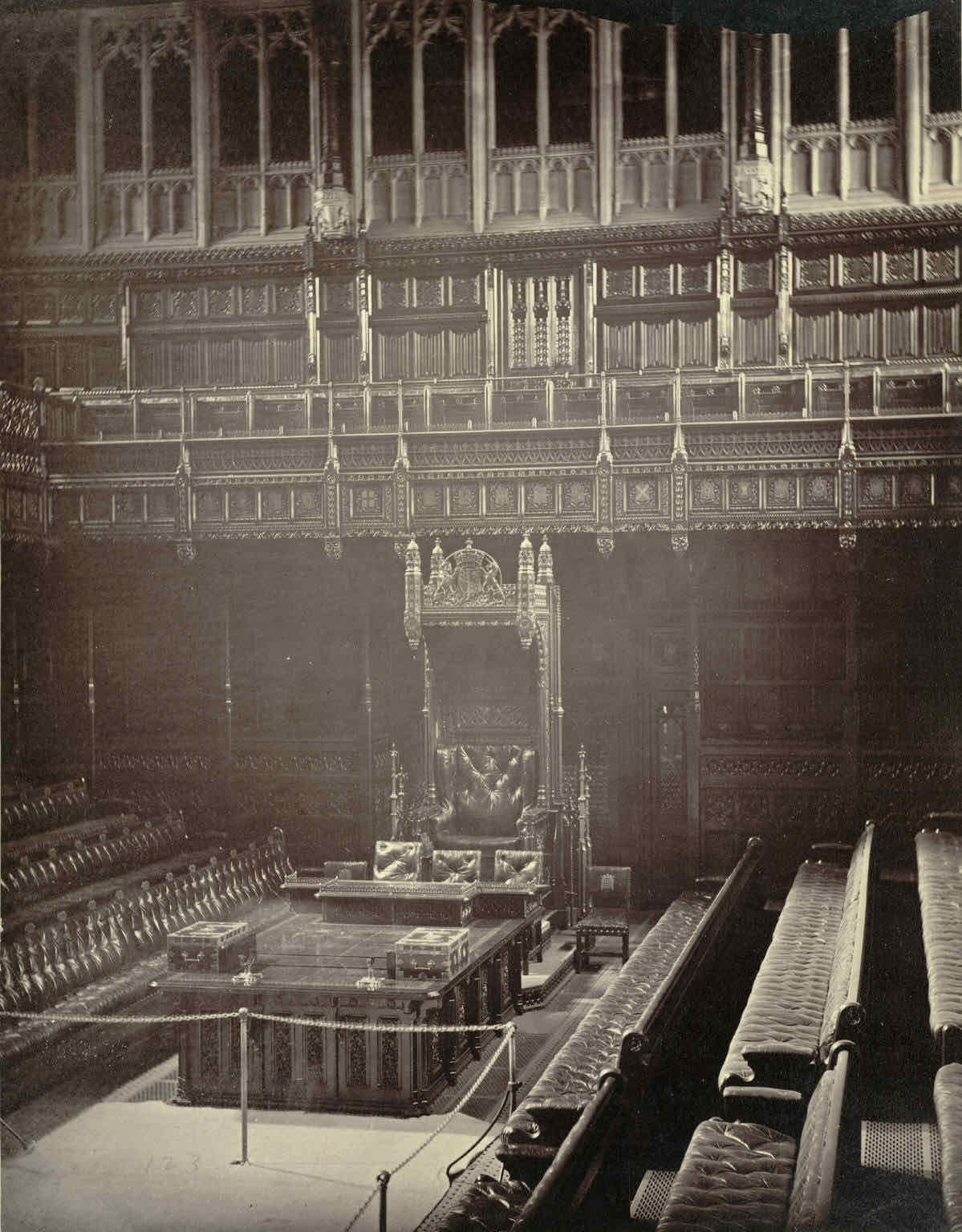
When the Commons holds a debate, the person sitting in the middle and running things is the Speaker. The Speaker is the Commons' chief officer, and the role is an unusual one:
The Speaker is an MP too, still representing a constituency and dealing with local people's problems. But while in the job, the Speaker stays neutral and does not represent any party.
Other MPs choose the Speaker in a secret ballot (a vote where nobody sees how you voted).
The Speaker keeps order in debates and makes sure everyone follows the rules. That includes making sure the opposition gets a set amount of time to debate topics it chooses.
At ceremonies, the Speaker represents Parliament.
The Speaker's chair in the House of Commons, photographed around 1870–1885. The chair and the whole chamber were burnt out by German bombing in May 1941 and rebuilt after the war. When a new Speaker is chosen, two MPs "drag" them to this chair while they pretend not to want to go. The custom is said to recall the days when the Speaker carried the Commons' messages to the king, and between the Middle Ages and the Tudor period several Speakers really were executed.
Photographer unknown, A. D. White Architectural Photographs, Cornell University Library, public domain, via Wikimedia Commons
Quiz
Which of the following statements is correct?
MPs elect the Speaker by secret ballot, and the Speaker must stay neutral. It is the Prime Minister and other ministers, not the Speaker, who speak for the government in debates.