12th–15th centuriesOften tested
Wars without end: Wales, Scotland and Ireland
In the widest sense, the Middle Ages, or the medieval period, stretch across about a thousand years: from AD 476, when the Roman Empire came to an end, until 1485. The story here picks up after the Norman Conquest. England's medieval kings were hardly ever at peace. They fought the lords of Wales, Scotland and Ireland for land, and each of these stories had a different ending.
Wales: a land held down by castles
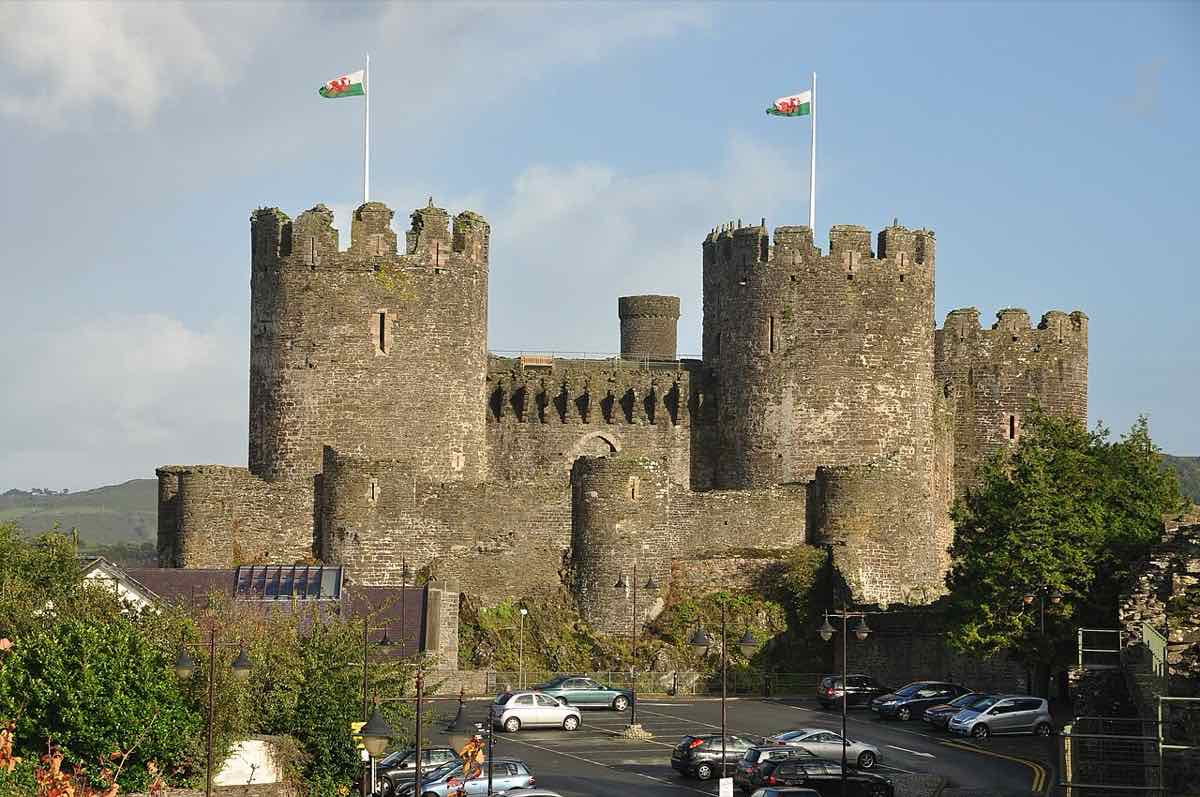
In 1284 King Edward I issued the Statute of Rhuddlan (a statute is a written law). It put Wales under the rule of the English Crown. To hold on to his new land, Edward built a chain of enormous castles across north Wales, such as Conwy and Caernarvon (spelled Caernarfon today). The last Welsh revolts were put down by the mid-1400s, and after that English law and the English language were brought into Wales.
Scotland: one blow at Bannockburn
England wanted Scotland as well, but it never managed to take it. In 1314 the Scottish king Robert the Bruce beat the army of the English king Edward II at the Battle of Bannockburn. The English never conquered Scotland.
The battle opened with a duel. On the first day, an English knight called Henry de Bohun recognised Robert the Bruce and charged straight at him with a long spear. Robert stepped his horse aside and swung his axe down on the knight's helmet, splitting it in two. The Scottish soldiers were thrilled, and the next day they won.
Ireland: they came to help, and stayed
In the early Middle Ages, Ireland was its own independent country. English troops first arrived there because an Irish king had asked them for help. Then they decided to stay. By 1200 the English were ruling a piece of land around Dublin called the Pale, and in other parts of Ireland some powerful lords agreed that the English king was in charge.
Quiz
In the broad sense, which period of time do the Middle Ages (the medieval period) cover?
The Middle Ages begin in 476, when the Roman Empire fell, and close in 1485, roughly a thousand years in all, though the story here starts after 1066. AD 43 to 410 is when the Romans ruled Britain, 1485 to 1603 is the Tudor period and 1603 to 1714 is the Stuart period.
Quiz
Which battle in 1314 meant that the English never conquered Scotland?
Bannockburn, 1314: Robert the Bruce beat the English. Hastings was in 1066, Agincourt in 1415 and Bosworth in 1485. These four battles are often offered together as answers to one question, so learn each one with its date.
Quiz
Is the statement below TRUE or FALSE? The Statute of Rhuddlan, introduced by Edward I in 1284, brought Wales under the English Crown.
True. To remember it: in 1284 Edward I locked Wales in with a law and a ring of castles.