14th–15th centuries
English makes a comeback: Chaucer and Caxton
After the Norman Conquest of 1066, England's nobles spoke French while the peasants spoke Old English. Three hundred years later the situation had turned round. By 1400, government papers in England were written in English, and the royal court and Parliament now chose English over French.
Why the turnaround? One important reason was the Hundred Years War. After more than a century of fighting France, French slowly became "the enemy's language", and England's nobles came to think of themselves more and more as English rather than French.
The most famous writer of the time was Geoffrey Chaucer. He wrote a collection of poems in English called The Canterbury Tales. In it, a group of pilgrims (people making a religious journey) travel together to Canterbury, and to pass the time on the road they take turns telling stories.
Writing wasn't Chaucer's day job. He was a royal official in charge of the king's building works, and when he died in 1400 it was this job that earned him a grave in Westminster Abbey. Later, more and more poets were buried close to him, and that part of the Abbey became the famous Poets' Corner.
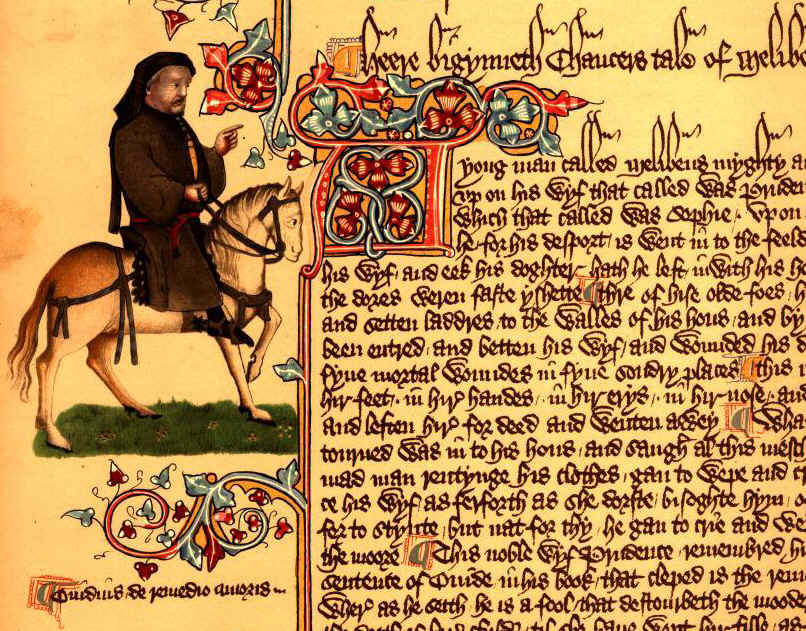
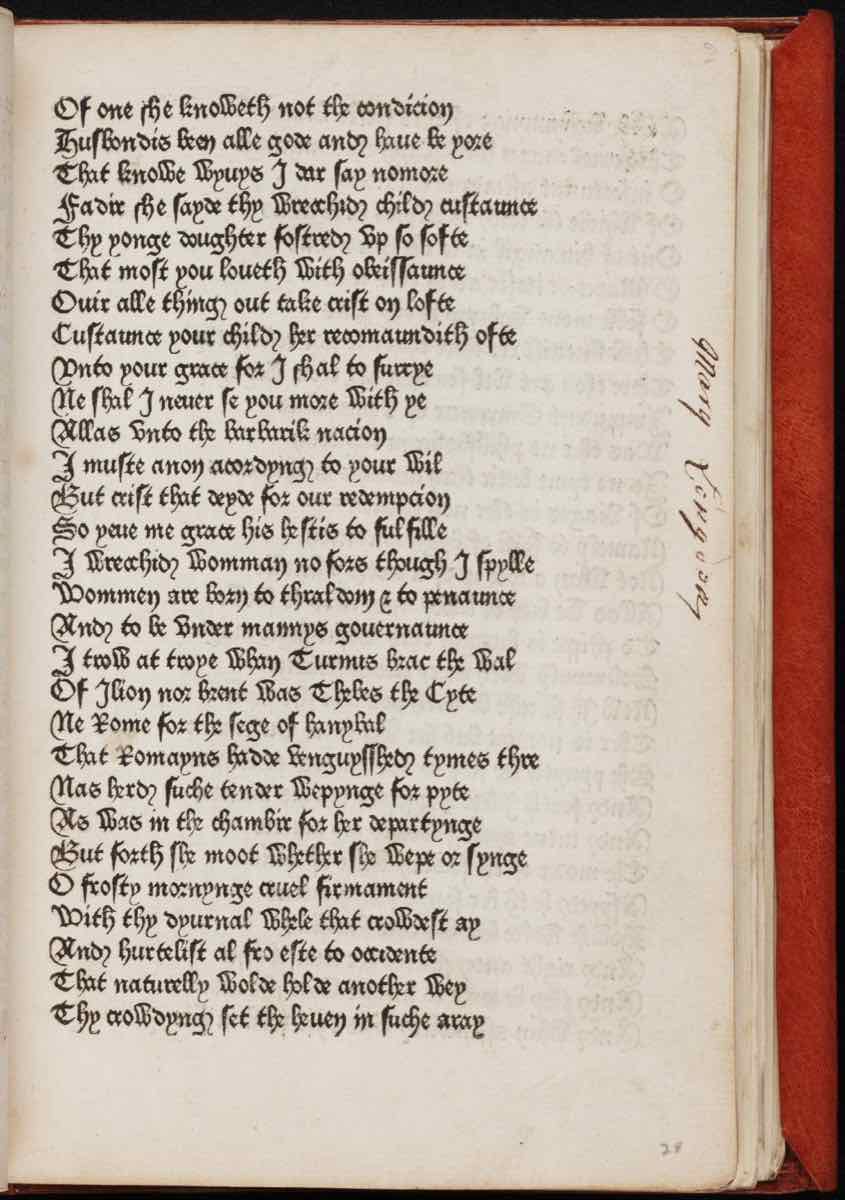
Later, William Caxton became the first person in England to produce books with a printing press, and The Canterbury Tales was one of the very first books he printed. Before this, every book had to be copied out by hand, word by word. The printing press meant that books in English could at last be made in large numbers.
In Scotland, many people still spoke Gaelic, while the Scots language was also growing. The poet John Barbour wrote a long poem in Scots called The Bruce, which tells the story of the Battle of Bannockburn.
Castles, cathedrals and skilled workers from abroad
Lots of castles were built in the Middle Ages, and some of them are still in use, such as Windsor and Edinburgh. Great cathedrals went up too, like Lincoln. Their windows were often made of stained glass that told stories from the Bible and about the saints. York Minster is a well-known example.
England made a lot of money by selling wool abroad. It also drew in skilled workers from other countries: weavers from France, engineers from Germany, glass makers from Italy, and people from Holland who knew how to build canals.
Quiz
Who wrote The Canterbury Tales, a collection of poems about pilgrims travelling to Canterbury?
Chaucer wrote it; Caxton printed it. The two names both start with C and are easy to mix up. A trick to keep them apart: "Chaucer" sounds a little like "author", and he was the author.
Quiz
Is the statement below TRUE or FALSE? In England, the first person to produce books on a printing press was William Caxton.
True. Caxton brought printing to England and set up his press at Westminster in London.