1920s–1930s
British inventions before the war
Throughout the 20th century, British scientists and engineers kept coming up with great inventions. Some of the best known actually came before 1945, so we look at them in two groups: before and after the war. For Alexander Fleming, who discovered penicillin, see the story Fleming and penicillin.
Before the war (1920s and 1930s)
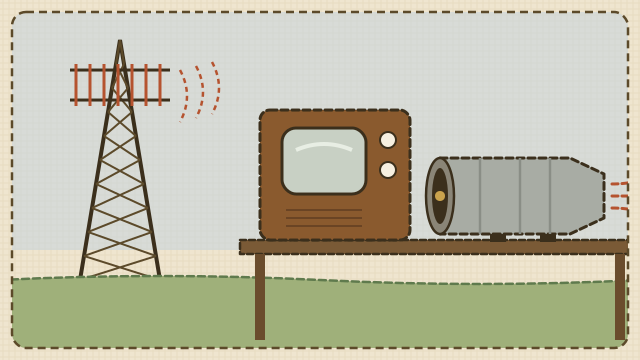
- Television: developed in the 1920s by the Scot John Logie Baird, who in 1932 sent the first TV broadcast between London and Glasgow.
- Radar: the Scot Robert Watson-Watt suggested that radio waves could be used to find enemy aircraft, and the first successful test came in 1935. In the Second World War, radar helped Britain spot German planes early during the Battle of Britain.
- The Turing machine: an idea for a theoretical machine, put forward by the mathematician Alan Turing in the 1930s. It became a foundation of modern computer science.
- Insulin: the Scottish doctor and researcher John Macleod was one of the people who discovered insulin, which made it possible to treat diabetes.
- The jet engine: developed in the 1930s by Frank Whittle, an engineer in the Royal Air Force.
Quiz
Which British mathematician came up with a theoretical device in the 1930s that helped lay the foundations of modern computing?
Alan Turing described the Turing machine in the 1930s, and the idea shaped computer science and the modern computer. Berners-Lee invented the World Wide Web, Baird developed television and Watson-Watt developed radar.