1914–1916
The whole Empire goes to war, and the Somme
In the First World War (1914–1918), it was not only Britain itself that fought. The whole British Empire took part: more than a million Indian soldiers fought for Britain in many different countries, and about 40,000 of them lost their lives. Soldiers came, too, from Canada, Australia, New Zealand, Africa and the West Indies, and fought side by side with the British.
The Somme: the worst day
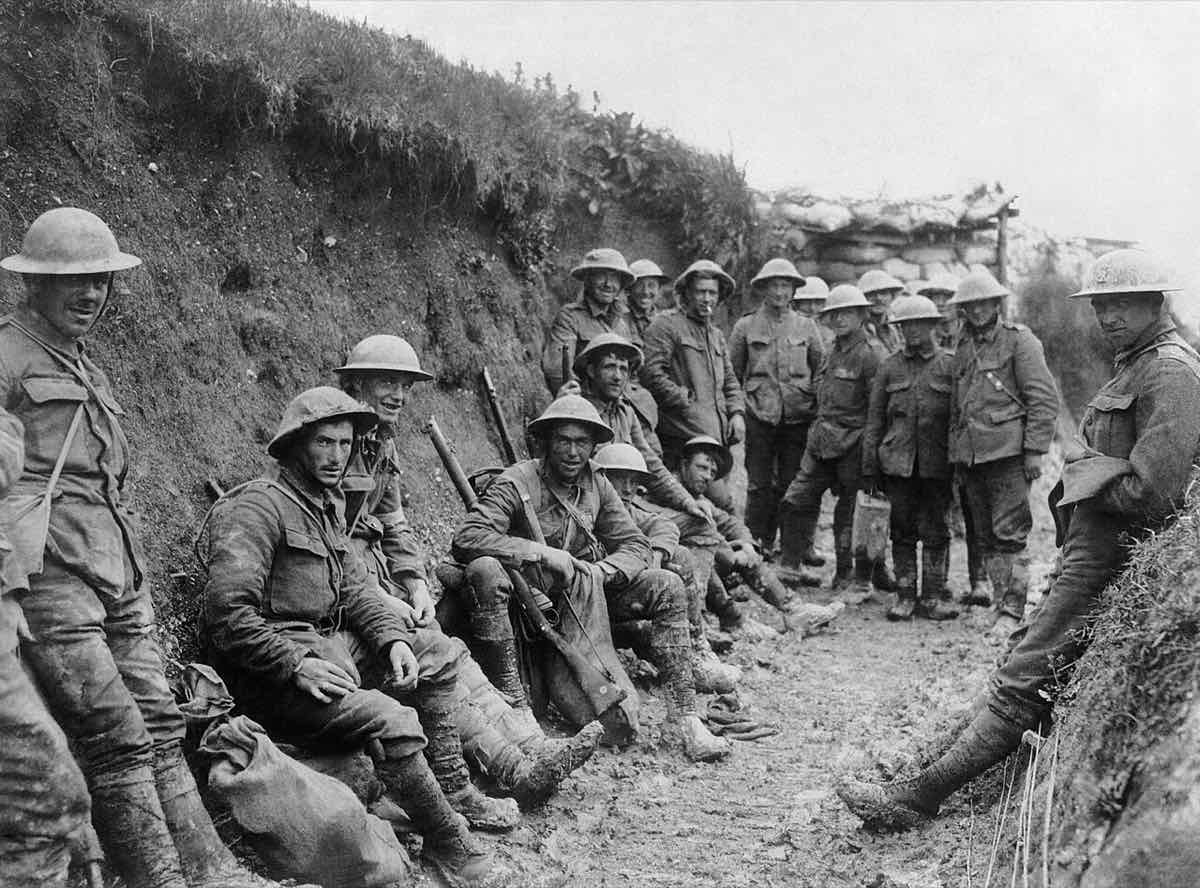
The First World War went on for four years, and millions of people were killed or wounded; Britain alone had more than 2 million casualties. The worst moment came in July 1916, when the British army attacked in northern France at the Battle of the Somme. On the very first day, there were about 60,000 British casualties.
Quiz
Approximately how many British casualties were there on the first day of the Battle of the Somme in 1916?
About 60,000 casualties on the first day of the Somme, the worst single day in the history of the British Army. Don't confuse it with the "more than 300,000" men rescued from Dunkirk.