1637–1642
The English Civil War
Charles I, the king who believed in the Divine Right of Kings, clashed more and more with Parliament. The final spark was a prayer book. Charles I wanted Church of England services to have more ceremony, so he brought in a revised Prayer Book. He also tried to make the Presbyterian Church in Scotland use it. The Scots were furious and raised an army.
When the new prayer book was first used in St Giles' Cathedral in Edinburgh in 1637, the service turned into chaos. According to the popular story, a market trader called Jenny Geddes was so angry that she threw her stool at the minister. Historians aren't sure she ever existed, so this is probably a legend, but there is still a sculpture in the cathedral in her memory.
Charles I had no money to pay for an army against the Scots, so in 1640 he had to call Parliament and ask for funds. But many of its members were Puritans: Protestants who wanted religious teaching and worship to be strict and plain. They didn't like the king's religious ideas, and even when the Scottish army had marched into England, Parliament would not give him the money.
Then rebellion broke out in Ireland as well, because Irish Catholics were frightened by how strong the Puritans were becoming. Parliament seized the moment and demanded control of the English army, which would have taken a great deal of power away from the king. Charles lost his temper. He walked into the House of Commons in person to arrest five of Parliament's leaders, but someone had tipped them off and they had already left.
Since that day, no monarch has ever set foot inside the House of Commons. Every year at the State Opening of Parliament, the official who comes to summon MPs on the monarch's behalf, known as "Black Rod", walks up to the door of the Commons, and MPs slam it shut. Black Rod then has to knock three times before being let in, a reminder that the Commons won't let the monarch barge in.
In 1642 civil war broke out between the king and Parliament. The country split into two sides:
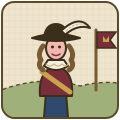 Cavaliers
On the king's side. Remembered for their long curly hair and hats with feathers.
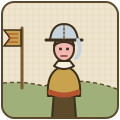 Roundheads
On Parliament's side. The name came from the short haircuts some of them had.
Quiz
Which TWO statements about the English Civil War are correct?
Cavaliers backed the king; Roundheads backed Parliament. The war began in 1642. The date in C, 1745, is the Jacobite rising led by Bonnie Prince Charlie, a century later. A memory trick: "Cavalier" is related to "cavalry", soldiers on horseback, like the knights who served the king.