1660–1679
The Restoration: Charles II comes back
After the Lord Protector, Oliver Cromwell, died in 1658, the republic was left without a leader. In May 1660 Parliament invited Charles II, son of the executed King Charles I, to come home from exile in the Netherlands. He became King Charles II of England, Wales, Scotland and Ireland. He said plainly that he did not want "to go on his travels" ever again.
Charles II knew he couldn't always get his own way; sometimes he would have to strike a deal with Parliament. Most of the time, Parliament backed what he wanted to do. The Church of England became the official church once more, and neither Catholics nor Puritans were allowed any power.
1665: the Great Plague
In 1665 a terrible plague broke out in London. Thousands of people died, and the poorest districts suffered most. It was bubonic plague, which is generally thought to have been spread by fleas living on rats. Most estimates say that between 70,000 and 100,000 Londoners died that year, roughly one in every five or six people in the city. Houses where someone had caught the disease were shut up, with a red cross painted on the door and the words "Lord have mercy upon us" written beside it. The rich fled the city, and even King Charles II's court moved out of London.
1666: the Great Fire of London
The next year, in the early hours of 2 September 1666, a fire started in a baker's shop in Pudding Lane. Most houses in London were made of wood and packed tightly together, and the summer had been very dry, with a strong wind blowing, so the fire raged out of control for four days. This Great Fire destroyed most of the City of London, about 13,000 houses, including many churches and the old St Paul's Cathedral.
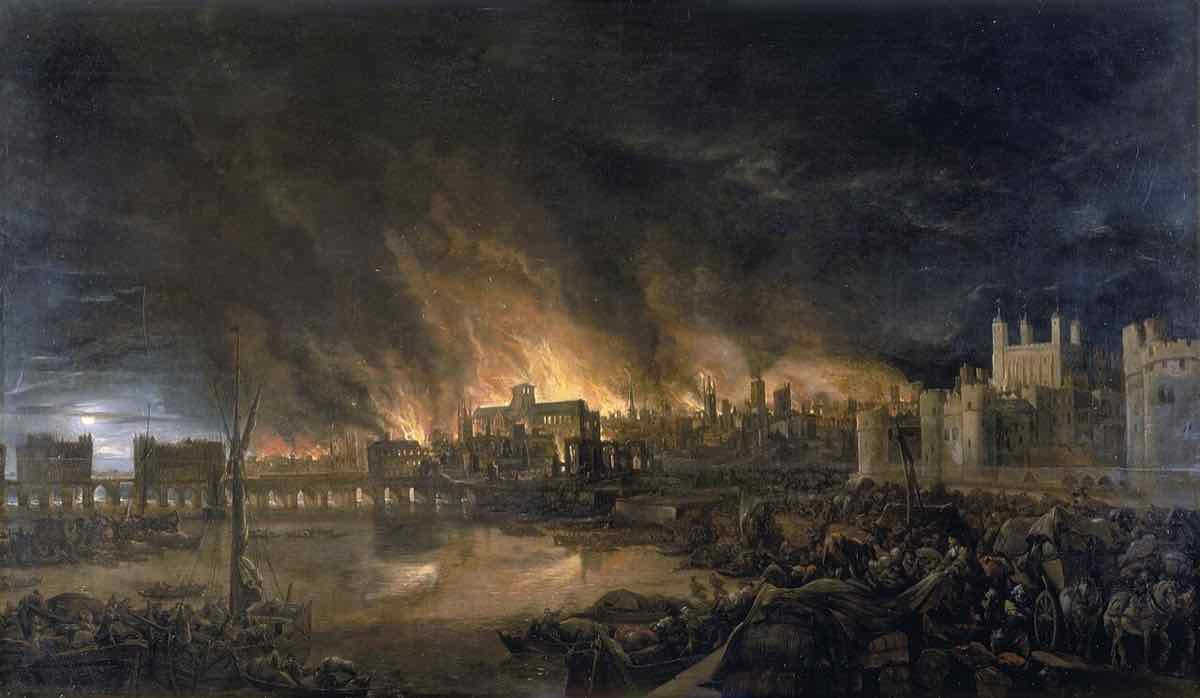
Samuel Pepys, an official who lived in London, wrote about both the plague and the fire in his diary. He described digging a hole in his garden and burying his wine and a Parmesan cheese in it, hoping they would survive the flames. The diary was printed many years later, and people still read it today.
People often say that the fire burned up the rats carrying the disease and so brought the plague to an end. Most historians don't agree: the plague was already dying down before the fire, and the poor districts outside the city walls, where it had been worst, were never burned. The two events following each other was more likely a coincidence.
London was rebuilt, and a new St Paul's Cathedral was designed by the famous architect Sir Christopher Wren.
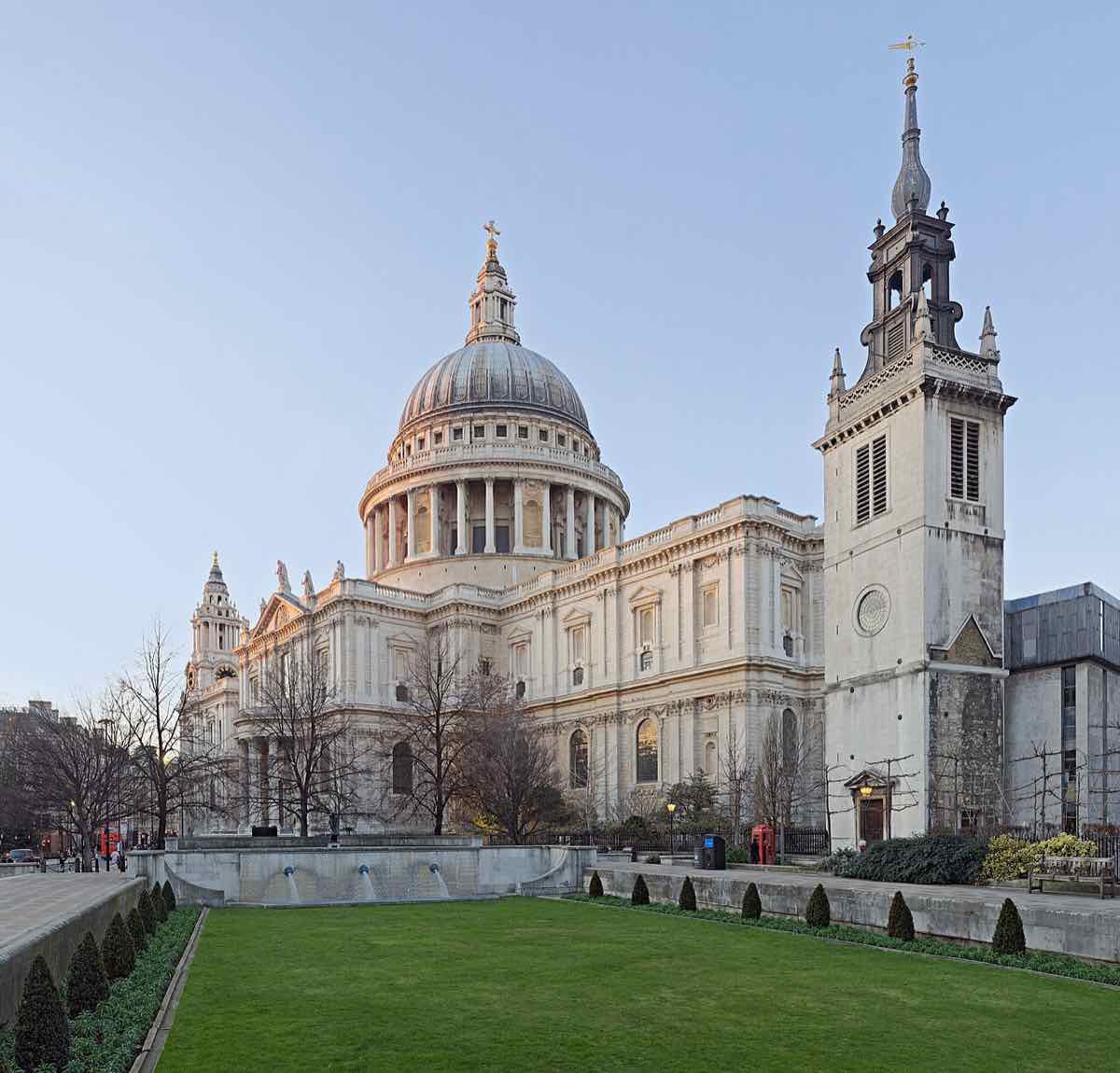
Today the Monument to the Great Fire stands 61 metres tall, exactly the same as its distance from where the bakery stood. Wren himself is buried in St Paul's, and his gravestone says in Latin: "Reader, if you are looking for his monument, look around you."
The Habeas Corpus Act
In 1679 the Habeas Corpus Act became law, and it still matters a great deal today. Habeas corpus is a Latin phrase which roughly means "you must bring the person before the court". The Act made sure that nobody could be locked up without a lawful reason, and that everyone held in prison had the right to have their case heard by a court.
The law only just got through. According to Gilbert Burnet, a bishop at the time, when the House of Lords voted on it, one of the lords counting the votes jokingly counted a very fat lord as ten, so the law passed with a few "extra" votes. It's a fun story that can't be proved, but the records do show that the vote was extremely close.
Quiz
Which architect designed the new St Paul's Cathedral after the Great Fire of London in 1666?
Wren. The other three are real British designers too: Inigo Jones designed the Banqueting House, where Charles I was executed; Lutyens designed the Cenotaph in London; and Capability Brown was an 18th-century garden designer.
Quiz
Which of the following statements is correct?
The Habeas Corpus Act protects the right not to be locked up unlawfully and the right to a court hearing. It has nothing to do with voting. At the time only men who owned a certain amount of property could vote; all adult men only got the vote in the 20th century.