1928–1945
Fleming and penicillin
Away from the fighting, the first half of the 20th century also produced a Scot who changed medicine: Alexander Fleming (1881–1955). Born in Scotland, he moved to London in his teens and went on to train as a doctor. In 1928, while he was studying flu, he discovered penicillin.
But Fleming only made the discovery. Turning penicillin into a medicine that people could actually take was the work of two other scientists, Howard Florey and Ernst Chain, and by the 1940s it was being made in huge quantities. In 1945 Fleming received the Nobel Prize in Medicine, and doctors still use penicillin to treat infections caused by bacteria.
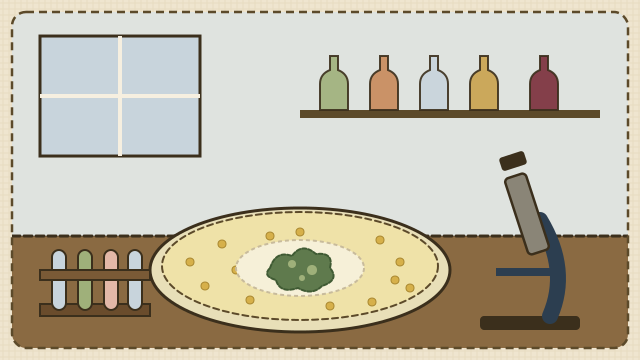
The discovery began with an untidy bench. In the summer of 1928 Fleming came back from holiday to his laboratory in London and found that a dish of bacteria he had left out had grown mould, and that all the bacteria around the mould had died. Instead of throwing the dish away, he set out to find out why, and that led him to penicillin. The 1945 Nobel Prize was in fact shared by three people: Fleming, Florey and Chain.
With the war in Europe won, Britain held its first general election for ten years in July 1945. What the voters chose would shape the country for decades to come.
Quiz
Who discovered penicillin in 1928?
Fleming discovered penicillin, and Florey and Chain turned it into a medicine. The other three are all on the list of 20th-century British inventions: Macleod is insulin, Watson-Watt is radar and Crick is the structure of DNA. Matching inventors to their inventions is a very common type of question.
Key facts
| Early 1900s reforms | Old-age pensions, free school meals, help for the unemployed, safer workplaces, slum prevention; MPs paid for the first time |
|---|---|
| 28 June 1914 | Archduke Franz Ferdinand assassinated, leading to the First World War (1914–1918) |
| Allies vs Central Powers | First World War: the Allies (Britain, France, Russia, Japan, Belgium, Serbia) against the Central Powers (Germany, Austria-Hungary, the Ottoman Empire) |
| British Empire | More than a million Indians fought and about 40,000 died; Britain had over 2 million casualties |
| 1916 Somme | About 60,000 British casualties on day one |
| 11.00 am, 11 Nov 1918 | End of the First World War; Remembrance Day, poppies, the Cenotaph in Whitehall |
| 1918 / 1928 votes | 1918: women over 30; 1928: women at 21, the same as men |
| Ireland 1916–1922 | 1916 Easter Rising; 1921 treaty; 1922 split into Northern Ireland (stays in the UK) and the Irish Free State; a republic from 1949 |
| 1929 Great Depression | Shipbuilding hit hard, cars and aviation grew; cars rose from 1 million to 2 million |
| BBC 1922 / 1936 | Radio from 1922; the world's first regular TV service in 1936 |
| 1939 | Hitler (in power from 1933) invades Poland, and Britain and France declare war; the Axis: Germany, Italy, Japan |
| Churchill | Prime Minister from May 1940; Conservative; lost in 1945, Prime Minister again in 1951; greatest Briton in 2002 |
| 1940 Dunkirk | Civilian small boats help the Navy rescue more than 300,000 men; the Dunkirk spirit |
| 1940 Battle of Britain | The Spitfire and the Hurricane |
| The Blitz | Coventry almost destroyed, the East End badly hit; the Blitz spirit |
| 1941 | Pearl Harbor brings the USA into the war; Germany invades the Soviet Union |
| 6 June 1944 D-Day | Allied landings in Normandy |
| May / Aug 1945 | Germany defeated in May; Japan surrenders in August after Hiroshima and Nagasaki; Rutherford's team first split the atom, and British scientists later joined the Manhattan Project |
| 1928 Fleming | A Scot who discovered penicillin; Florey and Chain made it into a medicine, mass-produced in the 1940s; Nobel Prize in Medicine 1945 |