1940–1941
The Battle of Britain and the Blitz
After France fell in 1940, Germany's leader, Adolf Hitler, wanted to invade Britain, but before he could send soldiers across the sea, Germany had to control the skies. So the German air force attacked Britain from the air. Britain fought back hard with its fighter planes and, in the summer of 1940, won this vital battle in the air, known as the Battle of Britain. The two key planes for the RAF (the Royal Air Force) were the Spitfire and the Hurricane, both designed and built in Britain.
Even after losing the air battle, the German air force kept on bombing London and other cities at night. This was the Blitz. Coventry was almost completely destroyed, and other cities suffered badly too, especially the East End of London.
Even with their homes in ruins, people in Britain showed great courage and refused to be beaten. Today, when British people talk about "the Blitz spirit", they mean everyone helping each other through hard times.
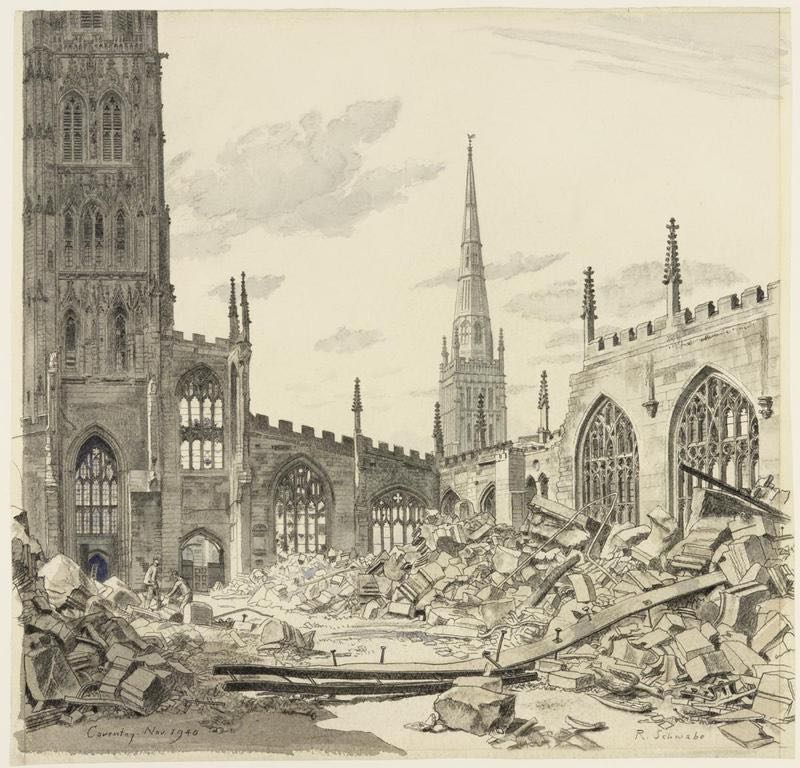
The Blitz lasted from September 1940 to May 1941, and more than 40,000 civilians were killed. Every night thousands of Londoners took blankets down into Underground stations to sleep. Buckingham Palace was hit too, and Queen Elizabeth (later known as the Queen Mother) is reported to have said that now she could look the people of the bombed East End in the face. George VI and his family stayed in Britain for the whole war instead of moving abroad.
The Battle of Britain pilots became known as "the Few", the "so few" of Prime Minister Winston Churchill's famous line. Many of them came from other countries; No. 303 Squadron, made up of Polish pilots, had an especially strong record.
Quiz
In the Battle of Britain, which TWO aircraft did the most to help the RAF defend the country?
The Spitfire and the Hurricane. Concorde was a supersonic passenger plane that first flew in 1969, and the Harrier jump jet was also a post-war invention; both come up again among Britain's post-war inventions.