In the Second World War, the Allies completely defeated Germany in May 1945. The war against Japan went on until August 1945, when the United States dropped its new atomic bombs on Hiroshima and Nagasaki in Japan. Japan then surrendered, and the war was over.
British scientists had a part in the story of the atomic bomb. A team led by the New Zealand-born physicist Ernest Rutherford, working first at the University of Manchester and later at the University of Cambridge, were the first to "split the atom". Later, a number of British scientists joined the Manhattan Project, the American programme that built the atomic bomb.
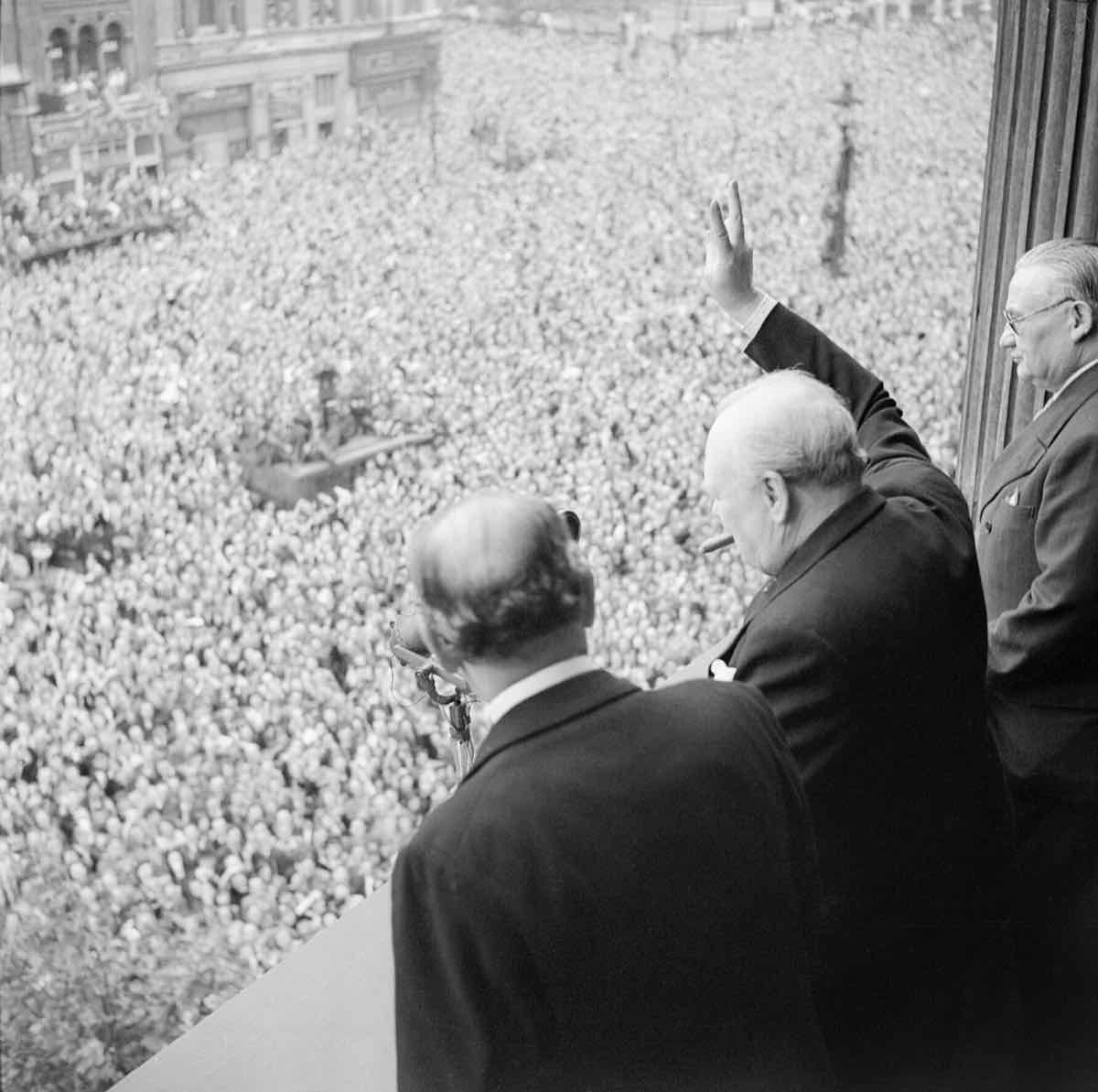
VE Day, 8 May 1945: from the balcony of the Ministry of Health in Whitehall, London, Churchill makes the V for victory sign to the crowds. That evening 19-year-old Princess Elizabeth (later Queen Elizabeth II) and her sister, Princess Margaret, were allowed by their father, George VI, to slip out of Buckingham Palace with a group of officers and join the crowds. Nobody recognised them, and many years later the Queen remembered it as one of the most memorable nights of her life.
Photo: Major W. G. Horton, War Office official photographer, Imperial War Museums H 41849, public domain, via Wikimedia Commons
Quiz
Which of the following statements is correct?
Scientists led by Rutherford were the first to split the atom. Germany was defeated in May 1945, but the war against Japan only ended in August 1945, after the atomic bombs were dropped.