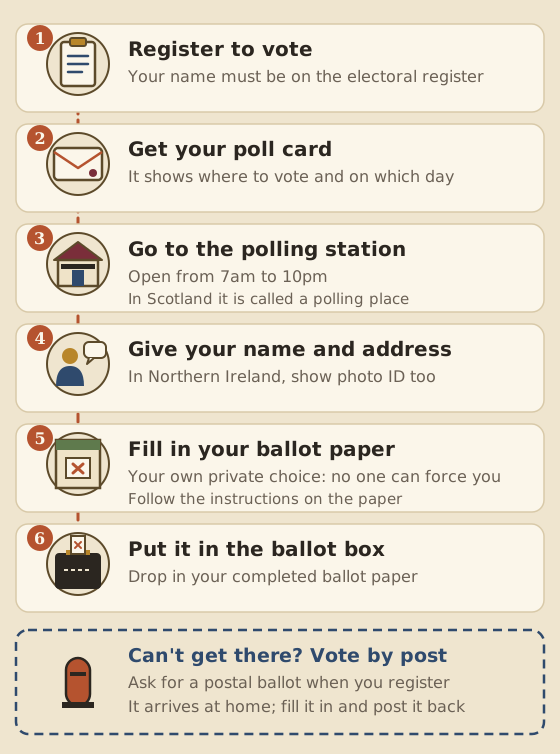
You vote at a polling station, which in Scotland is called a polling place. Before the election you will receive a poll card in the post. It tells you where your polling station is and the date of the election. On polling day, polling stations are open from 7am to 10pm.
Voting in six steps. If getting to a polling station is hard for you, you can choose to vote by post when you register.
When you arrive, polling station staff check your name and address. Voters in Northern Ireland also have to show photographic identification (photo ID).
You are given a ballot paper, which you fill in privately in a polling booth. Who you vote for is your decision alone: nobody is allowed to pressure you into choosing a certain candidate.
Fill it in by following the instructions on the paper, then put it in the ballot box.
If getting to the polling station would be hard for you, you can apply to vote by post, using a postal ballot. The ballot paper comes to your home before polling day; you complete it and send it back. You can ask for this when you register to vote.
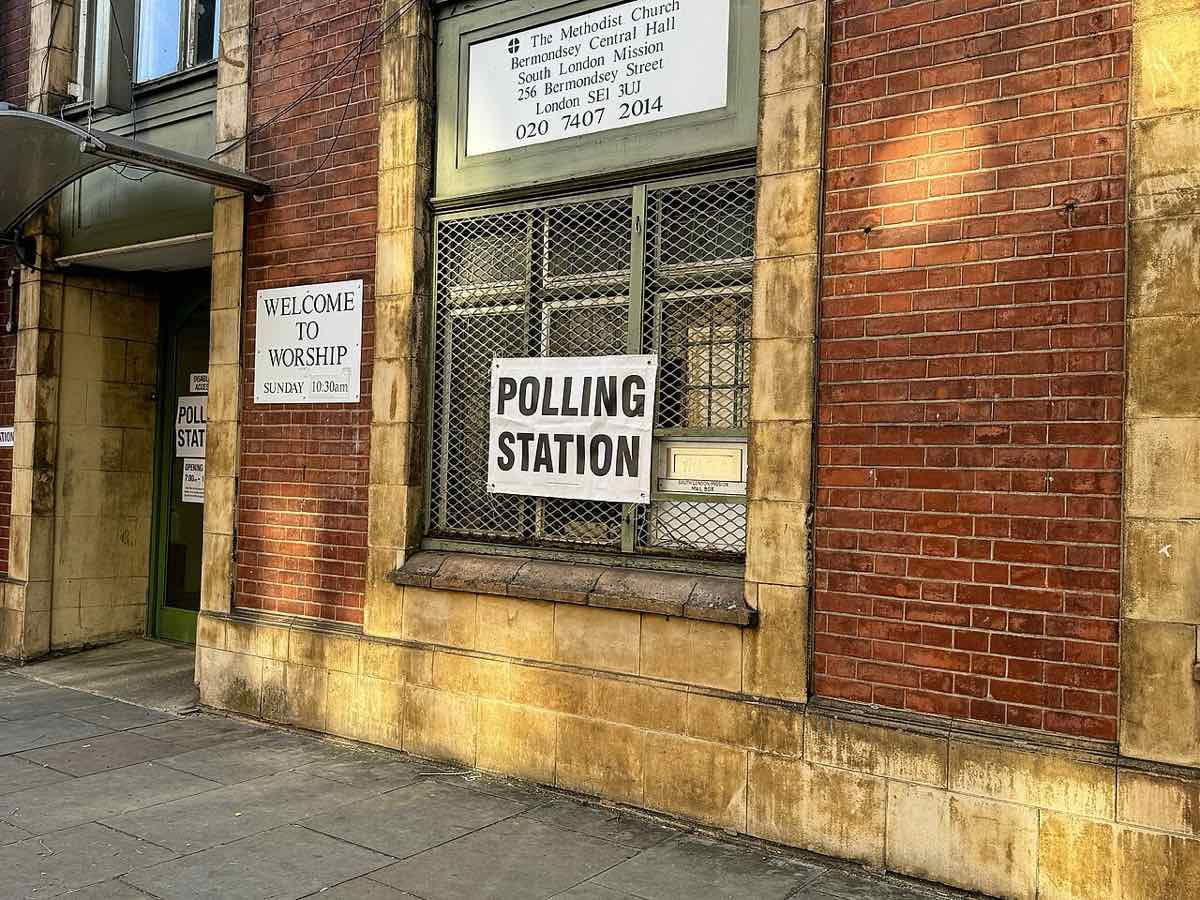
On general election day, the hall of a Methodist church in Bermondsey, London, became a polling station.
Photo: Bex Walton, CC BY 2.0, via Wikimedia Commons
Quiz
Before an election, what are you sent that tells you where your polling station is and when the vote takes place?
A poll card arrives before the election and tells you where to vote and on what date. You are given your ballot paper at the polling station itself (unless you have chosen a postal ballot). The electoral register is the list of people registered to vote, and the registration form is how you get onto it.
Quiz
On election day, between which hours is a polling station open?
From 7am to 10pm: 15 hours in all, so people who work can vote before or after their working day.
Standing for election yourself
You don't just have to vote: you can stand as a candidate too. If you are 18 or older and a citizen of the UK, the Irish Republic or a Commonwealth country, you can usually stand for public office. A few groups are excluded:
members of the armed forces
civil servants
people who have been found guilty of certain criminal offences
Also, members of the House of Lords cannot stand for election to the House of Commons, although they can stand for any other public office.
Quiz
Which TWO groups of people are generally not allowed to stand for public office?
Members of the armed forces, civil servants and people convicted of certain crimes cannot stand. Most Irish and Commonwealth citizens aged 18 or over can. Civil servants are left out because they must always stay politically neutral.