Five pillars: the fundamental principles of British life
Story 2 of 5
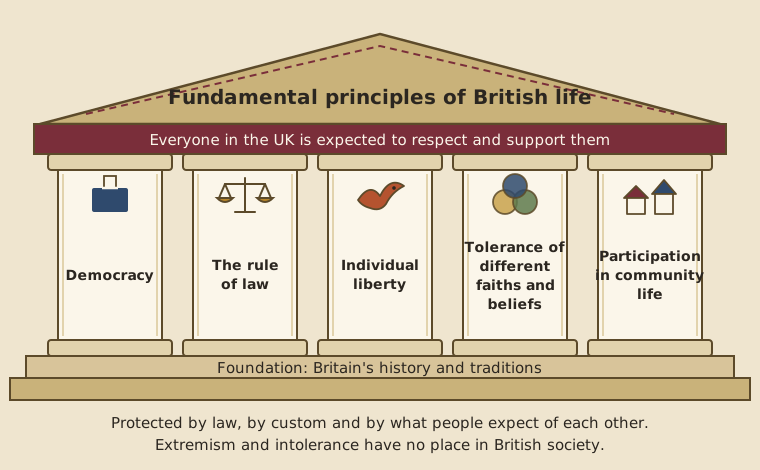
British society rests on a set of fundamental values and principles. Everyone who lives here, citizen or not, is expected to respect and support them. They grew out of the country's history and traditions. They are kept safe by the law, by custom and by what people expect of each other. And you can see them in the rights, privileges and responsibilities that citizens and permanent residents have.
One thing is very clear: extremism (holding extreme views, often with violence) and intolerance (refusing to accept people who are different from you) have no place in British society.
Think of the five principles as five pillars holding up a roof. Take any one away and the roof starts to lean.
Here are the five pillars:
Democracy: the people choose who runs the country.
The rule of law: everyone has to obey the law, including people with power.
Individual liberty: within the law, you decide how to live your own life.
Tolerance of those with different faiths and beliefs: accepting people whose religion or beliefs are not the same as yours.
Participation in community life: taking part in the life of the place where you live.
The rule of law has the oldest roots of the five. In England, the idea that even the king must obey the law goes back to 1215, when a group of powerful barons forced King John to accept Magna Carta. For the first time, someone wrote down that the king's power had limits. You can read the full story in the History story Magna Carta: the king must obey the law too.
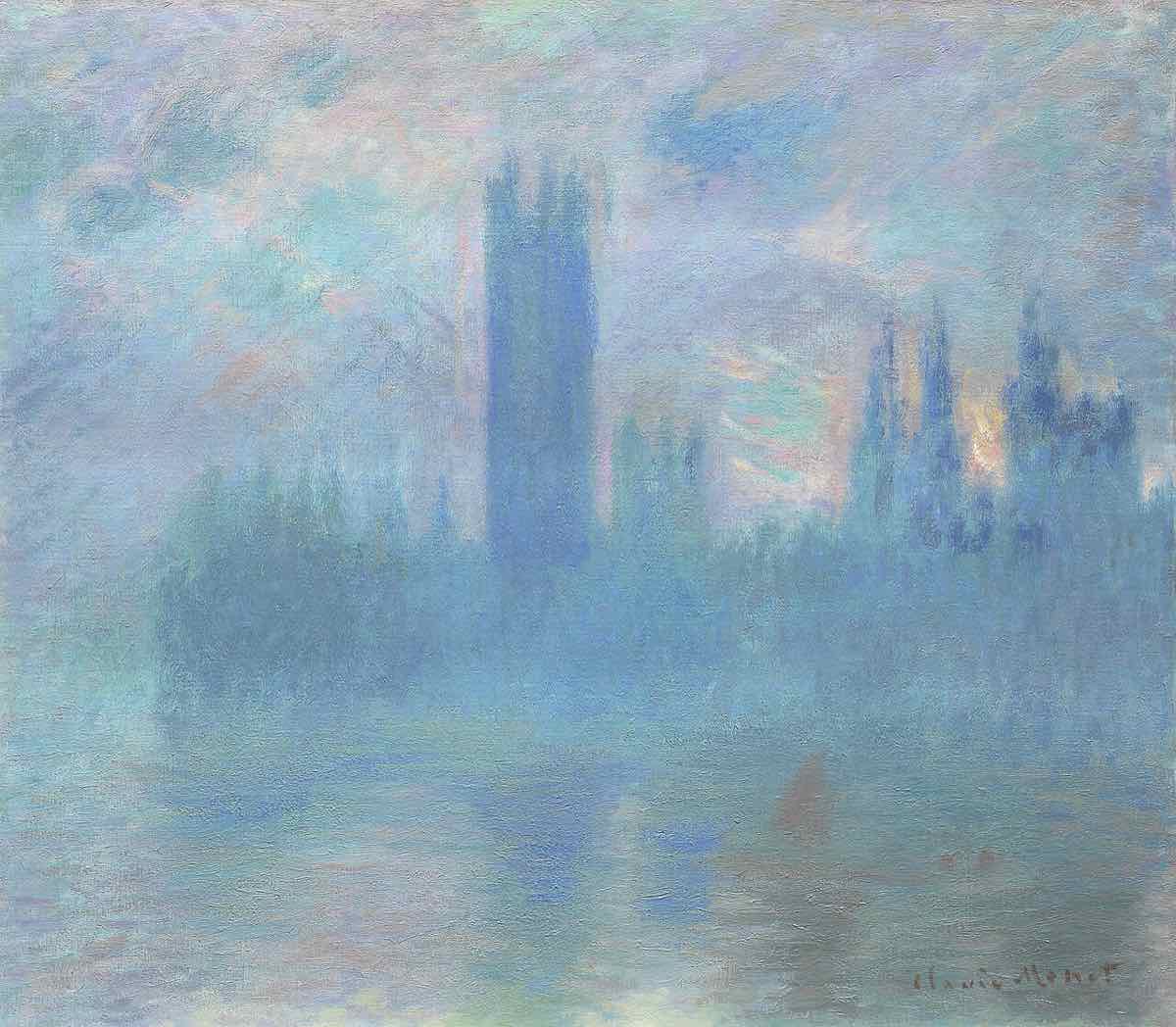
The Houses of Parliament in London, painted by the French artist Claude Monet between 1900 and 1903. This building is where British democracy does its work. The topic "The UK government, the law and your role" explains it in detail.
Claude Monet, Art Institute of Chicago, CC0, via Wikimedia Commons
Quiz
Which of the following is one of the fundamental principles of British life?
The five principles are democracy, the rule of law, individual liberty, tolerance of people with different faiths and beliefs, and participation in community life. The UK has many political parties, and religion is a personal freedom: nobody is made to go to a place of worship. There is no compulsory military service either.