1760s–1783
Losing America: American independence
In the 18th century, even as the British Empire grew around the world, it suffered its first big setback in North America. By the 1760s Britain had many colonies in North America. They were wealthy and mostly ran their own affairs. Many colonists' families had first crossed the Atlantic for religious freedom. They were well educated and cared a great deal about liberty.
When the British government tried to tax the colonies, the colonists saw it as an attack on their freedom. Their slogan was "no taxation without representation": we have no one to speak for us in the British Parliament, so why should we pay its taxes? Parliament tried to calm things by dropping some of the taxes, but relations kept getting worse.
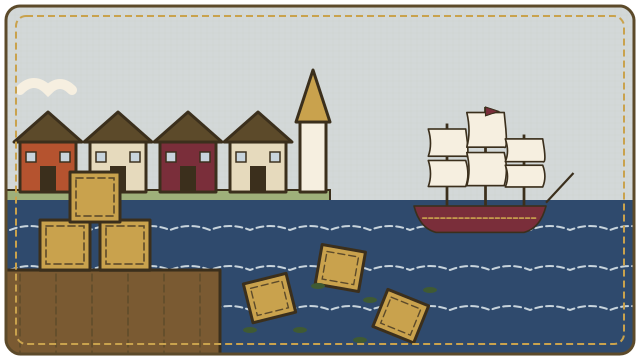
The final break came over tea. Britain had kept its tax on tea in the colonies, and in December 1773 a group of protesters in Boston, dressed as Native Americans, boarded ships of the East India Company in the harbour and tipped all 342 chests of tea into the sea. This became famous as the Boston Tea Party. The British government answered by closing the port of Boston and tightening its control over the colonies, which only pushed more colonists to side with the rebels. In 1775 fighting broke out between British troops and colonial militias in Massachusetts, and the American War of Independence began.
On 4 July 1776, 13 colonies in North America declared independence, saying that people had the right to set up their own government; 4 July is still the national day of the United States. In the end the colonists defeated the British army, and in 1783 Britain recognised their independence.