1714–1742
A king from Germany, and the first Prime Minister
Queen Anne, the last of the Stuart monarchs, left no children. When she died in 1714, Parliament picked a German prince as the next king: George I. Why him? Of all Anne's relatives, he was the closest one who was a Protestant. He was also the first king from the House of Hanover.
In Scotland, the Jacobites refused to accept him. They wanted the son of James II on the throne instead, but they were soon beaten.
George I's English was poor, so he leaned heavily on his ministers. The leading minister in Parliament later came to be called the Prime Minister. Britain's first was Sir Robert Walpole, who held the post from 1721 to 1742.
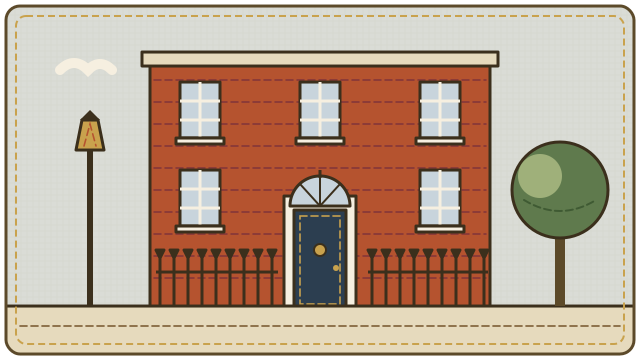
Walpole also gave Britain its most famous address. King George II offered him a house in Downing Street, London, as a gift, but Walpole asked for it to go with the post of First Lord of the Treasury instead, so that whoever did the job after him could live there too. He moved in in 1735, and 10 Downing Street has been the Prime Minister's official home ever since.
Quiz
Who was the first Prime Minister of Britain?
The first Prime Minister was Walpole, from 1721 to 1742. The Duke of Wellington did become Prime Minister after his victory at Waterloo, but much later. Cromwell was Lord Protector during the republic in the 17th century, and Wilberforce was the MP who led the campaign against slavery.