2010–2020
2010 to 2020: a coalition, a referendum and Brexit
Labour's 13 years in power ended at the general election of May 2010, when no party won a majority of seats. This had not happened in Britain since February 1974. The Conservatives and the Liberal Democrats formed a coalition government. The Conservative leader, David Cameron, became Prime Minister, and the Liberal Democrat leader, Nick Clegg, became Deputy Prime Minister.
2015: a surprise majority
Before the general election of 7 May 2015, almost every opinion poll predicted another hung parliament, with no party holding a majority. Instead the Conservatives won enough seats to govern alone, their first overall majority since 1992, and David Cameron carried on as Prime Minister. Their old coalition partners, the Liberal Democrats, crashed from 57 seats to just 8.
The result surprised almost everyone. When the BBC's exit poll came out at 10pm on election night, it gave the Liberal Democrats only about 10 seats. Paddy Ashdown, a former leader of the party, said live on television that if the poll was right he would publicly eat his hat. The real result was even worse for his party: 8 seats.
23 June 2016: the EU referendum
Cameron had promised that a Conservative government would let the people decide whether the UK should stay in the European Union. The referendum (a vote by the whole country on one question) took place on 23 June 2016. Cameron campaigned to stay, but the result went the other way, by a narrow margin: 51.9% voted to leave and 48.1% to remain. More than 72% of registered voters took part. England and Wales voted to leave, while most voters in Scotland and Northern Ireland wanted to stay. The next morning, Cameron announced that he would step down.
May, Johnson and the day the UK left
On 13 July 2016 Theresa May, who had been Home Secretary, took over from Cameron. She was the second woman to become Prime Minister, after Margaret Thatcher. Her task was to agree the terms of leaving with the EU, but MPs voted down the deal she negotiated three times in early 2019, and in May that year she announced that she would stand down. Boris Johnson, a former Mayor of London, succeeded her on 24 July 2019. In December 2019 he called a general election with the slogan "Get Brexit Done" and won a large majority.
At 11pm UK time on 31 January 2020, the UK formally left the European Union, 47 years after joining. This departure became known as Brexit, short for "British exit". It is also where our story ends.
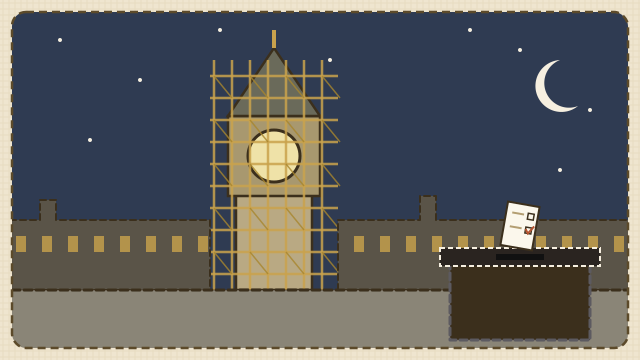
The moment itself passed quietly. Some people wanted Big Ben to ring out at 11pm, but the bell had been silenced for repair work on the Elizabeth Tower, and the idea was dropped. Instead, a countdown clock was shown on the front of 10 Downing Street, and the Royal Mint brought out a 50p coin dated 31 January 2020, with the words "Peace, prosperity and friendship with all nations".
In the Stone Age, people could walk from Britain to mainland Europe; in 2020, the UK left the European Union. Between those two moments lies the long history that has made the country what it is today.
Quiz
In the referendum of 23 June 2016, what share of the vote went to leaving the European Union?
51.9% voted to leave. 48.1% is the share that voted to remain, so don't swap the two. About two-thirds (67%) is how many voted to stay in the earlier referendum of 1975.
Quiz
Which TWO of the following statements are correct?
May followed Cameron on 13 July 2016, and Johnson followed May on 24 July 2019, not Cameron. The 2015 election gave the Conservatives a majority of their own, so no coalition was needed. The UK left the EU on 31 January 2020.
Key facts
| 1942 Beveridge Report | Five giant evils: Want, Disease, Ignorance, Squalor, Idleness; the basis of the welfare state |
|---|---|
| 1944 Butler Act | R A Butler's (Conservative) Education Act: free secondary schooling in England and Wales |
| 1945 Attlee | Labour government: the welfare state; railways, coal mines, gas, water and electricity nationalised |
| 1947 Independence | Nine countries, including India, Pakistan and Ceylon (Sri Lanka) |
| 1948 NHS | Nye Bevan sets up the NHS; the same year, people from the West Indies are invited to work in Britain |
| Dylan Thomas / Roald Dahl | Dylan Thomas: Welsh poet, Under Milk Wood, Swansea. Roald Dahl: born in Wales to Norwegian parents, RAF in the Second World War, Charlie and the Chocolate Factory |
| Migration | Bus drivers recruited in the West Indies; textile and engineering firms recruited in India and Pakistan; later Bangladesh too; 28,000 people of Indian origin from Uganda in the early 1970s |
| Wind of change | Macmillan's speech on decolonisation; Conservatives in power 1951–64 |
| 1960s | The Swinging Sixties: the Beatles, the Rolling Stones; divorce and abortion laws relaxed; equal pay; Concorde |
| Inventions | Before the war: TV, Baird (1932 London–Glasgow); radar, Watson-Watt (1935); the Turing machine; insulin, Macleod; the jet engine, Whittle (Fleming and penicillin has its own story). After the war: radio telescope, Lovell; hovercraft, Cockerell; Concorde and the Harrier; DNA, Crick, 1953; cash machine, Goodfellow, 1967; IVF, Oldham, 1978; Dolly the sheep, 1996; MRI, Mansfield; World Wide Web, Berners-Lee, 1990 |
| 1970s | End of the boom, balance of payments problems, strikes; direct rule in Northern Ireland from 1972; about 3,000 deaths |
| Mary Peters | Olympic pentathlon gold in 1972; promoted sport and tourism in Northern Ireland |
| EEC / EU | Six countries set up the EEC in 1957; it became part of the EU in 1993; the UK was a member but did not use the euro, and left on 31 January 2020 |
| 1979 Thatcher | First woman Prime Minister, Conservative; privatisation, limits on the unions; 1982 Falklands War |
| 1990 Major | Helped start the Northern Ireland peace process |
| 1997 Blair | Labour; Scottish Parliament and Welsh Assembly; 1998 Good Friday Agreement |
| NI Assembly | Elected 1999, suspended 2002, restored 2007 |
| 2007 / 2010 | Brown takes over; in 2010 a Conservative–Liberal Democrat coalition, with Cameron as Prime Minister |
| 2015 | The Conservatives win a majority; Cameron stays on as Prime Minister |
| 2016 referendum | 23 June: 51.9% leave, 48.1% remain; Theresa May becomes Prime Minister on 13 July |
| 2019 / 2020 | Boris Johnson Prime Minister from 24 July 2019; the UK formally leaves the EU on 31 January 2020 |