1603–1640
King versus Parliament: the Divine Right of Kings
In England in the early 17th century, a great quarrel was building: who really ran the country, the king or Parliament? Elizabeth I had been very good at handling Parliament. She knew how to steer between what she wanted, what the House of Lords wanted and what the House of Commons wanted, as the Commons became more and more Protestant.
James I and his son Charles I were not so skilful. Both believed in the Divine Right of Kings: the idea that God himself chooses the king, so a king doesn't need Parliament's permission for anything he does.
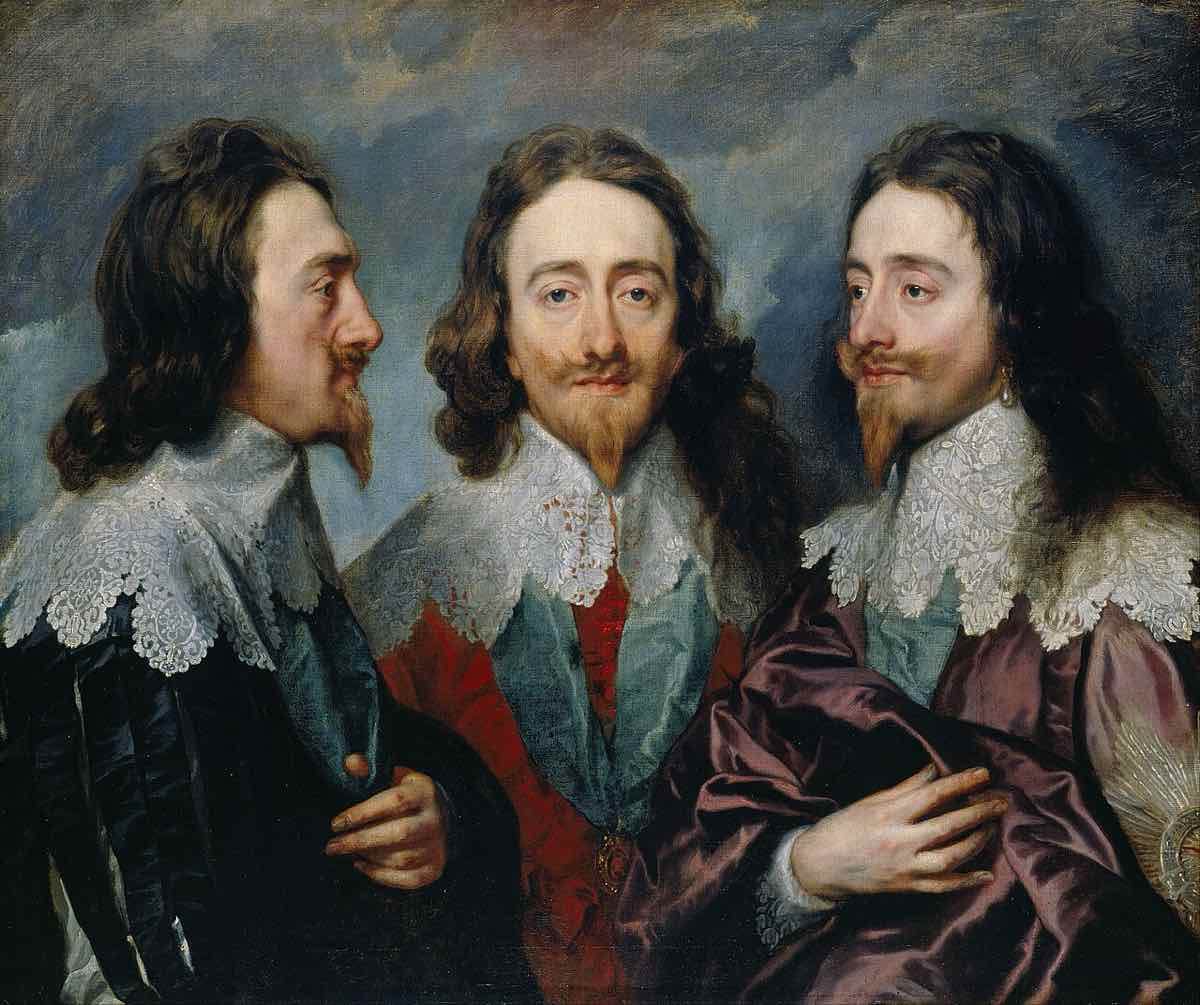
Charles I, who became king of England, Wales, Ireland and Scotland, ruled in exactly this way. When Parliament disagreed with his religious and foreign policies, he simply stopped calling it. For 11 years he tried every way he could think of to raise money without Parliament's approval, until trouble in Scotland forced him to call it again.
Quiz
James I and Charles I shared a belief that led Charles I to try to govern without Parliament. What was it called?
The Divine Right of Kings was the idea that God himself chose the king, so the king did not need Parliament's approval. Charles I acted on it and governed without Parliament for 11 years. Constitutional monarchy is the opposite idea and only began after 1688. Habeas corpus is the 1679 law against unlawful imprisonment, and the rule of law means that everyone, the king included, must obey the law.