Art: from royal portraits to the Turner Prize
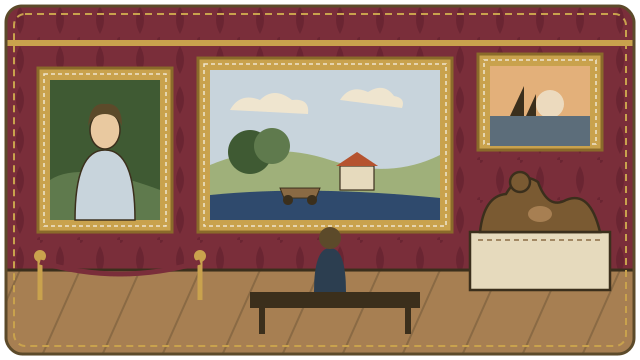
In the Middle Ages most art had a religious subject: pictures painted on church walls, and illustrations in religious books. Much of it was destroyed after the Reformation, but rich families then started to collect other kinds of paintings and sculpture.
In the 16th and 17th centuries, many of the painters at work in Britain came from other countries. Examples are Hans Holbein, who painted Henry VIII (see The Tudors), and Sir Anthony Van Dyck, who painted Charles I (see The Stuarts). It was only from the 18th century that home-grown British artists, especially painters of portraits and landscapes, became well known.
You can see work by British and international artists in galleries across the country. London has The National Gallery, Tate Modern and Tate Britain; Cardiff has the National Museum; and Edinburgh has the Scottish National Gallery.
The Turner Prize began in 1984 to celebrate contemporary art (art being made today). It takes its name from the painter Joseph Turner. Each year four works make the shortlist and go on show at Tate Britain, and then the winner is announced. It is seen as one of the most respected prizes for visual art. Past winners include Damien Hirst and Richard Wright. Turner himself appears on the Bank of England's plastic £20 note, issued from 2020, together with one of his paintings.
Quiz
What kind of work does the Turner Prize celebrate?
The Turner Prize, set up in 1984 and named after Joseph Turner, is for contemporary art. The prize for novels is the Man Booker Prize for Fiction, and London's theatre awards are the Laurence Olivier Awards.