Architecture: from Norman castles to the gothic revival
Story 7 of 13
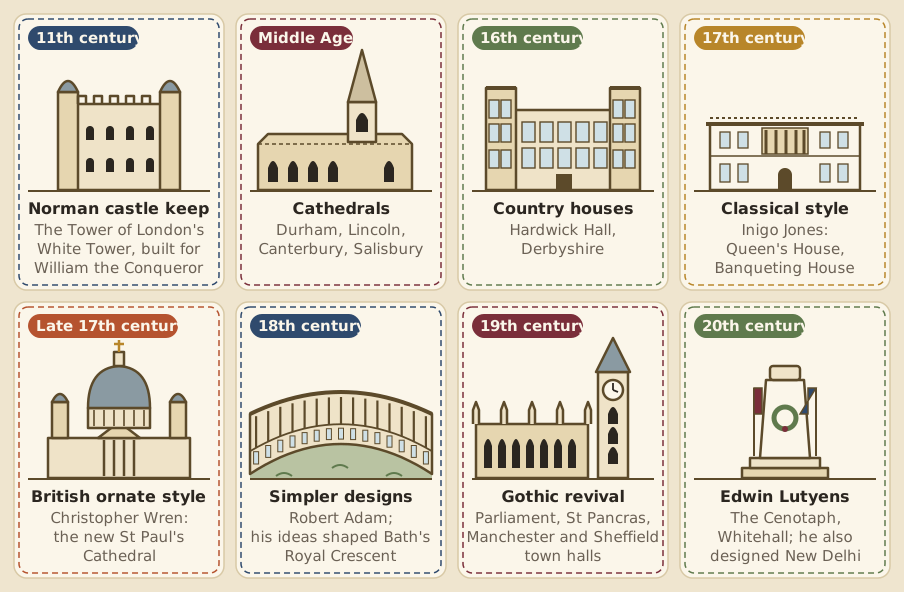
Britain's buildings are rich and varied. This picture shows the main style of each period:
British building styles, in date order. Under each picture are the architects and buildings that can come up in the test.
The Middle Ages: many cathedrals and churches were built, and a lot of them are still standing, for example the cathedrals at Durham, Lincoln, Canterbury and Salisbury. The White Tower at the Tower of London is a good example of a Norman castle keep (a strong central tower); William the Conqueror (William I) had it built.
Country houses: as the countryside became more peaceful and landowners grew richer, their homes became grander. Great country houses such as Hardwick Hall in Derbyshire appeared, and a British style of building began to develop. Hardwick Hall was built in the 1590s, when glass was a luxury, yet it has an enormous number of windows; local people made up a rhyme about it: "Hardwick Hall, more glass than wall."
The 17th century: Inigo Jones looked to classical architecture (the buildings of ancient Greece and Rome) when he designed the Queen's House at Greenwich and the Banqueting House in Whitehall, London. Later that century Sir Christopher Wren created a British form of the richly decorated styles fashionable in Europe; his best-known example is the new St Paul's Cathedral (see The Stuarts). The Banqueting House wasn't only for feasts: in 1649 Charles I was executed just outside it.
The 18th century: simpler designs came into fashion. The Scottish architect Robert Adam shaped building styles in the UK, Europe and America. He designed the insides of buildings as well as the outsides, as at Dumfries House in Scotland. His ideas inspired architects in Bath, among other places; the Royal Crescent there is a good example. It was actually designed by John Wood the Younger, though. Adam's ideas only influenced the architects in Bath, so don't assume he built it.
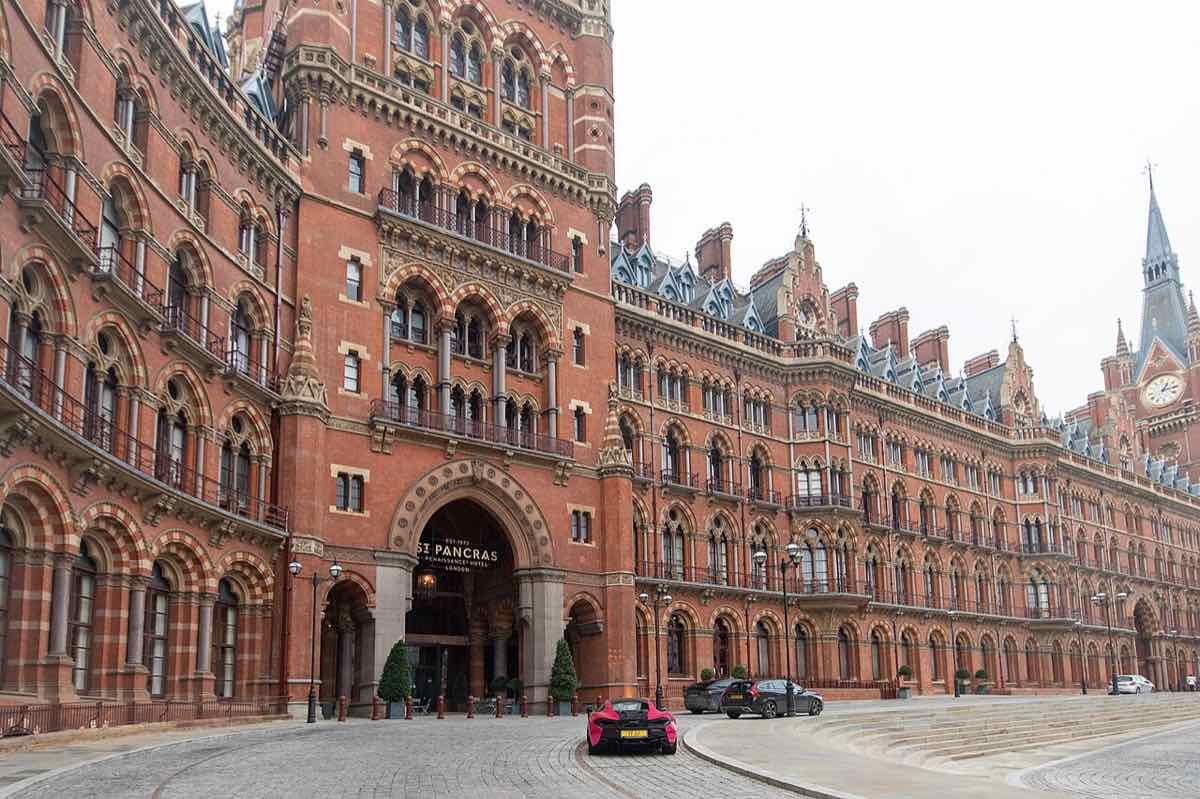
The 19th century: the medieval gothic style came back into fashion. As cities grew, many large public buildings were put up in this style, such as the Houses of Parliament, St Pancras Station and the town halls of cities like Manchester and Sheffield.
The 20th century: Sir Edwin Lutyens was influential across the British Empire. He designed New Delhi as the seat of government for India. When the First World War ended, he designed war memorials in many parts of the world, including the Cenotaph in Whitehall. The national Remembrance Day service is held there every year, attended by the Queen, politicians and foreign ambassadors (see Customs and Traditions).
Today: the firms set up by modern British architects take on major projects in the UK and around the world. Three names to know: Sir Norman Foster (born 1935), Lord Richard Rogers (1933–2021) and Dame Zaha Hadid (1950–2016). Hadid's firm has carried on with her work since her death. You may have seen their work: Foster helped design the new Wembley Stadium (see Sport), Rogers designed the Millennium Dome, now known as The O2, and Hadid designed the Aquatics Centre for the London 2012 Olympics.
The red-brick gothic front of St Pancras Station and the former Midland Grand Hotel: a classic example of the 19th-century gothic revival. The station was nearly knocked down in the 1960s, but a campaign led by people including the poet John Betjeman saved it. There is now a bronze statue of him inside the station, and he is also one of the best-loved British poets of recent times.
Photo: mgaylard (www.mgaylard.co.uk), CC BY 2.0, via Wikimedia Commons
Quiz
Which of the following statements is correct?
The Cenotaph was designed in the 20th century by Lutyens, who also designed New Delhi. Wren was a 17th-century architect, working more than 200 years before the First World War; his most famous building is St Paul's Cathedral.
Quiz
Which TWO of these buildings were built in the 19th-century revival of the gothic style?
The Houses of Parliament and St Pancras Station are both 19th-century gothic buildings. The Queen's House is in Inigo Jones's 17th-century classical style, and the Royal Crescent in Bath belongs to the simpler designs of the 18th century.