In 1946, in a courtroom in Nuremberg, Germany, a British prosecutor stood up and listed, one by one, the crimes of the Nazi leaders on trial. Four years later, an international agreement that he had helped to draft was signed in Rome. Its purpose was to make sure such horrors never happened again.
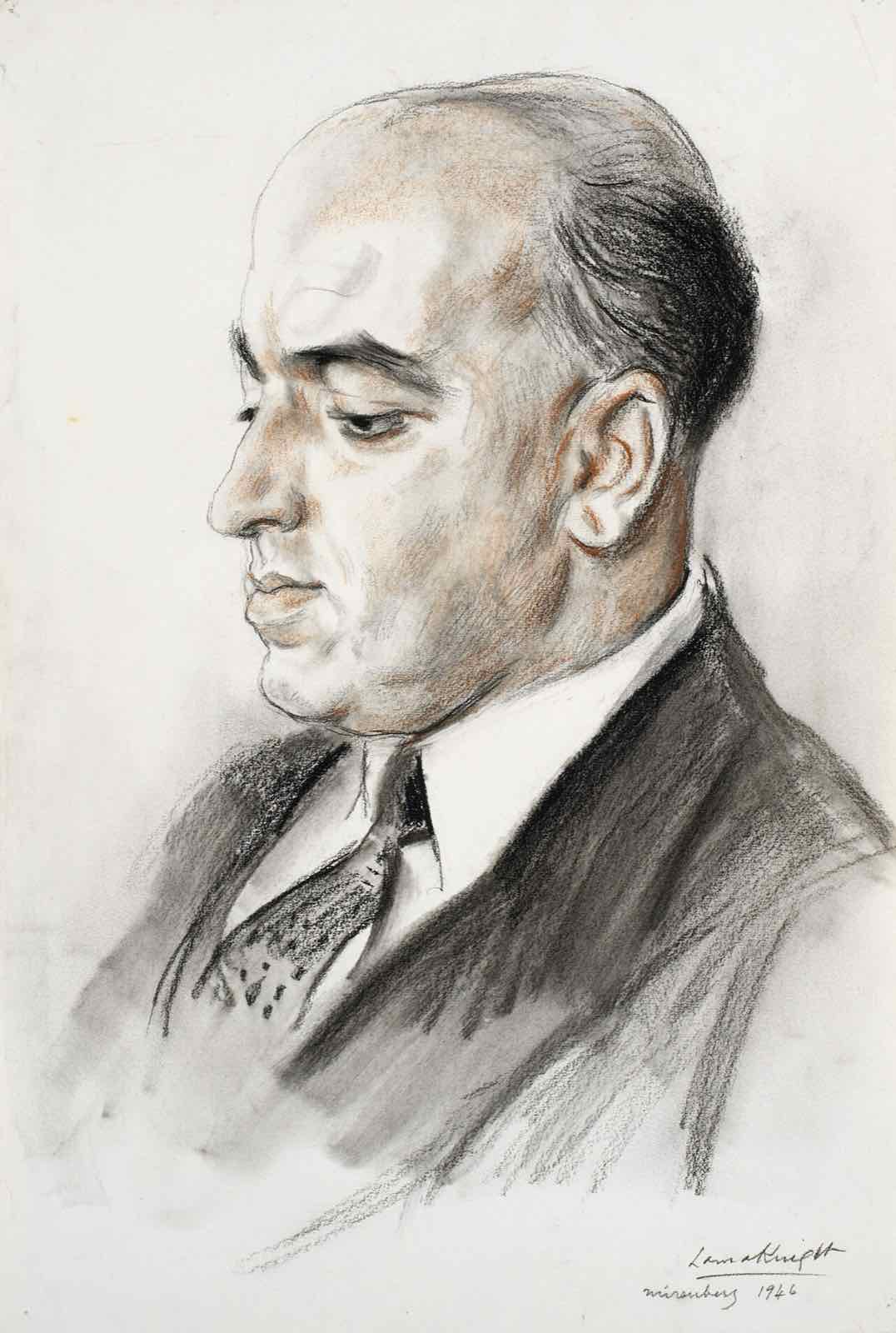
His name was David Maxwell Fyfe. Born in Edinburgh, he was the UK's deputy chief prosecutor at the Nuremberg trials, and he later chaired the Council of Europe's legal committee that drafted the agreement. That agreement is the European Convention on Human Rights, which today protects the basic rights of everyone in the UK. This chapter starts with the Convention, then looks at how UK law protects equality. Finally, it covers some acts that people elsewhere might call "private family matters", but which are crimes in the UK.
Old roots: from Magna Carta to the Bill of Rights
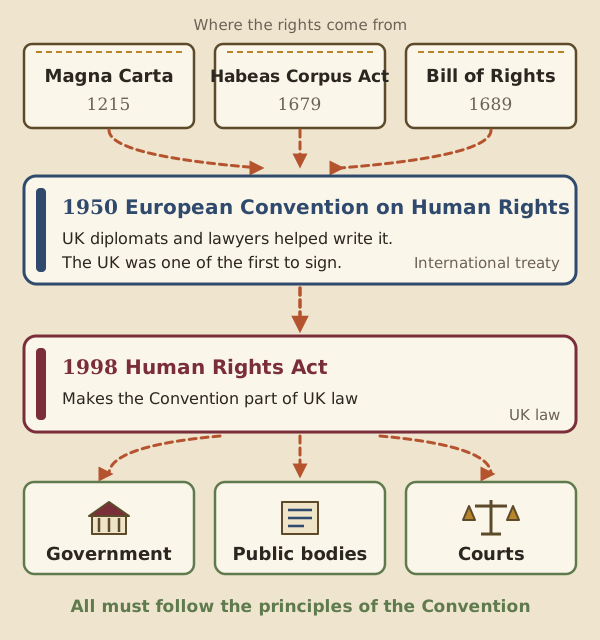
Respect for individual rights and basic freedoms has a long history in Britain, going back many hundreds of years. Three old documents stand out, and you met all of them in the history chapters:
1215Magna Carta: even the king must obey the law
1679The Habeas Corpus Act: nobody may be held prisoner unlawfully
1689The Bill of Rights: where Parliament's rights end and the monarch's power begins
1950The UK signs the European Convention on Human Rights
1998The Human Rights Act brings the Convention into UK law (in force from 2000)
These rights didn't appear overnight. They grew bit by bit over several centuries.
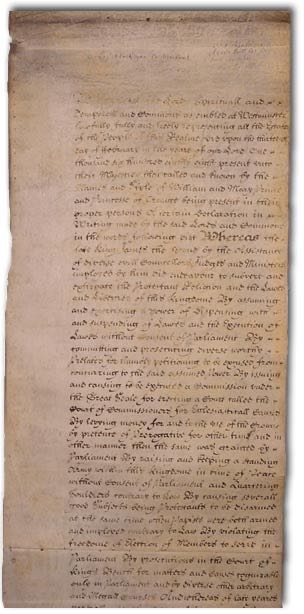
The original 1689 Bill of Rights, kept in the Parliamentary Archives.
UK Parliament, public domain, via The National Archives and Wikimedia Commons
Quiz
Which of the following statements is correct?
Rights in the UK have a long history, rooted in Magna Carta (1215), the Habeas Corpus Act (1679) and the Bill of Rights (1689). The Human Rights Act 1998 brought the European Convention on Human Rights into UK law; it was not where rights began.
The European Convention on Human Rights: drafted with British help
After the Second World War, the countries of Europe wanted to make sure such cruelty could never happen again. In 1949, ten western European countries signed a treaty in London that created the Council of Europe. One of its first big tasks was to write a convention to protect human rights.
Its full name is the Convention for the Protection of Human Rights and Fundamental Freedoms, but it is usually called the European Convention on Human Rights. British diplomats and lawyers played an important part in drafting it, and Maxwell Fyfe was one of them. In 1950, the UK was among the first countries to sign it.
The signing took place in Rome on 4 November 1950, but signing is only the first step: each country then has to "ratify" the treaty, formally approving it through its own procedures. The UK did so quickly, on 8 March 1951, under Clement Attlee's Labour government. The Convention came into force in September 1953, once enough countries had ratified it.
Maxwell Fyfe, drawn in 1946 during the Nuremberg trials by the British war artist Laura Knight.
Drawing by Laura Knight, Imperial War Museums (IWM ART LD 5863), public domain, via Wikimedia Commons
The Convention protects many rights. Here are seven of them:
The right to life
No torture
No slavery or forced labour
Liberty and security
A fair trial
Freedom of thought, conscience and religion
Freedom of expression (speech)
Quiz
In which year did the UK sign the European Convention on Human Rights?
It was signed in 1950. 1689 is the Bill of Rights, 1998 is the Human Rights Act that brought the Convention into UK law, and 1945 is the end of the Second World War. These years are easily confused, so questions often put them together.
Quiz
Which TWO rights are protected by the European Convention on Human Rights?
A fair trial, and freedom of thought, conscience and religion, are both among the seven rights listed above. A free house and a job for life are not rights protected by the Convention.
The Human Rights Act 1998: bringing the Convention home
Although the UK signed the Convention early, for a long time it was not part of the UK's own law. If people felt their rights had been broken, they often had to take their case all the way to the European Court of Human Rights in Strasbourg, France. That cost a lot of money and took a long time.
The Human Rights Act 1998 changed that by making the Convention part of UK law. Since then, the government, public bodies and the courts must all follow the principles of the Convention, and people can rely on these rights directly in UK courts.
When the government proposed the law in 1997, the paper explaining it was called Rights Brought Home: people would no longer need to travel all the way to Strasbourg. The Act was passed in 1998 but only came into force in October 2000; the time in between was used to train judges and public officials.
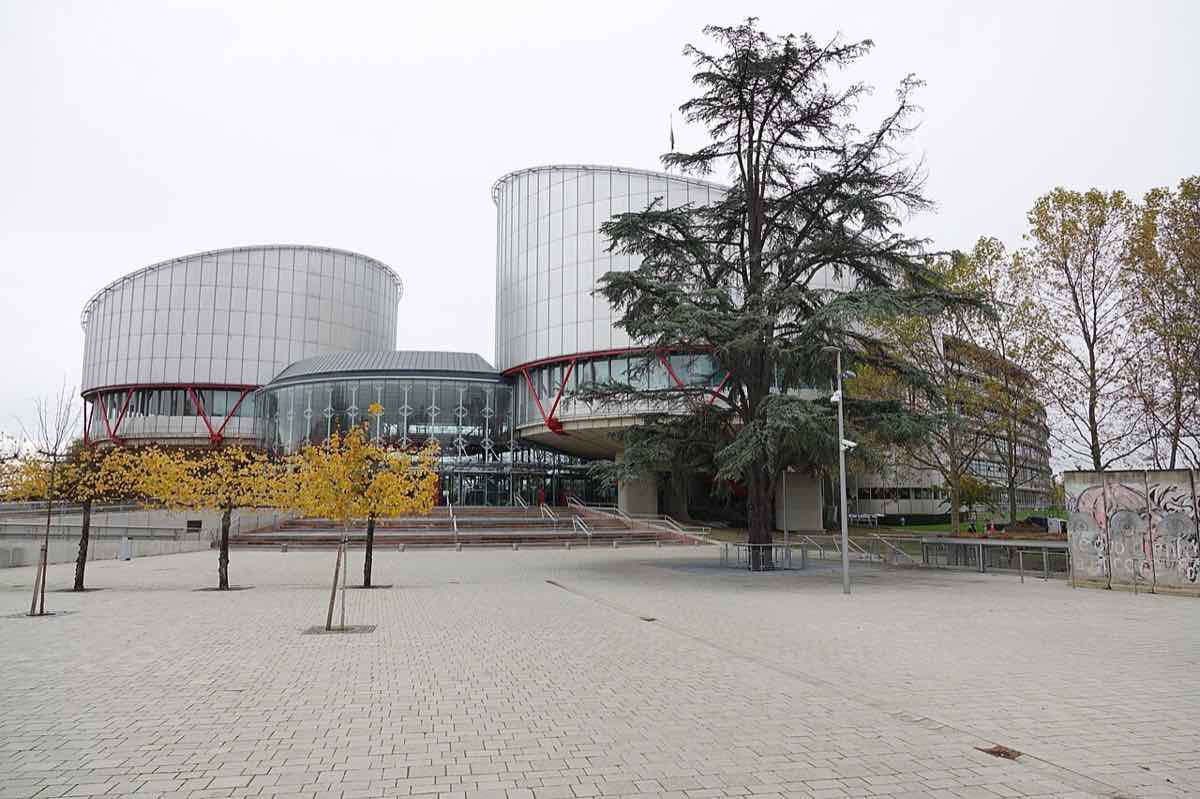
From old documents, to an international convention, to the UK's own law.The European Court of Human Rights in Strasbourg, opened in 1995. It was designed by the British architect Richard Rogers, who later also designed the Senedd building for the Welsh Assembly in Cardiff.
Photo: Gzen92, CC BY-SA 4.0, via Wikimedia Commons
A common mix-up is to think the Convention stopped applying after Brexit. It didn't. The Convention belongs to the Council of Europe, which is a separate organisation from the European Union. The UK left the EU in 2020 but is still a member of the Council of Europe, so the Convention and the Human Rights Act still apply. The previous chapter compares the two organisations in its section on international bodies.
Quiz
Is the statement below TRUE or FALSE?
The Human Rights Act 1998 made the European Convention on Human Rights part of UK law.
True. To remember: the Convention was signed in 1950 and became part of UK law through the 1998 Act. The government, public bodies and the courts must all follow it.
Equal opportunities: you can't be treated unfairly for who you are
At a job interview, a woman is asked, "When are you planning to have children?" A landlord hears someone's accent on the phone and says the room has already gone. In the UK, both of these could be unlawful discrimination.
UK law makes sure that, in every part of life and work, nobody is treated unfairly because of any of these:
Age
Disability
Sex
Pregnancy and maternity
Race
Religion or belief
Sexual orientation
Marital status
If you face discrimination, you can get advice from Citizens Advice, or from these organisations:
England & Wales
The Equality and Human Rights Commission
Scotland
The Equality and Human Rights Commission in Scotland, and the Scottish Human Rights Commission
Northern Ireland
The Equality Commission for Northern Ireland, and the Northern Ireland Human Rights Commission
Quiz
Which TWO of the following are reasons for which UK law says you must not be treated unfairly at work?
Age, and pregnancy and maternity, are both among the eight protected reasons. Exam results and a driving record relate to whether you can do a job, so an employer may reasonably take them into account; they are not protected reasons.
Domestic violence: a crime, even behind closed doors
In the UK, violence at home is not a "private family matter". Violence in the home is a serious crime.
Anyone who is violent towards their partner can be prosecuted, whether the violent person is a man or a woman, and whether the couple are married or living together.
A man who forces a woman to have sex can be charged with rape, and that includes her husband.
If you are suffering domestic violence, the sooner you get help, the better. A solicitor (a type of lawyer) or Citizens Advice can explain your options. Some areas have safe places to stay called refuges or shelters.
There is also a free phone number: the National Domestic Violence Freephone Helpline, on 0808 2000 247. It is open day and night, and if you can't get through, its voicemail lets you leave a message; the helpline has a website too. Another place to look is the website of the charity Women's Aid. And in an emergency, call the police straight away. They can also help you find somewhere safe to stay.
Quiz
Is the statement below TRUE or FALSE?
In the UK, a married man who forces his wife to have sex can be charged with rape.
True. Being married gives nobody the right to force their partner into sex. Under UK law, any man who forces a woman to have sex can be charged with rape, and that includes her husband.
Quiz
Is the statement below TRUE or FALSE?
In the UK, violence towards a partner is only a crime if the couple are married.
False. Married or living together, and whether the violent partner is a man or a woman, anyone who is violent towards a partner can be prosecuted.
Female genital mutilation (FGM): a crime in the UK
Female genital mutilation (FGM) is also known as "cutting" or "female circumcision". It is a long-standing tradition in some parts of the world, but it causes girls and women serious harm to body and mind that can last a lifetime.
FGM is against the law in the UK. Carrying out FGM is a criminal offence, and so is taking a girl or woman abroad for FGM.
Quiz
Which of the following statements is correct?
FGM is illegal in the UK in every case, even if the family agrees. Taking a girl or woman abroad to have it done is a criminal offence too.
Forced marriage: both people must want it
The UK's basic rule for marriage is simple: both people must agree to it fully and freely.
An arranged marriage is one where the families suggest and organise the match, but both people agree to marry. This is acceptable in the UK.
A forced marriage is one where one or both people have not agreed, or are not able to agree. Forcing someone to marry is a criminal offence.
Courts can issue Forced Marriage Protection Orders to protect people who are at risk of being forced into marriage, or who are already in a forced marriage. The person themselves, or someone acting for them, can apply.
Quiz
Who can apply to a court for a Forced Marriage Protection Order?
The person who may be forced to marry can apply, or someone can apply for them. Protection orders began in England, Wales and Northern Ireland in 2008, and in Scotland in November 2011.
Chapter summary
Roots of rights
Magna Carta, the Habeas Corpus Act and the 1689 Bill of Rights; rights developed gradually
1950 ECHR
European Convention on Human Rights: British diplomats and lawyers helped draft it; the UK was one of the first to sign
ECHR principles
Life; no torture; no slavery or forced labour; liberty and security; a fair trial; thought, conscience and religion; freedom of expression
Human Rights Act 1998
Made the Convention part of UK law; the government, public bodies and courts must follow it
Equal opportunities
No unfair treatment because of race, sex, age, disability, religion or belief, sexual orientation, marital status, or pregnancy and maternity
Where to get help
Citizens Advice; the Equality and Human Rights Commission in England and Wales; Scotland also has the Scottish Human Rights Commission; Northern Ireland has an Equality Commission and a Human Rights Commission
Domestic violence
A serious crime; married or not, man or woman, the abuser can be prosecuted; a husband can be charged with rape; refuges; 24-hour helpline 0808 2000 247 (with voicemail); Women's Aid website; in an emergency, the police
FGM
Illegal; carrying it out, or taking someone abroad for it, is a criminal offence
Forced marriage
Arranged marriage with both people's agreement is fine; forcing someone to marry is a crime; protection orders from 2008 (England, Wales, NI) and November 2011 (Scotland); breaking one: up to 2 years
 The right to life
 No torture
 No slavery or forced labour
 Liberty and security
 A fair trial
 Freedom of thought, conscience and religion
 Freedom of expression (speech)