1950s–1990sOften tested
British inventions after 1945
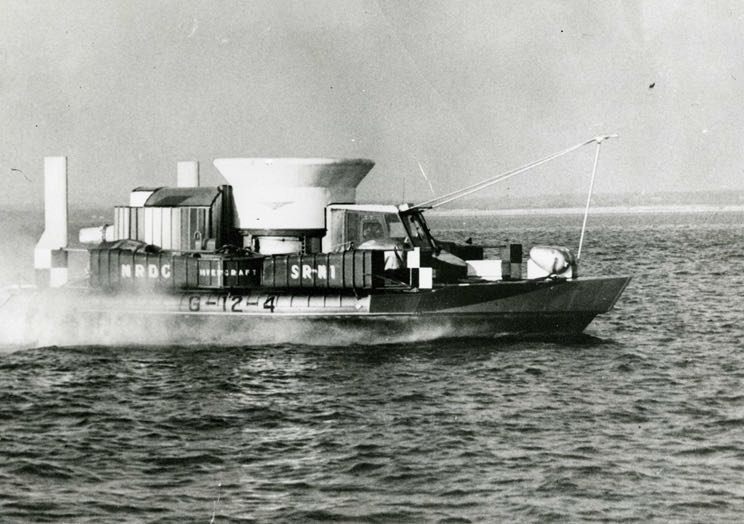
 Hovercraft
Cockerell · 1950s
 Concorde
Britain and France · 1969
 Structure of DNA
Crick · 1953
 Cash machine
Goodfellow · 1960s
 IVF ("test-tube" baby)
Edwards and Steptoe · 1978
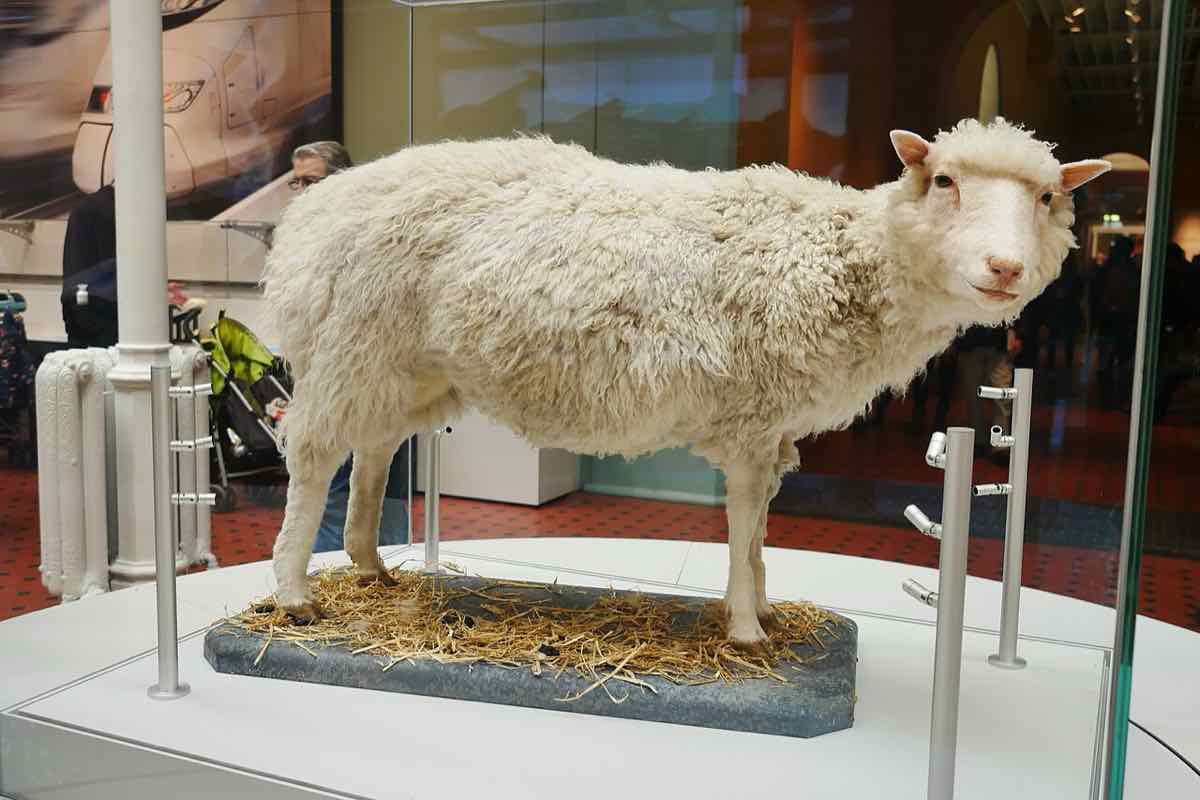
 Dolly the sheep
Wilmut and Campbell · 1996
 MRI scanner
Mansfield
 World Wide Web
Berners-Lee · 1990
- The hovercraft: invented in the 1950s by Sir Christopher Cockerell.
- The structure of DNA: worked out in 1953 by researchers at universities in London and Cambridge. Francis Crick was one of the people given the Nobel Prize for it. The discovery has been very important for medicine and for solving crimes.
- The radio telescope: Sir Bernard Lovell moved from working on radar into astronomy. At Jodrell Bank in Cheshire he built a radio telescope that was the biggest in the world for many years, and it is still in use.
- Concorde: built by Britain and France together. It first flew in 1969, started carrying passengers in 1976 and was taken out of service in 2003.
- The Harrier jump jet: a military plane that can take off straight up, designed and developed in the UK.
- The ATM (cash machine, or "cashpoint"): invented by James Goodfellow in the 1960s. Barclays Bank opened the first one in Enfield, north London, in 1967. The first person to take money out of it was the comedy actor Reg Varney.
- IVF (in vitro fertilisation): pioneered in Britain by Sir Robert Edwards and Patrick Steptoe. The world's first "test-tube baby" was born in Oldham, Lancashire, in 1978. She was Louise Brown, born on 25 July 1978.
- Dolly the sheep: in 1996 a team led by Sir Ian Wilmut and Keith Campbell became the first to clone a mammal.
- The MRI scanner (magnetic resonance imaging): Sir Peter Mansfield was one of its inventors. It lets doctors see inside the body without an operation.
- The World Wide Web: invented by Sir Tim Berners-Lee. The first information was sent over it on 25 December 1990.
Quiz
Who invented the hovercraft in the 1950s?
Cockerell invented the hovercraft. Whittle is the jet engine, Baird is television and Berners-Lee is the World Wide Web. These four often turn up in the same question.
Quiz
Is the statement below TRUE or FALSE? In 1978 the world's first IVF ('test-tube') baby arrived in Oldham, Lancashire.
True. IVF was pioneered in Britain by Robert Edwards and Patrick Steptoe. Don't confuse it with Dolly the sheep in 1996.
Quiz
Which TWO of the following statements are correct?
Goodfellow invented the cash machine; the jet engine was Whittle. Crick worked on the structure of DNA; the hovercraft was Cockerell.
Quiz
In which year did a team led by Sir Ian Wilmut and Keith Campbell clone Dolly the sheep, the first mammal to be cloned?
Dolly the sheep was born in 1996. The other years all belong to inventions in the same list: Concorde first flew in 1969, the first test-tube baby was born in 1978, and Berners-Lee first sent information over the World Wide Web in 1990.
Quiz
Is the statement below TRUE or FALSE? Concorde, the supersonic passenger aircraft, was developed jointly by Britain and the United States.
False. Concorde was developed by Britain and France together. It first flew in 1969, started carrying passengers in 1976 and was retired in 2003. The plane designed and developed in the UK alone was the Harrier jump jet, which can take off straight up.