Often tested
31 October: Halloween
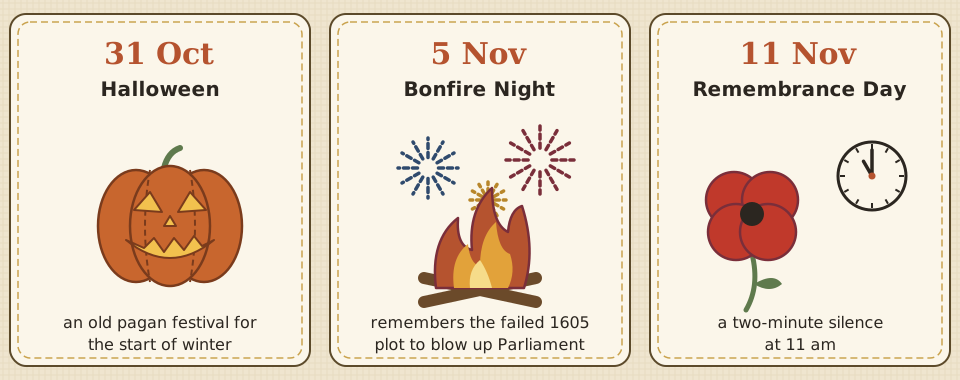
Halloween is a very old festival. It grew out of a pagan festival (from before Christianity) held at the start of winter. Young people often dress up in scary costumes and go from door to door for trick or treat: people hand out sweets (treats) so that the children won't play tricks on them. Many people also hollow out a pumpkin, carve a face in it to make a lantern, and put a candle inside.
The pumpkin lantern used to be a turnip lantern. In Scotland and Ireland, people hollowed out turnips and carved them into lanterns. Emigrants took the custom to America, where they switched to pumpkins, which are much easier to carve, and the pumpkin version later came back across the Atlantic to Britain.
5 November: Bonfire Night
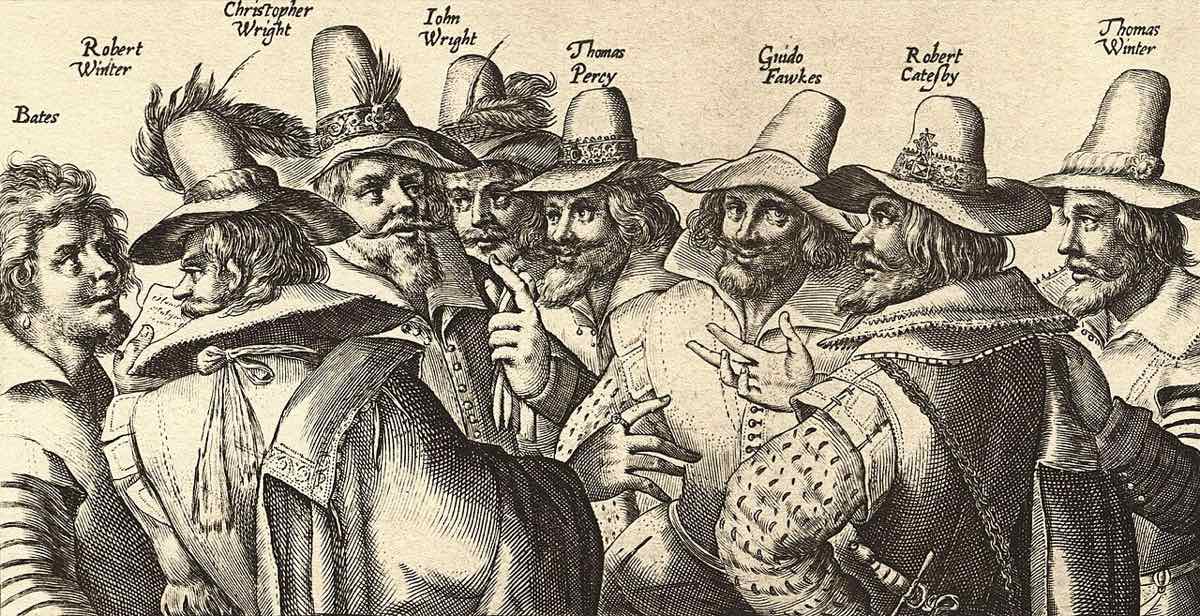
On Bonfire Night (also called Guy Fawkes Night), people across Great Britain let off fireworks in their gardens or go to see big public displays. It all goes back to 1605. That year a group of Catholics led by Guy Fawkes plotted to blow up the Houses of Parliament and kill the Protestant king. Their plan failed. The king was James I, whom you met in The Stuarts.
The straw figure burned on the bonfire stands for Guy Fawkes and is called a "guy", and the everyday English word "guy", meaning a man, is said to come from it. British children grow up with a rhyme that begins "Remember, remember the fifth of November". Even today, before the monarch opens a new session of Parliament, guards with lanterns search the cellars of the Houses of Parliament in case anyone has hidden explosives there again, though these days it is mainly a tradition.
11 November: Remembrance Day
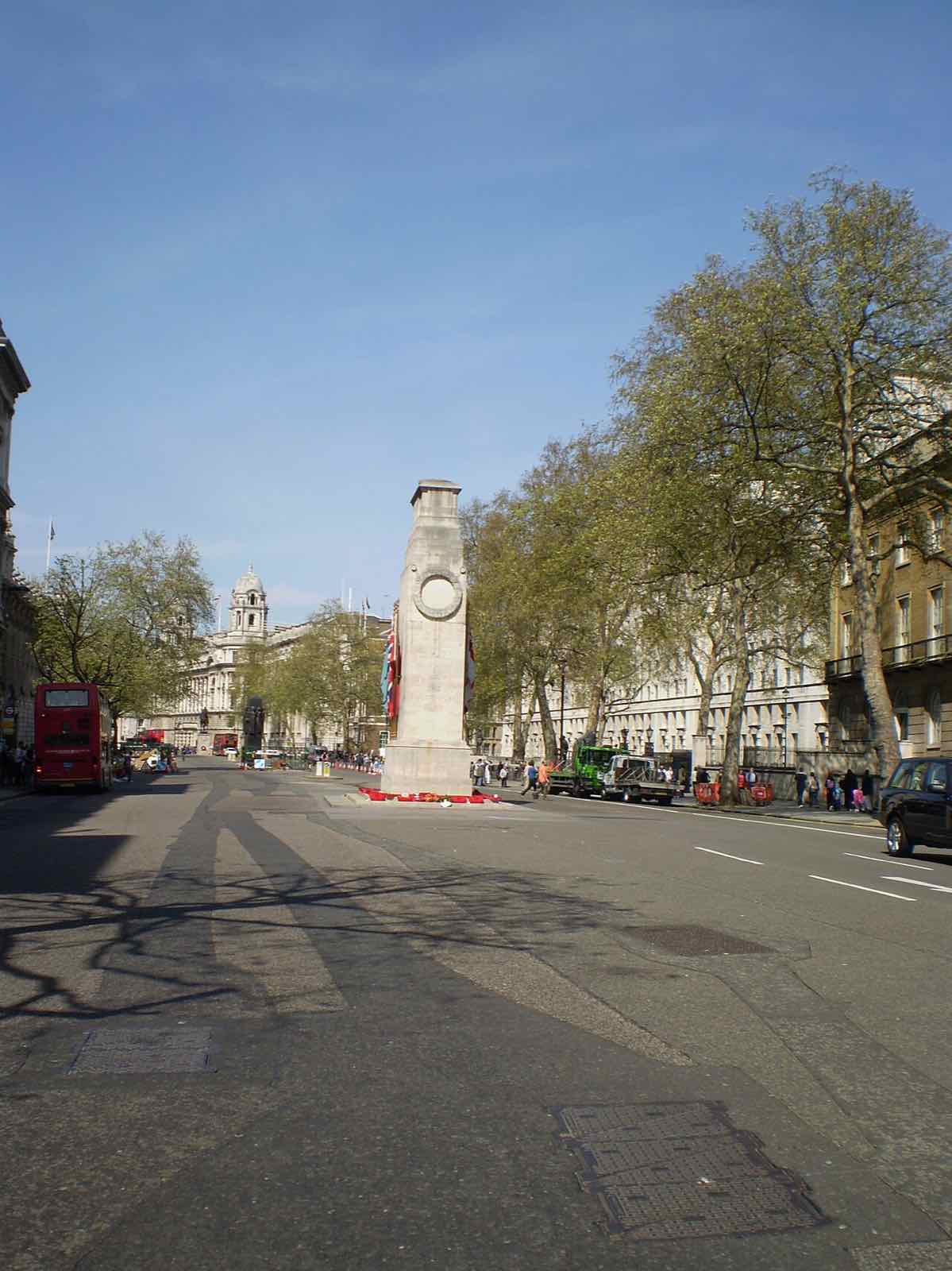
Remembrance Day honours the men and women who were killed fighting on the side of the UK and its allies. At first it was a day to remember those who died in the First World War, which came to an end on 11 November 1918. People wear a poppy, the red flower that grew all over the battlefields in that war. Everyone stops for a two-minute silence at 11 am, and wreaths of poppies are placed at the Cenotaph, the war memorial in Whitehall in London.
The poppy became a symbol of remembrance through a poem. In 1915 John McCrae, a Canadian army doctor, wrote In Flanders Fields on the battlefield in Belgium, describing red poppies blooming among the graves. The Royal British Legion has sold poppies to raise money since 1921. Look closely and you'll see that Scottish poppies are different from English ones: they have four petals and no leaf.
Quiz
Which of the following statements is correct?
Bonfire Night (5 November) remembers the failed Gunpowder Plot of 1605. The First World War ended on 11 November, which is Remembrance Day. The two dates are only six days apart, so don't mix them up.
Quiz
Which TWO of these happen on Remembrance Day?
Poppies and the two-minute silence at 11 am belong to Remembrance Day. Carving pumpkin lanterns is a Halloween custom, and pancake races take place on Shrove Tuesday.