Christmas and Boxing Day
On 25 December, Christmas Day marks the birth of Jesus Christ, and everyone gets the day off as a public holiday. Lots of Christians attend a church service on Christmas Eve (24 December) or on the day itself.
Christmas in Britain is very traditional. Most families stay at home and sit down to a special meal, often with roast turkey, Christmas pudding and mince pies. People give presents, send Christmas cards and decorate their homes, and many put up a Christmas tree indoors and decorate it.
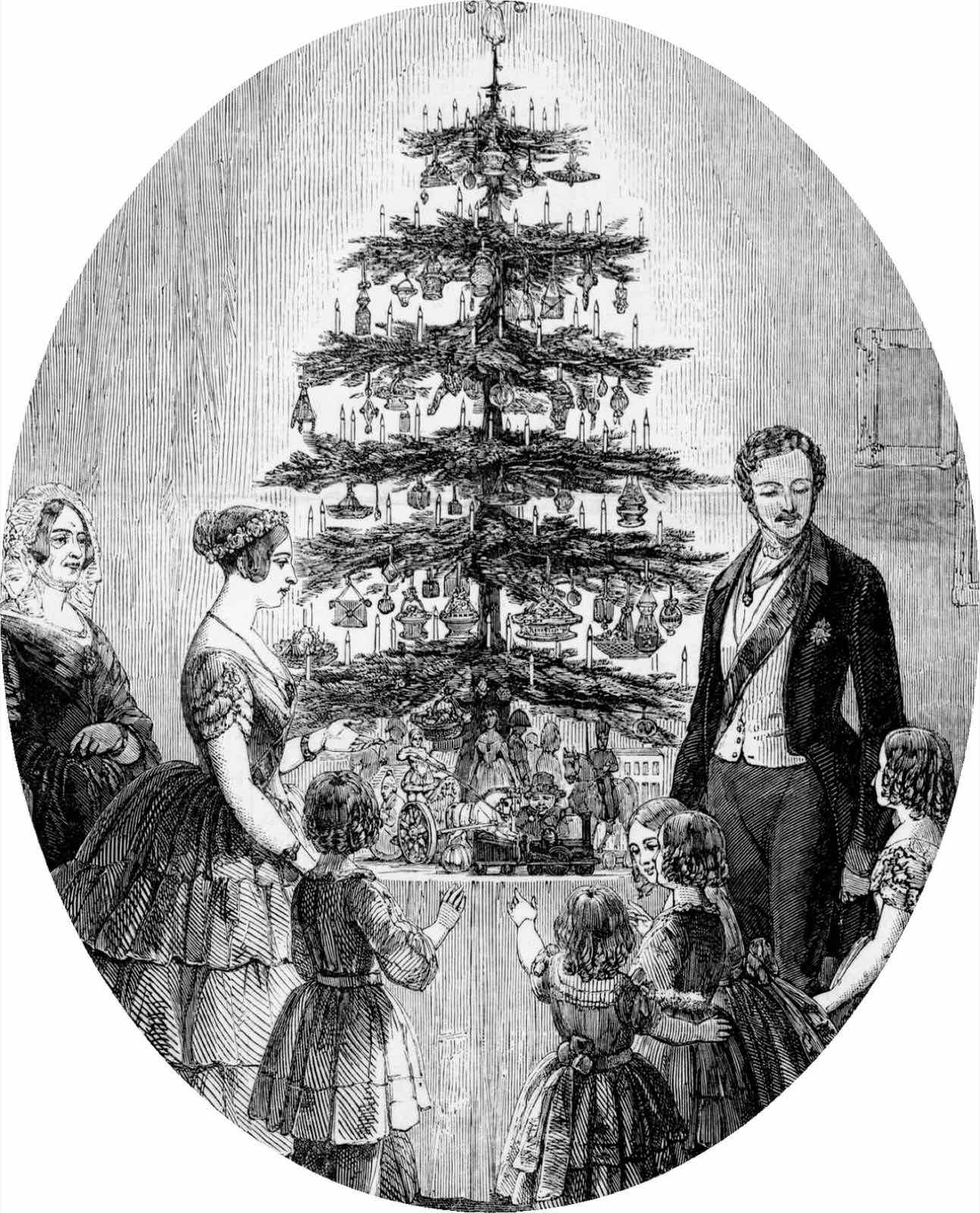
Some of these traditions are younger, or older, than they look. The Christmas tree is a German custom: as early as 1800, Queen Charlotte, the German wife of George III, had one at Windsor. What really made it catch on was the 1848 engraving below. When people saw Queen Victoria and her German-born husband, Prince Albert, celebrating round a tree with their children, they wanted one too. Mince pies, meanwhile, really did contain meat in the past; today the filling is mostly dried fruit, such as raisins, mixed with spices.
For children, Christmas is the most exciting day of the year. The youngest ones believe that Father Christmas, also called Santa Claus, comes in the night before Christmas Day and leaves them presents.
The next day, 26 December, is Boxing Day, and it is also a public holiday.
Despite the name, Boxing Day has nothing to do with the sport. The name is usually thought to come from the "Christmas box": in the past, on the day after Christmas, employers gave servants and delivery workers a box with money or a gift inside. But nobody is completely sure where the name comes from.
Quiz
Which TWO of these foods are traditionally eaten as part of Christmas dinner in the UK?
Christmas dinner usually means roast turkey, Christmas pudding and mince pies. Pancakes are eaten on Shrove Tuesday, and Easter eggs are an Easter present.