The UK is divided into many parliamentary areas called constituencies. Each one elects a Member of Parliament (MP), and together the MPs make up the House of Commons.
Parliament has two Houses. The Commons is seen as the more important one, because its members are chosen by the people in democratic elections. The Prime Minister and almost every member of the Cabinet sit in the Commons. Each MP looks after one constituency, which is a small area of the country.
An MP's job has four parts:
Speaking for everyone in the constituency
Helping to make new laws
Checking and commenting on the government
Debating big national issues
Quiz
Which TWO of the following are responsibilities of an MP?
An MP has four jobs: representing everyone in the constituency (not only the people who voted for them), helping to make laws, keeping a check on the government, and debating national issues. Appointing judges and commanding the armed forces are not part of an MP's work.
The House of Lords: the House with no elections
The other House of Parliament is the House of Lords. Its members are called peers. Voters do not elect them, and they do not represent a constituency. Over the last 50 years or so, what the Lords does and who sits there have changed a great deal:
Before 1958Every peer was a hereditary peer (someone who inherited a title from their family), a senior judge or a bishop of the Church of England
1958The Prime Minister can now put forward life peers: their title lasts for their own lifetime and can't be passed on to their children
1999Hereditary peers no longer get a seat automatically; instead they elect a small number of themselves to sit in the House
Life peers have usually done important work in politics, business, law or another profession. The monarch appoints them, acting on the Prime Minister's advice. The leaders of the other main parties can also put names forward, and people with no party are nominated by an independent Appointments Commission.
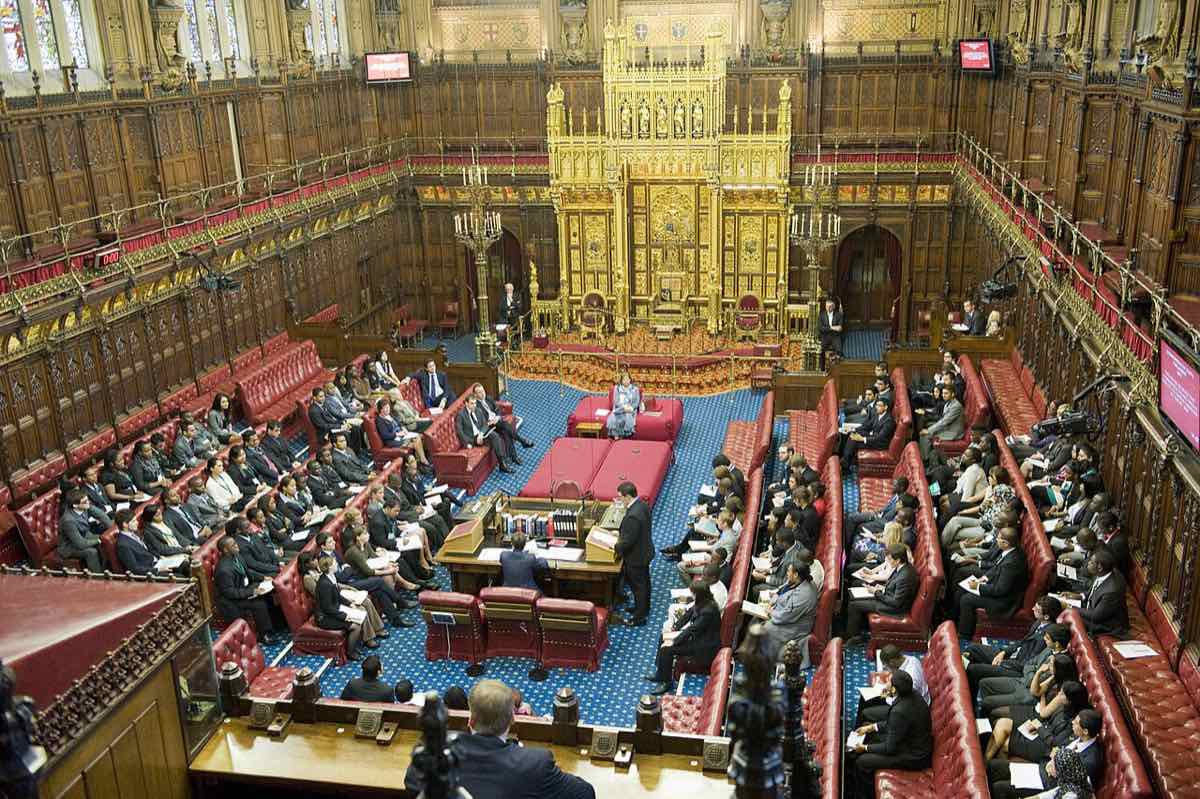
The House of Lords is famous for its red leather benches (in the Commons they are green). The golden throne at the far end is where the monarch sits each year to open Parliament.
UK Government, Open Government Licence v3, via Wikimedia Commons
So what does the House of Lords do?
It is normally more independent of the government than the Commons.
It can suggest changes to laws or propose new ones, which MPs then discuss.
It looks closely at laws passed by the Commons to make sure they will actually work.
It keeps an eye on the government to check that it is working in the public's best interest.
Some peers are experts in a particular field, and that knowledge helps when laws are being made and checked.
If the two Houses disagree, the Commons has the power to overrule the Lords, although this rarely happens.
Quiz
Since which year has the Prime Minister had the power to nominate life peers?
Life peers began in 1958. 1999 is when hereditary peers lost their automatic seats; 1928 is when men and women could both vote at 21; 1969 is when the voting age came down to 18. These four years are easy to mix up, and they often appear in the same question.
 Speaking for everyone in the constituency
 Helping to make new laws
 Checking and commenting on the government
 Debating big national issues