1845–late 19th century
The Irish famine and Home Rule
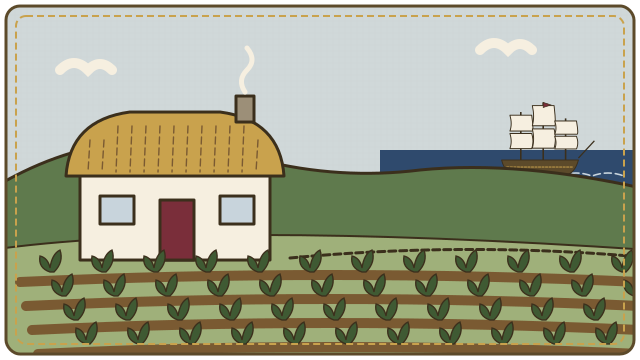
In the 19th century, just when the British Empire was at its wealthiest, conditions in Ireland were far worse than elsewhere in the UK. Two-thirds of the people still lived off farming, often on very small plots of land, and many depended mainly on potatoes for food.
In the middle of the 19th century the potato harvest failed, and a terrible famine followed: the potato famine. About a million people died from disease and hunger, and another one and a half million left Ireland. Some went to the United States and some came to England. By 1861 there were large Irish communities in cities such as Liverpool, London, Manchester and Glasgow.
One crop could do so much damage because almost all the potatoes grown by Ireland's poor were the same variety, so when a plant disease called blight arrived, whole fields rotted at once. Even more painful, Ireland went on exporting food during the famine. To this day, Ireland's population has not returned to what it was before the famine.
During the 19th century the Irish nationalist movement grew stronger:
- Some, such as the Fenians, wanted Ireland to be completely independent.
- Others, such as Charles Stuart Parnell, wanted Home Rule: Ireland would stay in the UK but have its own parliament.
Quiz
Is the statement below TRUE or FALSE? In the middle of the 19th century, Ireland suffered a famine because its wheat harvest failed.
False. It was the potato crop that failed. Many people in Ireland relied on potatoes for much of their food, so when the crop failed about a million people died from disease and starvation, and about a million and a half left the country.
Quiz
Is the statement below TRUE or FALSE? Supporters of Home Rule, such as Charles Stuart Parnell, wanted Ireland to become completely independent from the UK.
Home Rule meant staying in the UK, but with Ireland's own parliament. It was the Fenians who wanted full independence.