1840s–1850s
Workshop of the world: free trade, the Crystal Palace and Brunel
During the Victorian Age, the long reign of Queen Victoria, Britain was still a great trading nation. The government began to push for free trade and got rid of many taxes on imports. One example was the repeal of the Corn Laws in 1846. These laws had kept cheap foreign grain out of the country. After the reforms, raw materials could be imported more cheaply, which helped British industry grow.
In 1847 a new law said women and children could work no more than 10 hours a day. Housing for workers began to improve, and so did conditions in factories. Transport got better too, so it was easier to move goods and people around the country.
In the 19th century Britain led the world in industry, producing more than half of all the world's iron, coal and cotton cloth. It also became a centre for financial services such as insurance and banking.
The Great Exhibition of 1851
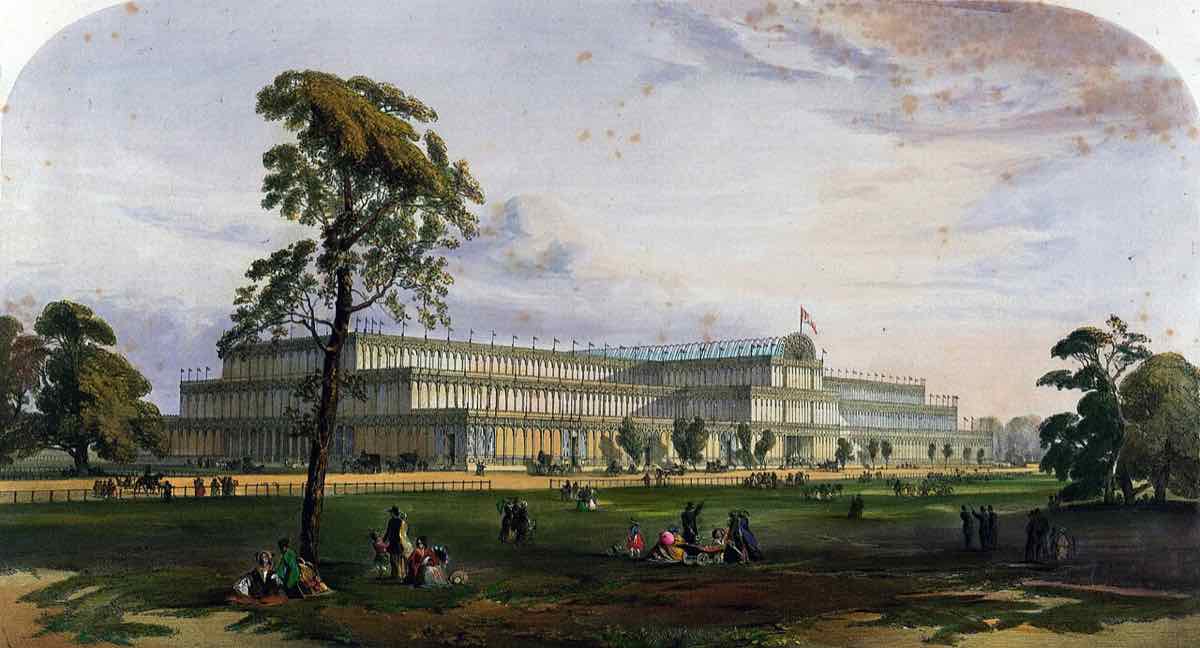
In 1851 the Great Exhibition opened in the Crystal Palace in Hyde Park, London. On show was everything from enormous machines to things made by hand. Countries from every part of the world took part, but most of the objects on show were made in Britain.
Brunel: the engineer of railways, bridges and ships
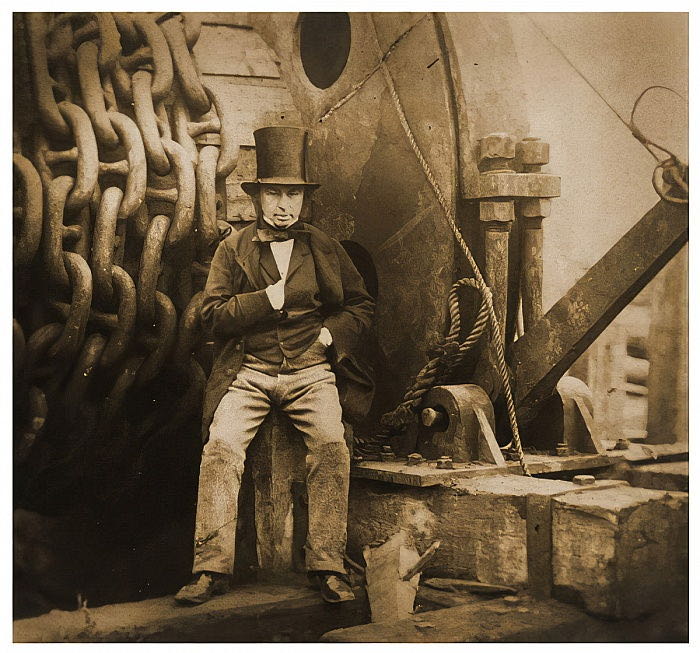
Isambard Kingdom Brunel (1806–1859) came from Portsmouth, England. As an engineer he built tunnels, bridges, railways and ships. He was in charge of building the Great Western Railway, whose trains ran from Paddington Station in London to Wales, the West Midlands and the south-west of England. You can still cross many of his bridges today, such as the Clifton Suspension Bridge over the Avon Gorge.
Brunel's father was an engineer from France. Brunel designed the Clifton bridge when he was young, but work stopped for years when the money ran out, and it was only finished in 1864, five years after his death. In 2002, when the BBC asked the public to vote for the "100 Greatest Britons", Brunel came second, behind Churchill.
Quiz
In 1847, a new law set a maximum working day for women and children. How long was it?
The 1847 law limited women and children to 10 hours of work a day. Before that, there were no laws to protect workers, and children were often treated just like adults.
Quiz
Which TWO statements about free trade in the Victorian period are correct?
The government promoted free trade by scrapping many import taxes. In 1846 it repealed the Corn Laws, which had stopped cheap grain coming in. A turns this round: 1846 is when the Corn Laws ended, not when they began. C is wrong too: cheaper imported raw materials helped British industry grow.
Quiz
Which engineer was responsible for building the Great Western Railway?
Brunel's Great Western Railway linked London's Paddington Station with Wales, the West Midlands and the south-west. George Stephenson and his son Robert pioneered the railway engine, Arkwright developed spinning mills, and Wren designed St Paul's Cathedral after the Great Fire of 1666.
Quiz
Where was the Great Exhibition of 1851 held?
The Great Exhibition was held in the Crystal Palace, built specially for it in Hyde Park. Westminster Abbey is where monarchs are crowned, Trafalgar Square has Nelson's Column, and the Tower of London is a medieval castle.