Into the countryside: national parks and the National Trust
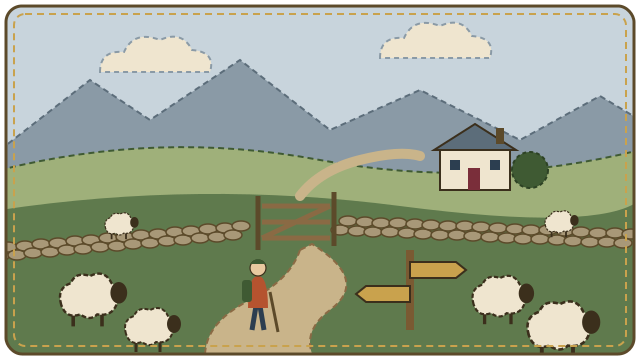
The British countryside is criss-crossed by public footpaths, and it is also great for mountain biking, climbing and hill walking. England, Wales and Scotland have 15 national parks between them. Each one is an area of protected countryside that anyone can visit, and where people also live and work and help to care for the landscape. That makes them different from national parks in many other countries, which are protected but have no people living in them.
The UK also has a huge number of museums, from tiny local collections to great national ones. Most famous sights around the country are open to visitors, usually for a fee.
A lot of countryside and many historic places are looked after and kept open by two charities:
- The National Trust, which covers England, Wales and Northern Ireland.
- The National Trust for Scotland, which covers Scotland.
They protect important buildings, coastline and countryside. The National Trust was started in 1895 by three volunteers, and today it relies on the help of more than 61,000 volunteers.
Those three founders were the social reformer Octavia Hill, the lawyer Sir Robert Hunter and the clergyman Hardwicke Rawnsley. Rawnsley lived in the Lake District, and his friend Beatrix Potter, the author of the Peter Rabbit books, later bought many farms there and left them all to the National Trust when she died.
Quiz
How many national parks are there in England, Wales and Scotland?
There are 15. A national park is an area of protected countryside that everyone can visit, and people also live and work there and help to look after the landscape.
Quiz
Is the statement below TRUE or FALSE? Three volunteers started the National Trust in 1895, and it now has more than 61,000 volunteers.
True. The National Trust is a charity that protects important buildings, coastline and countryside in England, Wales and Northern Ireland. In Scotland, a separate charity, the National Trust for Scotland, does the same job.