1660s–1680s
The Royal Society and Newton
Charles II, the king restored in 1660, was very interested in science. In his reign the Royal Society was founded to encourage "natural knowledge", meaning the study of the natural world. No other scientific society in the world has existed for longer: it is the oldest one still going. Two of its early members were Edmond Halley, who worked out when a famous comet would come back (it is named Halley's Comet after him), and Sir Isaac Newton.
This is the same comet that was stitched into the Bayeux Tapestry in 1066. Halley calculated that it came back roughly every 76 years and predicted it would return in 1758, but he died in 1742, so he never saw it. On Christmas Day 1758 the comet really did come back, and it was named after him.
Newton (1643–1727) came from Lincolnshire in eastern England. He first got interested in science as a student at Cambridge University. His best-known book is the Philosophiae Naturalis Principia Mathematica ("Mathematical Principles of Natural Philosophy"). In it he explained that gravity works in the same way everywhere in the universe. He also discovered that white light contains all the colours of the rainbow.
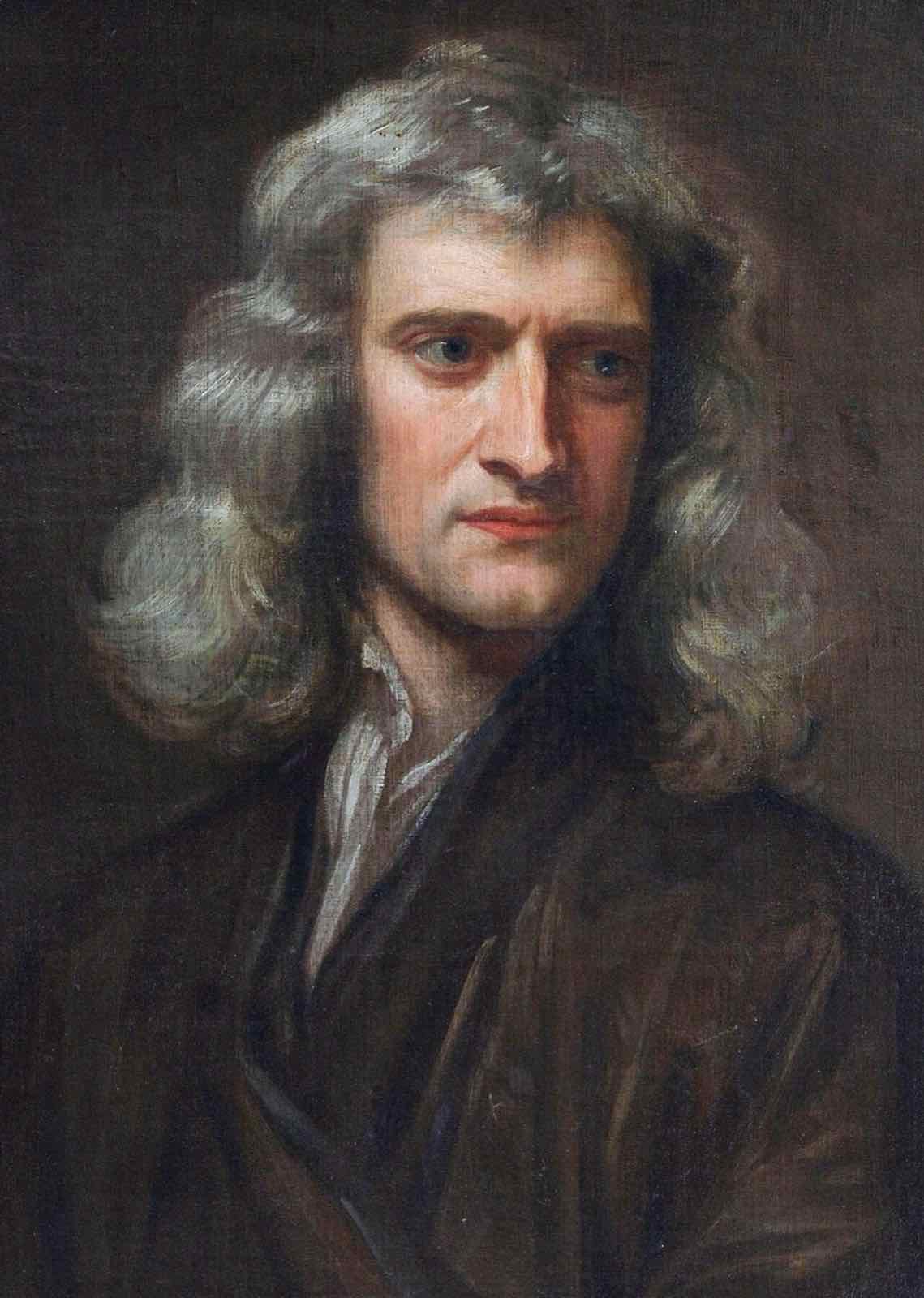
Newton told the apple story to a friend himself, when he was an old man: he was sitting in the garden of his family home, saw an apple fall, and began to wonder why apples always fall straight down. The part about it hitting him on the head was added later. A descendant of that apple tree still grows by the gate of Trinity College, Cambridge.
As for Charles II, the king who backed the Royal Society, he had no legitimate children. When he died in 1685, the crown passed to his brother.
Quiz
Which Lincolnshire-born scientist explained that gravity works throughout the universe?
Newton. Halley was also an early member of the Royal Society, but he is famous for predicting a comet's return. Darwin (evolution) and Fleming (penicillin) were scientists of later times.