1941–1944
From Pearl Harbor to the Normandy landings
During the Second World War, while Britain was defending itself at home, its forces were also fighting the Axis powers of Germany, Italy and Japan in many other parts of the world. In Asia, Japan defeated the British at Singapore and then occupied Burma, which put India in danger.
In 1941, two events changed the course of the war:
- In December, Japan bombed the US naval base at Pearl Harbor, and the United States joined the war.
- In the same year, Hitler launched the biggest invasion in history by attacking the Soviet Union. Both sides lost huge numbers of people, and in the end the Soviets pushed the Germans back. This was a turning point in the war.
Little by little, the Allies got the upper hand, with important victories in North Africa and Italy. Germany's heavy losses in the Soviet Union, together with American support, finally made the Allies strong enough to take on Hitler's armies in western Europe.
D-Day: the Normandy landings
On 6 June 1944, Allied troops landed in Normandy in France, a day usually known as D-Day. After winning on the Normandy beaches, they fought their way across France and finally into Germany.
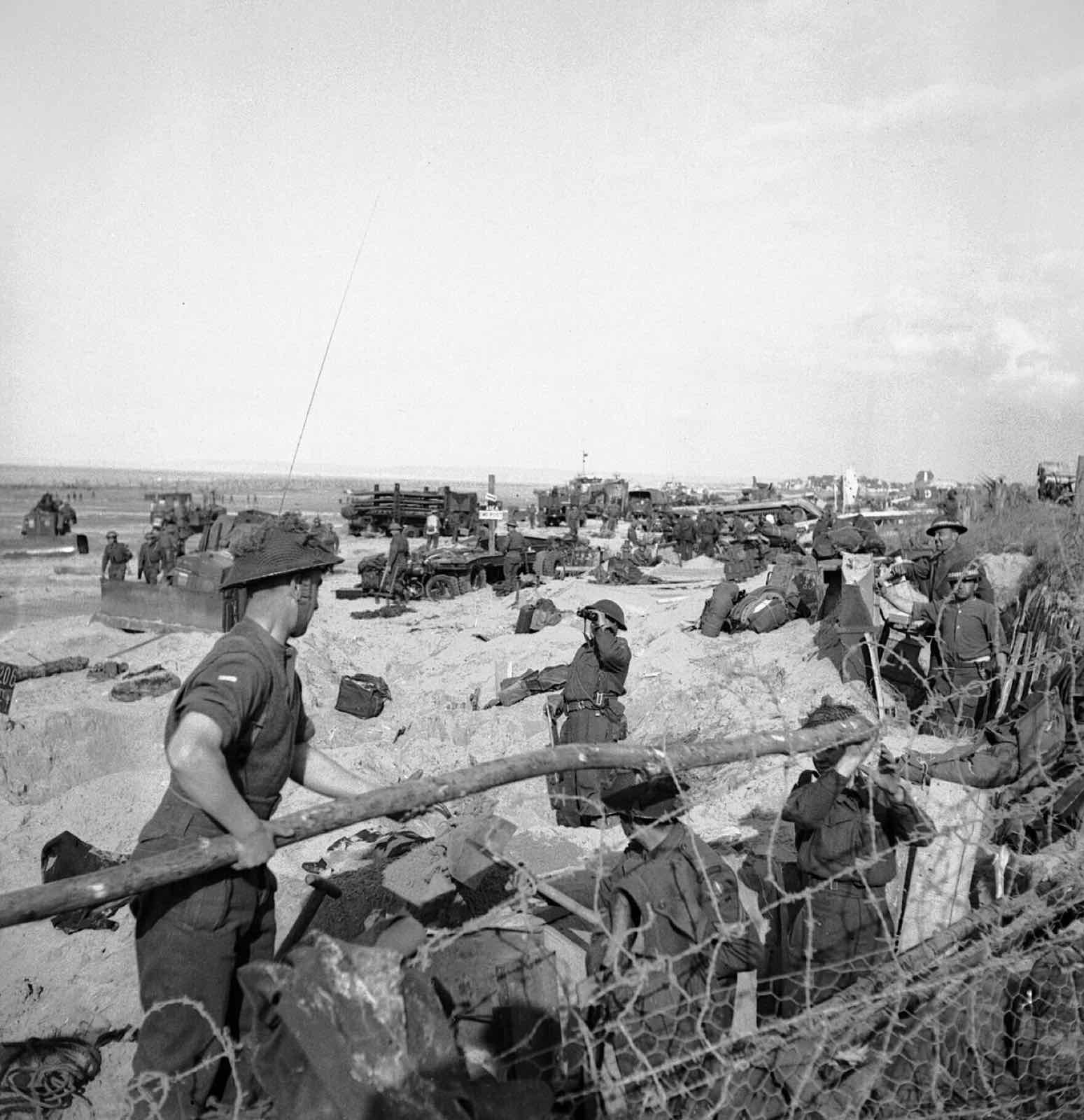
The "D" does not stand for anything special: it simply means "day". The military used "D-Day" for the day an operation begins, with D-1 for the day before and D+1 for the day after, so a change of date did not mean rewriting the whole plan. That mattered here, because the landings were first planned for 5 June and bad weather put them back by a day. More than 150,000 Allied soldiers landed on five beaches: Utah and Omaha (American), Gold and Sword (British) and Juno (Canadian).
Quiz
On what date did allied forces land in Normandy, in what is often called D-Day?
6 June 1944. The other three dates also come from the stories of the two world wars: 11 November 1918 is the end of the First World War, 1 July 1916 is the first day of the Somme, and 8 May 1945 is VE Day (Victory in Europe Day).