1933–1939
Hitler and the road to war
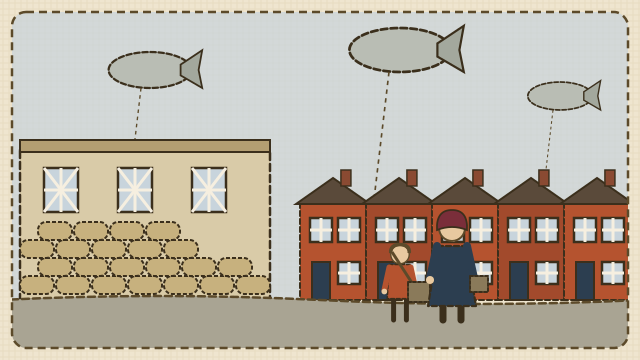
The Great Depression that began in 1929 hit Germany especially hard, and many desperate voters there turned to extreme parties. In 1933 Adolf Hitler took power in Germany. He thought the terms the Allies had forced on Germany after the First World War were unfair, and he wanted to win more land for Germans. He began to tear up and renegotiate treaties, build up Germany's weapons, and try out its military strength on neighbouring countries. At first the British government did everything it could to avoid another war.
In 1939 Hitler invaded Poland. To stop him going any further, Britain and France declared war on Germany. The British king at this time was George VI, who had come to the throne in 1936.
At the start, the war was between the Axis powers and the Allies. The Axis was made up of Fascist Germany, Italy and the Empire of Japan. The Allies included the UK, France and Poland, along with Australia, Canada, New Zealand and the Union of South Africa. (For a chart of the two sides, see "The First World War begins: one shot and two rival camps".)
Quiz
Which TWO statements about how the Second World War began are correct?
Hitler's invasion of Poland in 1939 was the turning point: Britain and France then declared war on Germany to stop him going any further. Hitler took power in 1933, but for years after that the British government tried to avoid another war. The German advance through France came in 1940, when the war had already begun.