1580s–1603Often tested
The Elizabethan age: Shakespeare and the New World
Elizabeth I left behind much more than the victory over the Spanish Armada in 1588. The greatest gift of the Elizabethan period to later generations was its poetry and drama, above all the plays and poems of William Shakespeare (1564–1616).
Shakespeare was born in Stratford-upon-Avon. He was both a playwright (someone who writes plays) and an actor, and he wrote a great many plays and poems. He put important moments from history on stage, but he didn't write only about kings and queens: he was among the first playwrights to show ordinary English men and women. Many people think he is the greatest playwright who ever lived. He also left a deep mark on the English language and invented lots of words we still use today.
Among his best-known plays are Hamlet, Macbeth, Romeo and Juliet and A Midsummer Night's Dream.
Shakespeare's acting company built the Globe Theatre on the south bank of the Thames in London. In 1613, during a performance of Henry VIII, a cannon fired on stage as a special effect set light to the thatched roof (a roof made of dried straw or reeds), and the whole theatre burned down in less than an hour. According to a letter written at the time, nobody died; one man's trousers caught fire, and someone put the flames out with a bottle of ale. Today's Shakespeare's Globe is a copy, rebuilt in 1997 near the original site, and it was the first building in London allowed a thatched roof since the Great Fire of 1666.
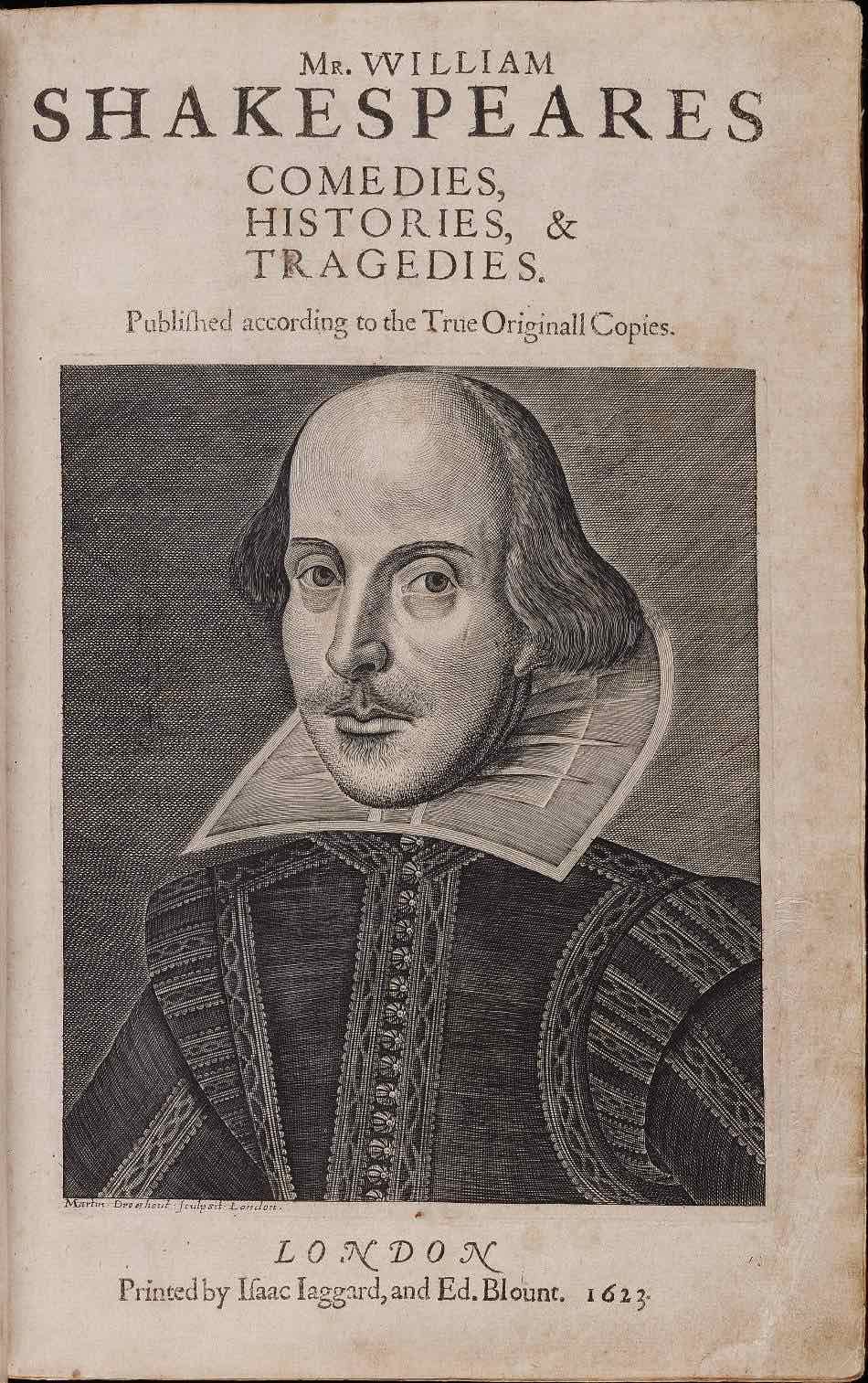
Lines from his work are still quoted all the time, and the test may ask which lines come from Shakespeare:
| Once more unto the breach | Henry V: the king urges his soldiers to charge one more time |
|---|---|
| To be or not to be | Hamlet: Hamlet wonders whether it is better to live or to die |
| A rose by any other name | Romeo and Juliet: a rose would smell just as sweet if it had a different name |
| All the world's a stage | As You Like It: life is like a play, and we are all actors in it |
| The darling buds of May | Sonnet 18: the lovely young flowers of spring |
The first colonies in America
It was also in this period that English settlers started colonising the east coast of America. Many more followed in the next century, and many of them left because they did not share the religious views of the next two kings, the Stuarts James I and Charles I.
Because Elizabeth I never married, she was called "the Virgin Queen". In the 1580s the explorer Walter Raleigh sent people to the east coast of North America and named the land Virginia in her honour. One group of settlers built a colony on Roanoke Island, which later vanished without a trace and became known as the "Lost Colony". England's first settlement in America that lasted was Jamestown, founded in 1607, by which time the Stuarts were on the throne.
Elizabeth I was the last of the Tudors. When she died in 1603, the crown passed to her relatives in Scotland, and a new royal family took over: the Stuarts.
Quiz
Which TWO of the following are lines from plays by William Shakespeare?
"Once more unto the breach" is from Henry V, and "To be or not to be" is from Hamlet. B comes from a 1940 speech by Winston Churchill. D is the song sung to a march by Edward Elgar, often performed on the Last Night of the Proms.
Quiz
Where was William Shakespeare born?
Shakespeare was born in Stratford-upon-Avon. Many people choose London, because his acting company and the Globe were there, but that is where he worked later, not where he was born.
Quiz
Is the statement below TRUE or FALSE? It was under Elizabeth I that English people first tried to settle on America's east coast.
True. Settlement began in Elizabeth I's time and grew much bigger in the following century, when many people left because they disagreed with the religious views of James I and Charles I. Don't mix up when it began with when it grew.
Key facts
| Henry VII | Stronger central government, weaker nobles, careful with money |
|---|---|
| Henry VIII's six wives | Catherine of Aragon (divorced), Anne Boleyn (beheaded), Jane Seymour (died), Anne of Cleves (divorced), Catherine Howard (beheaded), Catherine Parr (survived) |
| Church of England | The Pope would not allow Henry VIII's divorce, so he set up the Church of England, with the king appointing bishops |
| Reformation | Protestants read the Bible in their own language, did not pray to saints and valued a personal relationship with God |
| Act for the Government of Wales | Under Henry VIII, Wales was formally united with England and gained seats in the House of Commons |
| Ireland | Henry VIII became "King of Ireland" and brought in English laws |
| Edward VI | Protestant; the Book of Common Prayer; died at 15 |
| Mary I | Catholic; persecuted Protestants; "Bloody Mary" |
| Elizabeth I | Protestant; restored the Church of England; kept a religious balance; never married |
| 1588 Spanish Armada | Spain tried to conquer England and restore Catholicism, and was defeated |
| Sir Francis Drake | One of the commanders against the Armada; the Golden Hind sailed round the world |
| 1560 Scotland | The Scottish Parliament ended the Pope's authority; the Protestant Church of Scotland was not a state church |
| Mary, Queen of Scots | Catholic; fled to England; held prisoner by Elizabeth I for 20 years, then executed; her son James VI was a Protestant |
| Shakespeare | Born in Stratford-upon-Avon; Hamlet, Macbeth, Romeo and Juliet, A Midsummer Night's Dream; the Globe |
| Colonisation | Settlement of America's east coast began in Elizabeth I's time |