The 300 years after 1066
How English blended: French for the lords, Old English for the farmers
Why does English have both "cow" and "beef"? The answer goes back to the Norman Conquest of 1066. After the conquest, England had two languages side by side:
- The king and nobles spoke Norman French.
- Ordinary peasants kept speaking Anglo-Saxon, also called Old English.
Over a few hundred years the two blended into a single English language. That's why modern English so often has a pair of words with similar meanings: one from French, one from Anglo-Saxon.
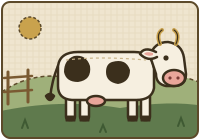 cowOld English cū
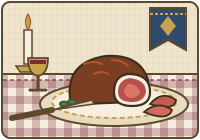 beefFrench bœuf
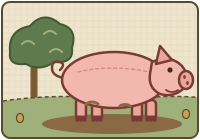 pigOld English
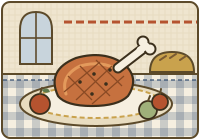 porkFrench porc
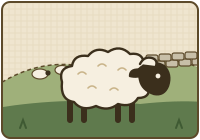 sheepOld English
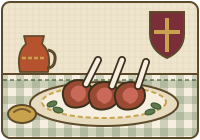 muttonFrench mouton
The pattern follows who did the work and who did the eating. The peasants looking after the cattle in the fields spoke English, so the living animal is a cow; the nobles eating the meat at the table spoke French, so the meat is beef. Pigs and sheep work the same way. Walter Scott made the idea famous in his 1819 novel Ivanhoe, and linguists say the real history is messier, but it's a handy way to remember that "cow" comes from Anglo-Saxon. Next time you order a beef burger, you're eating a little bit of 1066.
Quiz
Which TWO of these words come from Anglo-Saxon?
"Park" and "beauty" come from Norman French. A memory trick: apple, cow and summer are everyday words from farming life.
Quiz
Is the statement below TRUE or FALSE? Following 1066, Anglo-Saxon was the language of the king and the nobles, and Norman French was the language of the peasants.
False: it was the other way round. The nobles spoke French and the peasants spoke Old English. Remember who ate the beef.
Key facts
| 1066 | Battle of Hastings: William defeats Harold II |
|---|---|
| William the Conqueror | Duke of Normandy who became King William I of England |
| Last successful invasion | No foreign invasion of England has succeeded since the Norman Conquest |
| Bayeux Tapestry | Embroidery commemorating Hastings; kept in France |
| Domesday Book | Record of England's towns, people, land and animals; it still survives |
| French + Anglo-Saxon | Blended into English. Park and beauty come from French; apple, cow and summer from Old English |
| Wales / Scotland | Wales conquered, then partly won back; Scotland not invaded |