1832–1867
Winning the vote: from a few wealthy men to more people
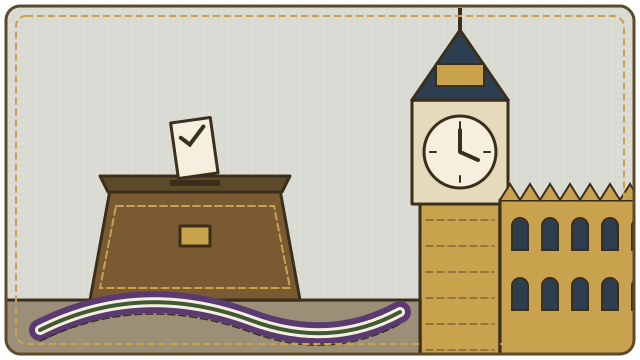
The Industrial Revolution had filled the towns with people, but the rules on who could vote had hardly changed in a hundred years. In the 18th century only men who owned a certain amount of property could vote, and women could not vote at all. Some voting areas were controlled by a single rich family; these were called pocket boroughs. Others had almost no voters at all; these were rotten boroughs.
The middle classes in the industrial towns grew more powerful and began to demand a bigger say in politics. The Reform Act of 1832 greatly increased the number of people who could vote. It got rid of the old pocket and rotten boroughs and gave more seats in Parliament to the towns and cities. From then on, political power moved for good from the countryside to the towns. But the right to vote still depended on owning property, so working-class people still could not vote.
The Chartists took petitions to Parliament asking for the vote for the working class and others without property. At first they seemed to fail, but in 1867 another Reform Act gave more seats to the cities and lowered the amount of property you needed to vote. Even so, most men still had no vote, and no women could vote.
As the number of voters grew, politicians realised they had to win people over, and political parties began to organise to reach ordinary voters. Universal suffrage, the right of every adult man and woman to vote, only came in the 20th century. For how women won the vote step by step, see Votes for women: 1918 and 1928.
Quiz
Which TWO statements about the Reform Act of 1832 are correct?
The 1832 Reform Act abolished the pocket and rotten boroughs and gave more seats to towns and cities. But the vote still depended on owning property, so working-class people still could not vote; this is exactly what the Chartists later campaigned for. Women only began to get the vote in 1918.