A Global Power: The Industrial Revolution and the Empire
In 1714 Britain invited a German to be its king, a man who, it was said, could hardly speak English. Less than two hundred years later, this small island nation ruled almost a quarter of the world's people and made over half of the world's iron, coal and cotton cloth. How did it become "the empire on which the sun never sets"? The answer lies in steam engines, canals and warships, and in quite a few stories that are far from glorious.
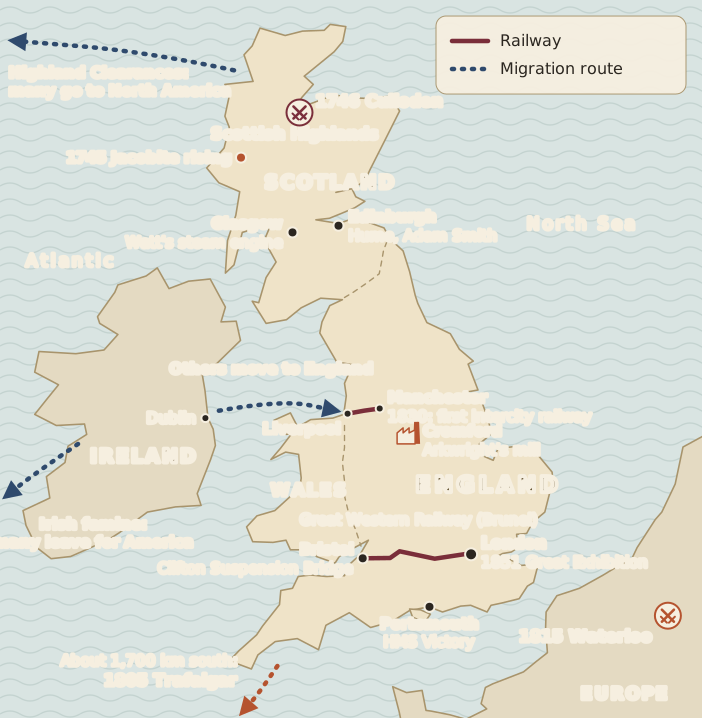
Places in this chapter. ⚔ marks a battle, red lines are early railways and blue dotted lines are emigration routes. Trafalgar is off the south coast of Spain, beyond the edge of the map.
1714George I comes from Germany to be king
1721Walpole becomes the first Prime Minister
1746Battle of Culloden: Bonnie Prince Charlie is defeated
1776Thirteen colonies in North America declare independence
1801Ireland joins the union and the Union Flag is born
1805Battle of Trafalgar: Nelson wins but is killed
1807British ships and ports are banned from buying and selling slaves
1815Battle of Waterloo: the Duke of Wellington defeats Napoleon
1832The Reform Act gives more people the vote
1833The Emancipation Act ends slavery across the Empire
1837Queen Victoria comes to the throne aged 18
1851The Great Exhibition opens in the Crystal Palace
1853–56The Crimean War
1899–1902The Boer War
1901Queen Victoria dies after almost 64 years on the throne
A king from Germany, and the first Prime Minister
As the last chapter told, Queen Anne left no children. When she died in 1714, Parliament picked a German prince as the next king: George I. Why him? Of all Anne's relatives, he was the closest one who was a Protestant. He was also the first king from the House of Hanover.
In Scotland, the Jacobites refused to accept him. They wanted the son of James II on the throne instead, but they were soon beaten.
George I's English was poor, so he leaned heavily on his ministers. The leading minister in Parliament later came to be called the Prime Minister. Britain's first was Sir Robert Walpole, who held the post from 1721 to 1742.
Walpole also gave Britain its most famous address. King George II offered him a house in Downing Street, London, as a gift, but Walpole asked for it to go with the post of First Lord of the Treasury instead, so that whoever did the job after him could live there too. He moved in in 1735, and 10 Downing Street has been the Prime Minister's official home ever since.
Quiz
Who was the first Prime Minister of Britain?
The first Prime Minister was Walpole, from 1721 to 1742. The Duke of Wellington did become Prime Minister after his victory at Waterloo, but much later. Cromwell was Lord Protector during the republic in the 17th century, and Wilberforce was the MP who led the campaign against slavery.
The last rising: Bonnie Prince Charlie and Culloden
In 1745 the Stuart family tried once more to win back the throne, this time from George II, the son of George I. The attempt was led by James II's grandson, Charles Edward Stuart, better known as Bonnie Prince Charlie.
He landed in Scotland, where clans from the Highlands gave him their support and formed an army. He won some early battles, but in 1746 George II's army beat him at the Battle of Culloden. Charles escaped back to mainland Europe.
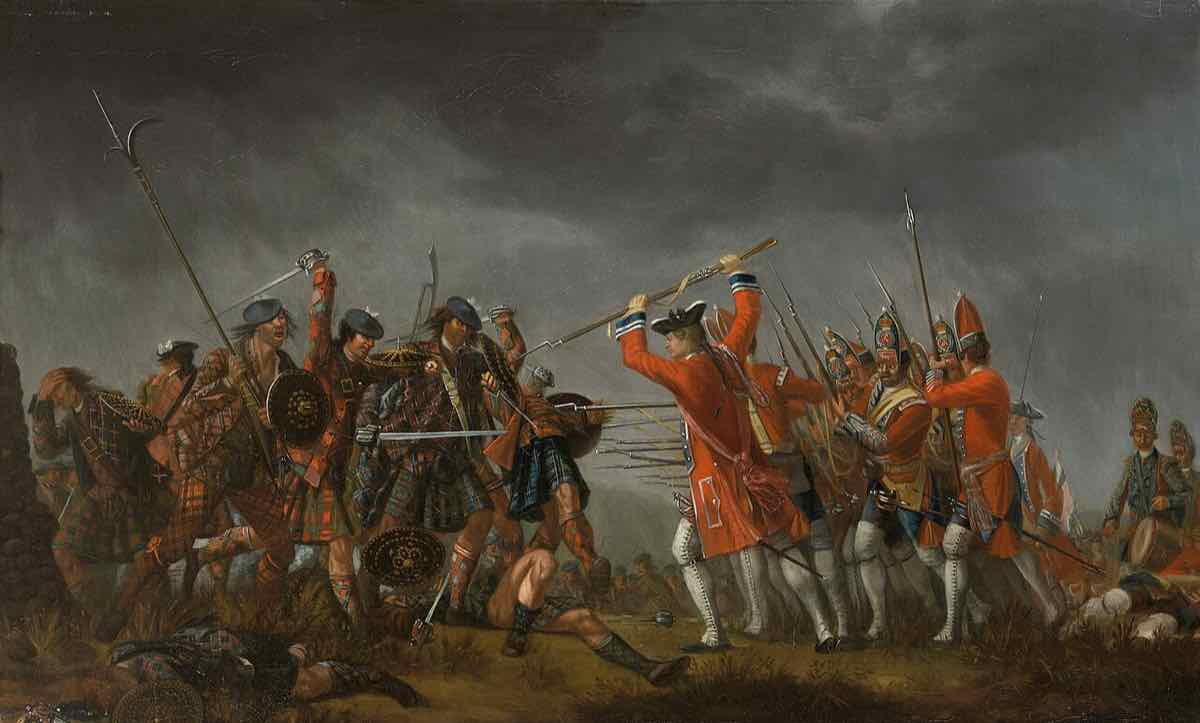
David Morier's painting of the Battle of Culloden. Its original title is An Incident in the Rebellion of 1745.
Painting: David Morier, Royal Collection Trust, public domain, via Wikimedia Commons
The fighting at Culloden was over in less than an hour, and it is often called the last pitched battle (a planned battle between two full armies) fought on British soil. Afterwards Charles hid in the Highlands and on the islands for months. A woman called Flora MacDonald helped him escape by boat to the Isle of Skye, dressed as an Irish maid named "Betty Burke", and a later Scottish song, the "Skye Boat Song", tells the story of that escape.
The end of the clans and the Highland Clearances
After Culloden, the clans lost most of their power and influence. Chiefs who had the trust of the English king became landlords, and the people of their clans became tenants who had to pay rent.
Many Scottish landlords got rid of the small farms, called crofts, to make space for big flocks of sheep and herds of cattle. This is known as the Highland Clearances. By the early 19th century, forcing people off the land had become very common, and many Scots left for North America at this time.
Quiz
Is the statement below TRUE or FALSE?
In the Highland Clearances, Scottish landlords got rid of crofts (small farms) to make room for sheep and cattle.
True. To make room for big flocks of sheep and herds of cattle, landlords pulled down many small crofts. By the early 1800s, families being forced off the land was a common sight, and many Scots emigrated to North America.
Quiz
Is the statement below TRUE or FALSE?
Bonnie Prince Charlie defeated the army of George II at the Battle of Culloden in 1746.
It was the other way round: George II's army defeated Charles at Culloden, and Charles fled to Europe. The year 1746 is right; the trap is who won.
The Enlightenment: Scotland's great thinkers
While Highland families were being forced off the land, Scotland's universities and cities were entering a golden age of ideas. In the 18th century, lots of new ideas appeared in politics, philosophy and science. This period is called the Enlightenment. Many of its most important thinkers were Scottish:
Adam Smith Ideas about economics that people still quote today
David Hume Wrote about human nature, and still influences philosophers
James Watt His work on steam power helped drive the Industrial Revolution
One of the Enlightenment's key ideas was that people should be free to hold whatever political and religious beliefs they choose, and the state should not tell them what to believe. This is still an important principle in the UK today.
Watt did not actually invent the steam engine. Earlier engines were mainly used to pump water out of mines, and they burned huge amounts of coal. While repairing an old one at the University of Glasgow, Watt had the idea of adding a "separate condenser", which made the engine far more efficient; the watt, the unit of power you see on electrical goods, is named after him. Adam Smith's most famous book, The Wealth of Nations, came out in 1776, the same year the United States declared independence.
The poet Robert Burns (1759–1796) belongs to the same Scottish age. Known in Scotland as "The Bard", he wrote poems in Scots and in English and reworked many old folk songs. His most famous is Auld Lang Syne, which people in Britain sing together at New Year. The tune has travelled far: in many countries it is also sung at graduations and farewells.
Quiz
Which TWO were important Scottish thinkers of the Enlightenment?
Adam Smith (economics) and David Hume (philosophy) were both Scottish Enlightenment thinkers. Chaucer was a medieval writer, the author of The Canterbury Tales, and Walpole was the first Prime Minister, not a thinker.
The Industrial Revolution: the world's first industrial nation
New ideas did not only change how people thought. Soon they changed how people worked, too. Before the 18th century, most people in Britain worked on the land. There were also many cottage industries, where families made cloth or lace at home.
In the 18th and 19th centuries, industry in Britain grew very fast. This was the Industrial Revolution. Britain was the first country anywhere to industrialise in a big way. The key was new machines and steam power: farming and manufacturing both started to use machines, so work was faster and output much bigger.
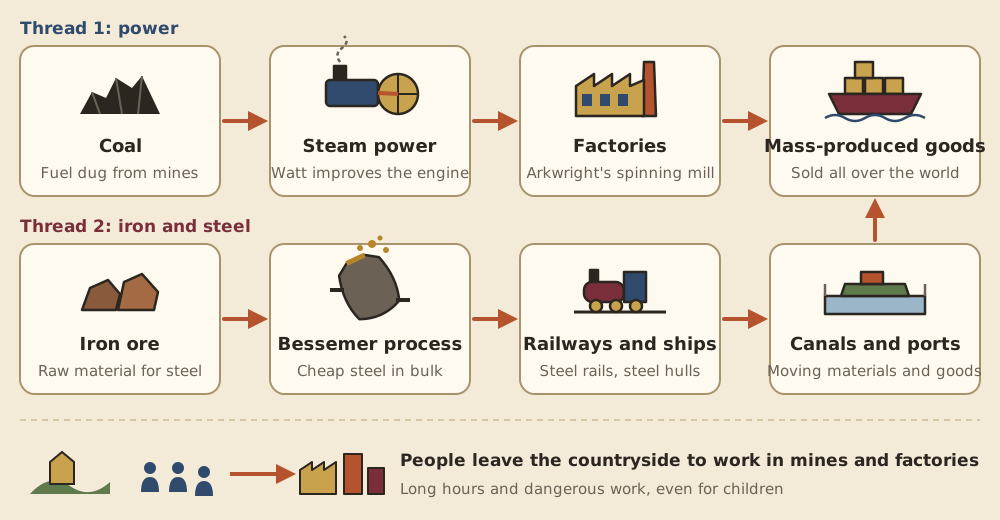
Two main threads of the Industrial Revolution: coal and steam made the factories run, and cheap steel sent railways and steamships across the world. People followed, moving from the countryside into the towns.
The new factories needed coal and other raw materials. Many people left the countryside to work in the mines and factories, and making things in factories overtook farming as the biggest source of jobs.
The Bessemer process made it possible to produce steel in large amounts, which helped the shipbuilding and railway industries to grow. To carry raw materials and goods to cities and ports, Britain also dug many canals, especially in the new industrial areas of the Midlands and the north of England.
But working conditions were terrible. No laws protected workers, who were often made to work long hours in dangerous places. Children worked too, and were treated like adults, sometimes even worse.
Arkwright: from barber to factory pioneer
Richard Arkwright (1732–1792) started out as a barber who could dye hair and make wigs. When wigs went out of fashion, he moved into textiles. He improved the carding machine (carding means combing the fibres so they are ready to be spun into thread). He also set up a spinning mill that used horses to drive a single machine, and later switched to steam engines. Arkwright is best remembered for running his factories in a very efficient and profitable way.
His mill at Cromford in Derbyshire, opened in 1771 and driven by water power, shows what that efficiency meant for the people inside. The workers did two shifts of 13 hours each, and the gates closed on the dot: anyone who was late was shut out for the day and lost a second day's pay as well. Arkwright employed whole families, including many children as young as seven. The mill is now part of the Derwent Valley Mills, a UNESCO World Heritage Site.
Shortly before Queen Victoria came to the throne, George and Robert Stephenson, a father and son, pioneered the steam locomotive. The railway network grew fast in the Victorian age, and railways were later built all over the Empire.
Quiz
Why were canals built during the Industrial Revolution?
Raw materials and manufactured goods needed better transport, so canals were dug to link factories with towns, cities and ports, especially in the new industrial areas of the Midlands and the north of England. Canals came before the great railway boom of the Victorian age, not after it, and they were built for goods, not for defence or long-distance passengers.
Quiz
What did the development of the Bessemer process make possible?
The Bessemer process was a way to mass-produce steel, which in turn boosted shipbuilding and the railways. Cotton cloth and spinning belong to Arkwright's story, and printing books goes back to Caxton in the 15th century.
Trade and colonies: even the curry house dates from this time
Factories needed raw materials, and people to buy what they made, so Britain looked overseas. During this period Britain's power spread around the world:
Captain James Cook charted (made maps of) Australia's coast, and Britain set up several colonies there.
Britain took control of Canada.
The East India Company started out simply as a trading company, but came to control large parts of India.
Britain also began to set up colonies in southern Africa.
Britain traded with the whole world and brought in more and more goods: sugar and tobacco from North America and the West Indies, and textiles, tea and spices from India and Indonesia. Trading and settling overseas often brought Britain into conflict with other countries, above all France, which was also expanding around the world.
Britain's first curry house
Sake Dean Mahomet (1759–1851) grew up in the Bengal region of India and served in the Bengal army. He came to Britain in 1782. He later moved to Ireland, where in 1786 he ran away to marry an Irish girl called Jane Daly, and around the turn of the century he moved back to England.
In 1810 he opened Britain's first curry house: the Hindoostane Coffee House, on George Street in London. He and his wife also brought shampooing, an Indian head massage, to Britain.
The word shampoo itself comes from Hindustani, where it first meant "to press" or "to massage". The coffee house closed after only two years because of money problems, so Mahomet opened steam and massage baths in the seaside town of Brighton instead. They were a great success: people called him "Dr Brighton", and he was appointed "shampooing surgeon" to King George IV and King William IV. His travel book, published in 1794, is often described as the first book written in English by an Indian.
Quiz
Which explorer mapped the coast of Australia?
Captain James Cook mapped Australia's coast, and Britain then set up a few colonies there. Drake was a Tudor sea captain who sailed round the world and helped defeat the Spanish Armada. Nelson and Wellington were the commanders at Trafalgar and Waterloo.
Quiz
Which of the following statements is correct?
Mahomet opened the Hindoostane Coffee House in London in 1810, Britain's first curry house. The steam locomotive was the work of George and Robert Stephenson.
The slave trade and the fight to end it
Part of Britain's commercial growth and wealth was built on the slave trade. Slavery was illegal in Britain itself, but by the 18th century the slave trade overseas was a well-established industry, run mainly by Britain and its colonies in North America.
Most enslaved people came from West Africa. They were crammed into British ships and carried in horrific conditions to America and the Caribbean, where they were forced to work on tobacco and sugar plantations. Their living and working conditions were terrible. Many tried to escape, and some rose up against their owners.
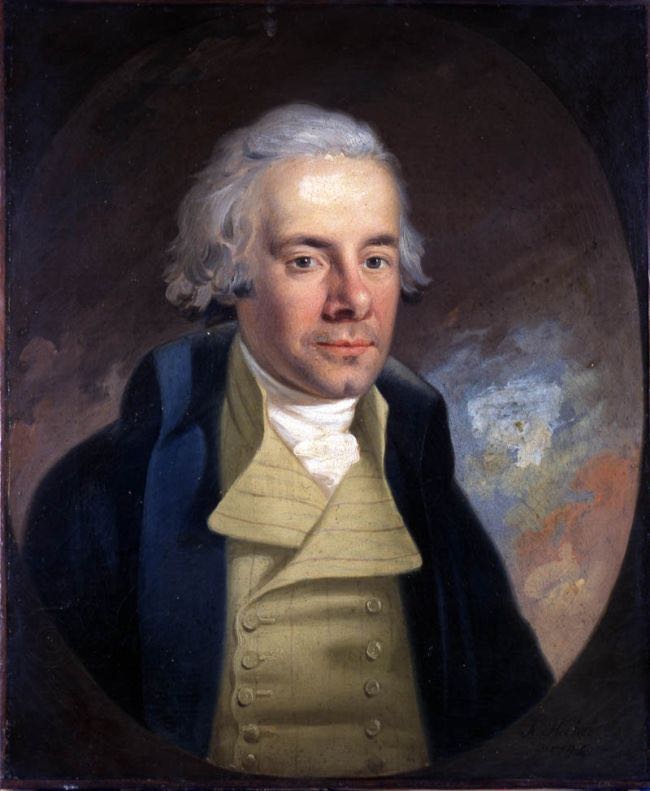
William Wilberforce, who led the campaign against slavery in Parliament, in a portrait from around 1794. He fought to end the slave trade for almost 20 years. In July 1833 he heard that the law to abolish slavery was certain to pass, and three days later he died.
Painting: Karl Anton Hickel, public domain, via Wikimedia Commons
In the late 18th century the Quakers set up the first formal groups against slavery and asked Parliament to ban it. William Wilberforce, an evangelical Christian and Member of Parliament, worked with other abolitionists (people campaigning to end slavery) and helped change the way the public saw the slave trade.
1807: it became illegal to buy and sell slaves using British ships or British ports.
1833: the Emancipation Actended slavery throughout the British Empire. The Royal Navy also stopped slave ships from other countries, freed the people on board and punished the slave traders.
After 1833, Britain brought in 2 million workers from India and China to take the place of the freed slaves. They were sent to the Caribbean to work on sugar plantations, to South Africa to work in the mines, to East Africa to build railways, and to Kenya to serve in the army.
Quiz
In which year did the Emancipation Act abolish slavery throughout the British Empire?
1807 banned only the slave trade; 1833 ended slavery itself across the Empire. These two years are the ones people mix up most. 1776 is American independence and 1851 is the Great Exhibition.
Losing America: American independence
Even as the Empire grew around the world, it suffered its first big loss in North America. By the 1760s Britain had many colonies in North America. They were wealthy and mostly ran their own affairs. Many colonists' families had first crossed the Atlantic for religious freedom. They were well educated and cared a great deal about liberty.
When the British government tried to tax the colonies, the colonists saw it as an attack on their freedom. Their slogan was "no taxation without representation": we have no one to speak for us in the British Parliament, so why should we pay its taxes? Parliament tried to calm things by dropping some of the taxes, but relations kept getting worse.
In 1776, 13 colonies in North America declared independence, saying that people had the right to set up their own government. In the end the colonists defeated the British army, and in 1783 Britain recognised their independence.
Fighting Napoleon: Trafalgar and Waterloo
Only a few years after losing America, Britain faced an even bigger rival in Europe. In 1789 revolution broke out in France, and before long the new French government was at war with Britain. Napoleon (Napoleon I), who later made himself Emperor of France, carried the war on.
The Battle of Trafalgar, 1805
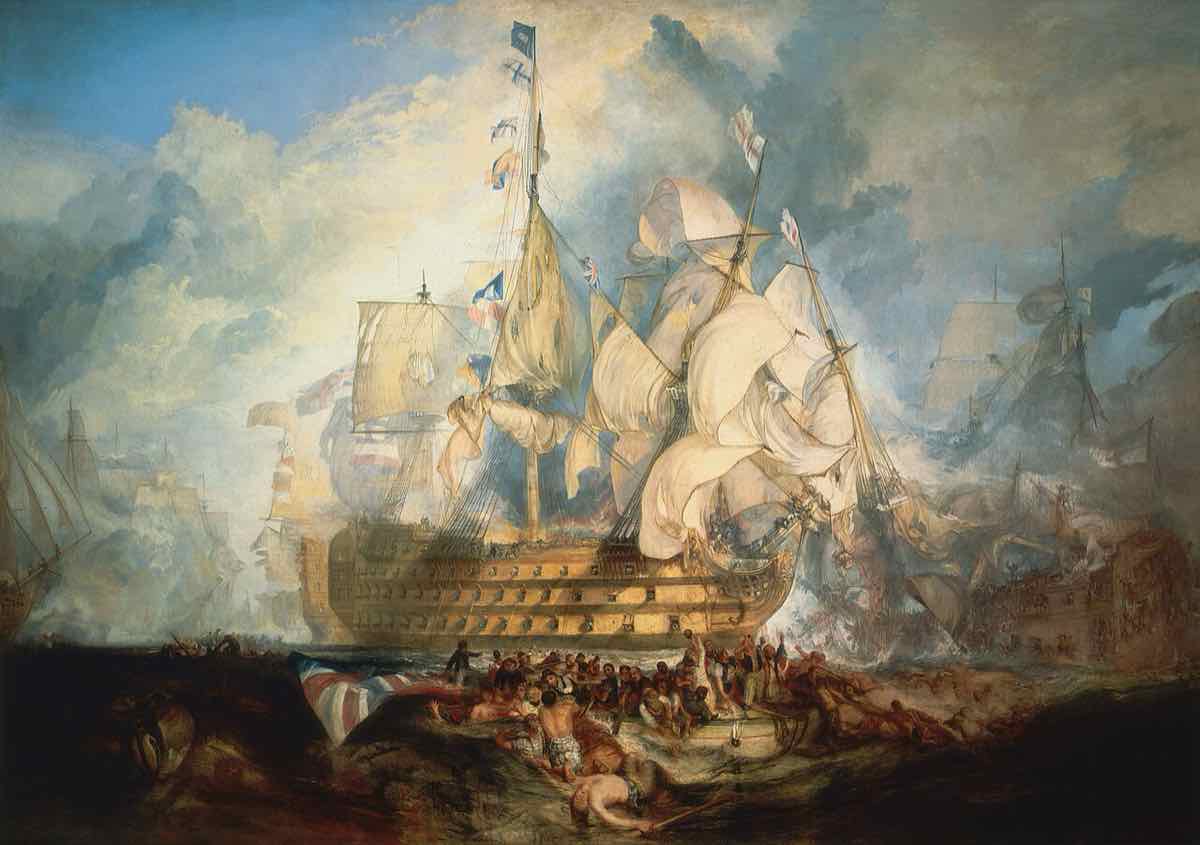
At the Battle of Trafalgar the British navy defeated the combined fleets of France and Spain. The British fleet was led by Admiral Nelson, who was killed during the fighting. In London, Nelson's Column in Trafalgar Square was built in his memory. His flagship, HMS Victory, is now in Portsmouth, and you can go on board.
The Battle of Trafalgar (1822–24) by the landscape painter J. M. W. Turner. In the middle is HMS Victory, flying the famous flag signal Nelson sent before the battle.
Painting: J. M. W. Turner, National Maritime Museum, public domain, via Wikimedia Commons
Before the battle Nelson sent the whole fleet a flag signal that became famous: "England expects that every man will do his duty." During the fighting a French sniper shot him, and he died on board HMS Victory. To bring his body home in one piece, the sailors put it in a large barrel of brandy. People say they secretly drank from the barrel, which is why rum was nicknamed "Nelson's blood" in the navy, but that is only a legend.
Nelson's Column was finished in 1843. It is about 52 metres tall including the base, the statue at the top is more than 5 metres high, and the bronze panels around the base were made by melting down cannons taken from the French.
The Battle of Waterloo, 1815
In 1815 the Duke of Wellington defeated Napoleon at the Battle of Waterloo, which ended the wars with France. Wellington was nicknamed the "Iron Duke" and later became Prime Minister.
He also gave his name to a boot. Wellington liked to wear a new style of long boot, other wealthy men copied him, and the British still call tall rain boots "wellies", short for Wellington boots.
Quiz
Is the statement below TRUE or FALSE?
Admiral Nelson died during the Battle of Trafalgar, and visitors can go aboard his flagship, HMS Victory, in Portsmouth today.
Both parts are true. A common trap is mixing up Nelson and Wellington: Nelson means the navy, Trafalgar, 1805, killed in battle; Wellington means the army, Waterloo, 1815, later Prime Minister.
The Union Flag: three crosses in one
During those same years of war with France, the shape of the country itself changed. Ireland had shared a king with England and Wales since the time of Henry VIII, but it was still a separate country. In 1801, under the Act of Union of 1800, Ireland was formally joined with England, Scotland and Wales.
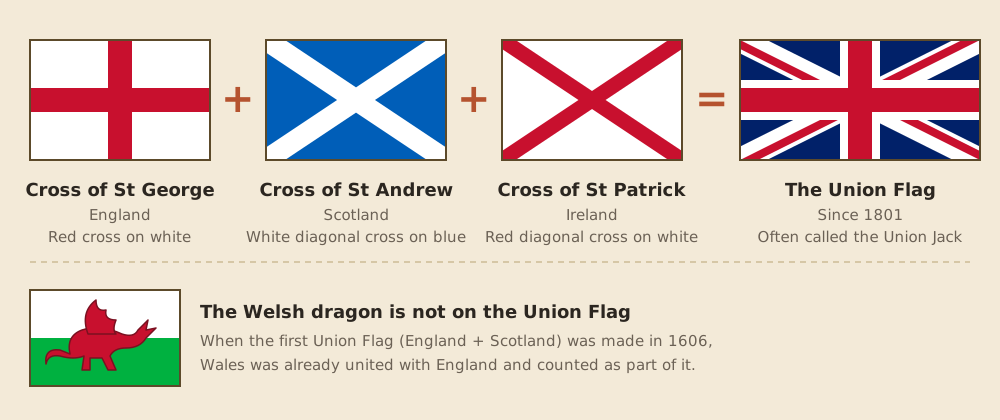
The flag changed too. The new Union Flag, often called the Union Jack, laid the crosses of the patron saints of England, Scotland and Ireland on top of each other. It is still the official flag of the UK today.
How the Union Flag is put together. Look closely and you'll see the red diagonal stripes are not in the middle of the white ones. This lets both the Scottish and the Irish crosses show, and it means the flag has a right way up: flying it upside down is seen as disrespectful.
The cross of St George: patron saint of England, a red cross on a white background.
The cross of St Andrew: patron saint of Scotland, a white diagonal cross on a blue background.
The cross of St Patrick: patron saint of Ireland, a red diagonal cross on a white background.
Wales has its own official flag too, showing a red dragon (the Welsh dragon). But the dragon is not on the Union Flag. This is because when the first Union Flag was made in 1606, from the flags of England and Scotland, the Principality of Wales was already united with England.
The flag also has two names. Some people insist it should only be called the Union Jack when it flies on a ship, and the Union Flag everywhere else, but the Flag Institute, a UK organisation that studies flags, says both names are fine. You may see either name in the test; they mean the same flag.
Quiz
Which TWO of the following appear on the Union Flag?
The Union Flag has the crosses of St George, St Andrew and St Patrick. Neither the Welsh dragon nor the cross of St David, the patron saint of Wales, is on it, because Wales was already joined to England when the first Union Flag was made.
The Victorian age: the Empire at its height
After Napoleon's defeat, Britain entered a long period of peace and growing wealth. George III's sons, George IV and William IV, reigned in turn, but neither left a legitimate heir, so the crown passed to William IV's niece. Queen Victoria was only 18 when she became queen in 1837, and she stayed on the throne until 1901: almost 64 years in all. That long stretch of British history is called the Victorian Age.
It was a time when Britain's power and influence abroad kept growing. At home, the middle classes became more and more important, and some reformers worked to improve life for the poor.
The biggest empire in history
In Victoria's time the British Empire came to include all of India, Australia and large parts of Africa. No empire in history had ever been bigger: an estimated 400 million people or more lived in it.
People moved in both directions. The government encouraged British people to settle abroad, and between 1853 and 1913 as many as 13 million left the country. At the same time, people also came to Britain. Between 1870 and 1914 about 120,000 Russian and Polish Jews arrived to escape persecution, and many settled in London's East End, Manchester and Leeds. Others came from across the Empire, from India, Africa and elsewhere, to make their homes in Britain, to work or to study.
Free trade and factory reform
Britain was still a great trading nation. The government began to push for free trade and got rid of many taxes on imports. One example was the repeal of the Corn Laws in 1846. These laws had kept cheap foreign grain out of the country. After the reforms, raw materials could be imported more cheaply, which helped British industry grow.
In 1847 a new law said women and children could work no more than 10 hours a day. Housing for workers began to improve, and so did conditions in factories. Transport got better too, so it was easier to move goods and people around the country.
In the 19th century Britain led the world in industry, producing more than half of all the world's iron, coal and cotton cloth. It also became a centre for financial services such as insurance and banking.
The Great Exhibition of 1851
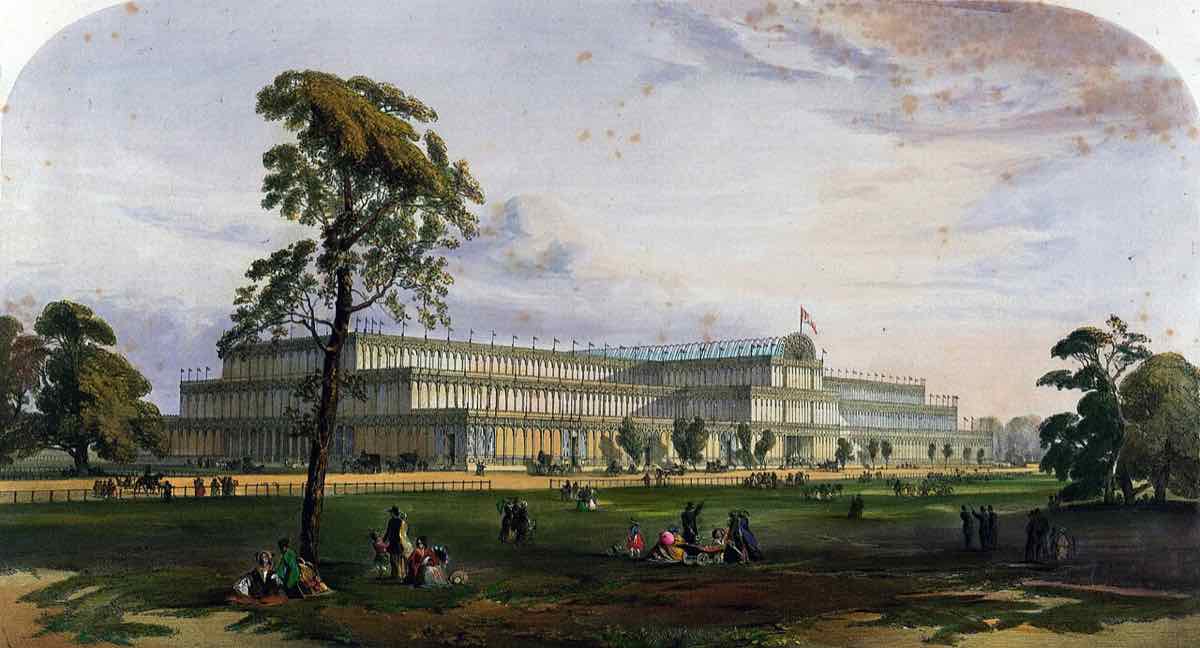
In 1851 the Great Exhibition opened in the Crystal Palace in Hyde Park, London. On show was everything from enormous machines to things made by hand. Countries from every part of the world took part, but most of the objects on show were made in Britain.
The Crystal Palace in Hyde Park, seen from the north-east during the Great Exhibition of 1851. Over six million visits were made to the exhibition. The exhibition made a profit, which paid for the Victoria and Albert Museum (V&A), the Science Museum and the Natural History Museum in South Kensington. The building itself was moved to south London, where it burned down in 1936, but the area kept its name, and so does the football club Crystal Palace FC.
Dickinson Brothers, Dickinsons' Comprehensive Pictures of the Great Exhibition of 1851, public domain, via Wikimedia Commons
Brunel: the engineer of railways, bridges and ships
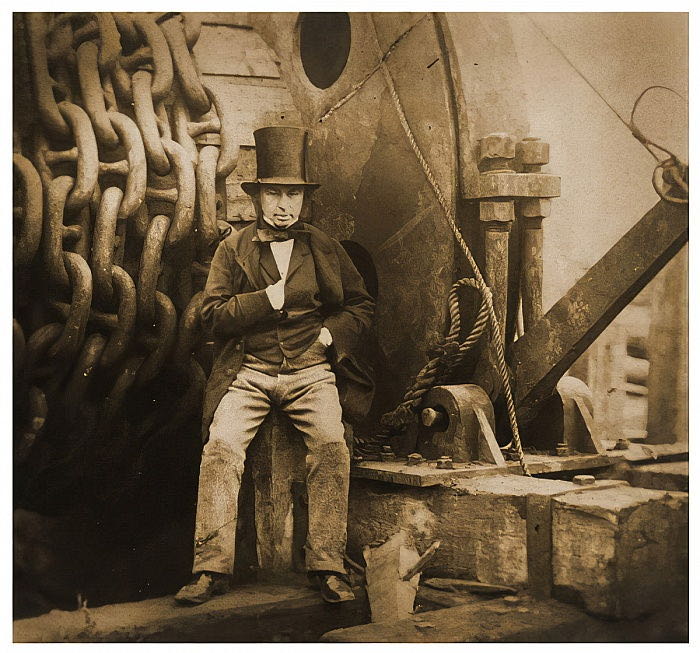
Isambard Kingdom Brunel (1806–1859) came from Portsmouth, England. As an engineer he built tunnels, bridges, railways and ships. He was in charge of building the Great Western Railway, whose trains ran from Paddington Station in London to Wales, the West Midlands and the south-west of England. You can still cross many of his bridges today, such as the Clifton Suspension Bridge over the Avon Gorge.
Brunel's father was an engineer from France. Brunel designed the Clifton bridge when he was young, but work stopped for years when the money ran out, and it was only finished in 1864, five years after his death. In 2002, when the BBC asked the public to vote for the "100 Greatest Britons", Brunel came second, behind Churchill.
Brunel in 1857, in front of the launching chains of his giant steamship, the SS Great Eastern. It is one of the most famous portrait photographs ever taken.
Photo: Robert Howlett, public domain, via Wikimedia Commons
Quiz
In 1847, a new law set a maximum working day for women and children. How long was it?
The 1847 law limited women and children to 10 hours of work a day. Before that, there were no laws to protect workers, and children were often treated just like adults.
Quiz
Which TWO statements about free trade in the Victorian period are correct?
The government promoted free trade by scrapping many import taxes. In 1846 it repealed the Corn Laws, which had stopped cheap grain coming in. A turns this round: 1846 is when the Corn Laws ended, not when they began. C is wrong too: cheaper imported raw materials helped British industry grow.
Quiz
Which engineer was responsible for building the Great Western Railway?
Brunel's Great Western Railway linked London's Paddington Station with Wales, the West Midlands and the south-west. George Stephenson and his son Robert pioneered the railway engine, Arkwright developed spinning mills, and Wren designed St Paul's Cathedral after the Great Fire of 1666.
Quiz
Where was the Great Exhibition of 1851 held?
The Great Exhibition was held in the Crystal Palace, built specially for it in Hyde Park. Westminster Abbey is where monarchs are crowned, Trafalgar Square has Nelson's Column, and the Tower of London is a medieval castle.
The Crimean War and Florence Nightingale
The Victorian age was mostly peaceful at home, but Britain still fought wars abroad. The Crimean War (1853–1856) saw Britain, Turkey and France fighting together against Russia. It was the first war that the media reported on in depth, with news reports and photographs. Conditions were very poor, and many soldiers died not from their wounds but from illnesses they caught in hospital.
During the war Queen Victoria introduced the Victoria Cross, a medal to honour acts of bravery by members of the armed forces.
The medal has a story of its own. Traditionally the Victoria Cross is said to be made from Russian cannons captured in the Crimean War, but one historian's research found that the metal for medals given out from the 20th century onwards actually came from two Chinese cannons. This is still debated.
Florence Nightingale (1820–1910) had English parents but was born in Italy. When she was 31 she went to Germany to train as a nurse. In 1854 she travelled to an army hospital in Turkey to look after soldiers wounded in the Crimean War. With other nurses, she improved conditions in the hospital and brought the death rate down. In 1860 she founded a school to train nurses, the Nightingale Training School, at St Thomas' Hospital in London. It was the first school of its kind, and it still exists. She is often seen as the founder of modern nursing.
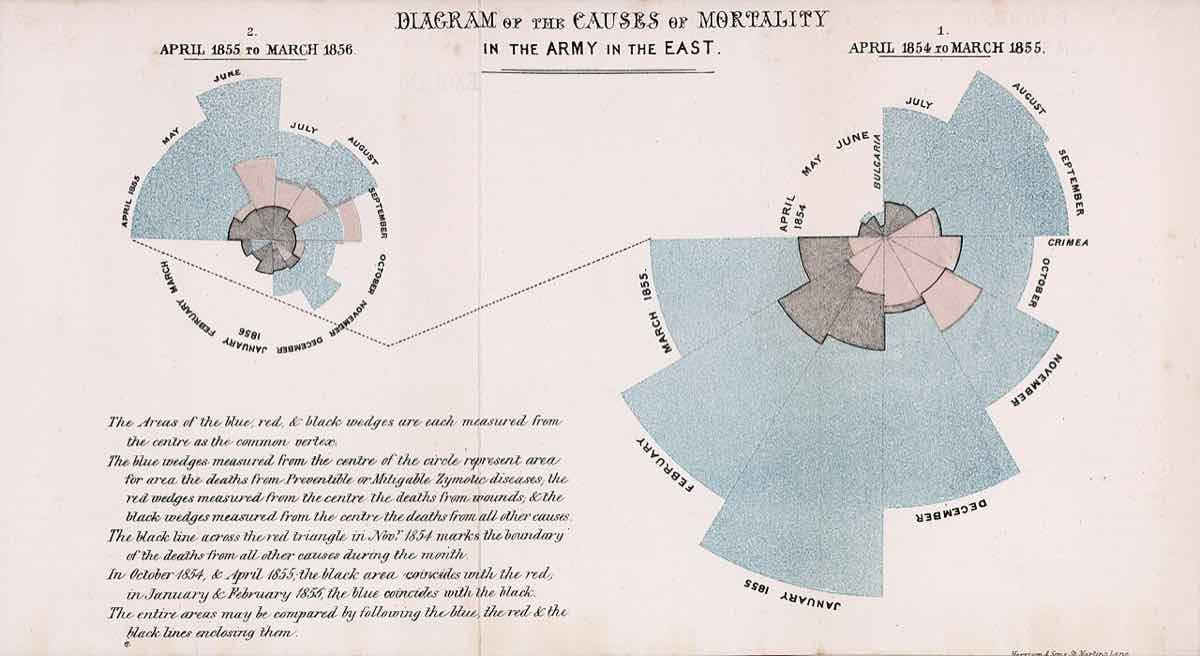
She was named after Florence, the Italian city where she was born. Because she checked on the wards at night carrying a lamp, the newspapers called her "The Lady with the Lamp". She was also very good at maths: she used charts like the one below to persuade the government to improve hygiene in the army, and in 1859 she became the first woman member of the Royal Statistical Society.
Nightingale's "rose diagram", published in 1858. Each wedge is one month. Blue shows deaths from infectious diseases that could have been prevented, and red shows deaths from wounds, so you can see at a glance that disease was the biggest killer.
Florence Nightingale, public domain, via Wikimedia Commons
Quiz
Which of the following statements is correct?
The Victoria Cross was introduced during the Crimean War (1853–1856). The Boer War (1899–1902) only began near the end of Victoria's life, when the medal had already existed for almost half a century.
Ireland: the famine and Home Rule
Yet even at the height of the Empire's wealth, conditions in Ireland were worse than elsewhere in the UK. Two-thirds of the people still lived off farming, often on very small plots of land, and many depended mainly on potatoes for food.
In the middle of the 19th century the potato harvest failed, and a terrible famine followed: the potato famine. About a million people died from disease and hunger, and another one and a half million left Ireland. Some went to the United States and some came to England. By 1861 there were large Irish communities in cities such as Liverpool, London, Manchester and Glasgow.
One crop could do so much damage because almost all the potatoes grown by Ireland's poor were the same variety, so when a plant disease called blight arrived, whole fields rotted at once. Even more painful, Ireland went on exporting food during the famine. To this day, Ireland's population has not returned to what it was before the famine.
During the 19th century the Irish nationalist movement grew stronger:
Some, such as the Fenians, wanted Ireland to be completely independent.
Others, such as Charles Stuart Parnell, wanted Home Rule: Ireland would stay in the UK but have its own parliament.
Quiz
Is the statement below TRUE or FALSE?
In the middle of the 19th century, Ireland suffered a famine because its wheat harvest failed.
False. It was the potato crop that failed. Many people in Ireland relied on potatoes for much of their food, so when the crop failed about a million people died from disease and starvation, and about a million and a half left the country.
Quiz
Is the statement below TRUE or FALSE?
Supporters of Home Rule, such as Charles Stuart Parnell, wanted Ireland to become completely independent from the UK.
Home Rule meant staying in the UK, but with Ireland's own parliament. It was the Fenians who wanted full independence.
Winning the vote: from a few wealthy men to everyone
The Industrial Revolution had filled the towns with people, but the rules on who could vote had hardly changed in a hundred years. In the 18th century only men who owned a certain amount of property could vote, and women could not vote at all. Some voting areas were controlled by a single rich family; these were called pocket boroughs. Others had almost no voters at all; these were rotten boroughs.
The middle classes in the industrial towns grew more powerful and began to demand a bigger say in politics. The Reform Act of 1832 greatly increased the number of people who could vote. It got rid of the old pocket and rotten boroughs and gave more seats in Parliament to the towns and cities. From then on, political power moved for good from the countryside to the towns. But the right to vote still depended on owning property, so working-class people still could not vote.
The Chartists took petitions to Parliament asking for the vote for the working class and others without property. At first they seemed to fail, but in 1867 another Reform Act gave more seats to the cities and lowered the amount of property you needed to vote. Even so, most men still had no vote, and no women could vote.
As the number of voters grew, politicians realised they had to win people over, and political parties began to organise to reach ordinary voters. Universal suffrage, the right of every adult man and woman to vote, only came in the next century.
Women's rights
Before 1870, everything a woman earned or owned became her husband's the moment she married. Laws passed in 1870 and 1882 allowed married women to keep what they earned and owned. From the late 1800s into the early 1900s, a growing number of women campaigned and demonstrated for more rights, and above all for the vote. They became known as suffragettes.
Their best-known leader was Emmeline Pankhurst (1858–1928), who was born in Manchester. In 1889 she founded the Women's Franchise League, which campaigned for married women to be able to vote in local elections. In 1903 she helped to start the WSPU (Women's Social and Political Union), the first group whose members were called suffragettes. They protested by breaking the law on purpose (civil disobedience): they chained themselves to railings, smashed windows and set fire to buildings. Many, including Pankhurst herself, went on hunger strike.
Women finally won the vote in two steps. In 1918, women over 30 were allowed to vote and to stand for Parliament, partly as a thank-you for the work women had done during the First World War. In 1928, women got the vote at 21, the same age as men; this was also the year Pankhurst died. The next chapter looks more closely at how these dates link to the First World War.
Quiz
Who was the best-known leader of the suffragettes, the women who campaigned for the right to vote?
Emmeline Pankhurst, born in Manchester in 1858, helped to set up the WSPU in 1903, the first group whose members were called suffragettes. Boudicca led a revolt against the Romans, Florence Nightingale is remembered for her nursing work in the Crimean War, and Jane Austen was a novelist.
Quiz
Which TWO statements about the Reform Act of 1832 are correct?
The 1832 Reform Act abolished the pocket and rotten boroughs and gave more seats to towns and cities. But the vote still depended on owning property, so working-class people still could not vote; this is exactly what the Chartists later campaigned for. Women only began to get the vote in 1918.
The future of the Empire: the Boer War and Kipling
The British Empire kept growing until the 1920s, but even by the late 19th century people were arguing about where it should go next. Those in favour of expansion said the Empire brought more trade and business. Others thought it had grown too big: there was constant fighting in places such as India's North West Frontier and southern Africa, and this used up a lot of resources. Still, most British people believed the Empire was a "force for good" in the world.
The Boer War of 1899 to 1902 made this debate more urgent. In South Africa, Britain fought the Boers, the descendants of settlers from the Netherlands. The Boers fought back hard, and the war lasted over three years. Many soldiers were killed in battle, and even more died of disease. Some people in Britain felt sympathy for the Boers and began to ask whether the Empire could last. As the different parts of the Empire developed, they also won more freedom and self-government from Britain.
Part of that sympathy came from the camps. The British army burned farms and held Boer women and children, and Black Africans, in concentration camps, where conditions were terrible and more than 20,000 Boer women and children died. When the news reached Britain it caused a great deal of anger.
Kipling: a writer who believed in the Empire
Rudyard Kipling (1865–1936) was born in India. He went on to live in India, Britain and the USA. His books and poems are set in India and Britain, and they show his belief that the Empire was doing good in the world. He won the Nobel Prize in Literature in 1907. His Just So Stories and The Jungle Book are still popular today, and his poem If regularly comes near the top when British people vote for their favourite poems.
Kipling was only 41 when he won, and he is still the youngest person ever to receive the Nobel Prize in Literature, as well as the first writer in English to win it. Yet he turned down a knighthood, and also said no to becoming Poet Laureate. Mowgli the boy and Baloo the bear from the Disney cartoon both come from his The Jungle Book.
At the start of the 20th century the Empire was larger than ever. Within a few years it would face its hardest test yet: a world war.
Chapter summary
1714 George I
Queen Anne's closest Protestant relative, from Germany
1721–42 Walpole
Britain's first Prime Minister
1746 Culloden
Bonnie Prince Charlie beaten by George II's army; the Highland Clearances followed
Enlightenment
Adam Smith (economics), Hume (philosophy), Watt (steam)
Industrial Revolution
Britain industrialised first; the Bessemer process, canals, Arkwright's factories, child labour
1810 Mahomet
Opened Britain's first curry house in London and introduced shampooing
1807 / 1833
1807: slave trade banned; 1833: the Emancipation Act ends slavery in the Empire; the Quakers, Wilberforce
1776 / 1783
13 North American colonies declare independence / Britain recognises it
1805 Trafalgar
Nelson wins and is killed; his column is in Trafalgar Square and HMS Victory is in Portsmouth
1815 Waterloo
The "Iron Duke", Wellington, beats Napoleon and later becomes Prime Minister
1801 Union Flag
St George + St Andrew + St Patrick; no Welsh dragon
1837–1901 Victoria
Queen at 18, reigned almost 64 years; an Empire of over 400 million people
1846 / 1847
Corn Laws repealed (free trade) / women and children limited to 10 hours' work a day
1851 Great Exhibition
Held in the Crystal Palace in Hyde Park
Brunel
Born in Portsmouth; the Great Western Railway (Paddington Station); many of his bridges are still in use
1853–56 Crimea
War against Russia; the first war widely covered by the media; the Victoria Cross; Florence Nightingale
Irish famine
1 million died and 1.5 million left; the Fenians wanted independence, Parnell wanted Home Rule
1832 / 1867 Reform
Pocket and rotten boroughs abolished; the Chartists campaigned for working-class votes
Suffragettes
Pankhurst helped found the WSPU in 1903; votes for women over 30 in 1918 and at 21 in 1928
1899–1902 Boer War
Fought in South Africa against descendants of Dutch settlers; Kipling won the Nobel Prize in 1907