1970s
The 1970s: economic trouble and the Troubles
Through the 1950s and 1960s, most people had grown used to steady jobs and rising wages. In the late 1970s the long boom after the war came to an end. Prices and the cost of raw materials shot up, and the value of the pound against other money kept changing. This caused balance of payments problems: the goods Britain bought from abroad were worth more than the goods it sold abroad.
Many industries and services were hit by strikes, and relations between the trade unions and the government grew tense. Some people began to feel that the unions had too much power and were damaging the country.
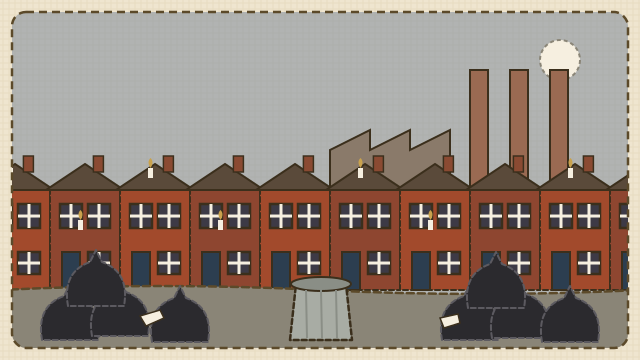
Two winters stood out. In early 1974 a miners' strike caused power shortages, and businesses were only allowed to use electricity three days a week, which became known as the Three-Day Week. In the winter of 1978–79 came a wave of big strikes. Rubbish piled up in the streets with no one to collect it, and newspapers borrowed a line from Shakespeare to call it the "Winter of Discontent". It helped pave the way for Margaret Thatcher's election in 1979.
The 1970s were also the worst years of the conflict in Northern Ireland. People who wanted Northern Ireland to join the Republic of Ireland and people who wanted it to stay in the UK were locked in a long conflict known as the Troubles. In 1972 the UK government suspended the Northern Ireland Parliament and began to run Northern Ireland directly from London. In the decades after 1969, around 3,000 people were killed in the violence in Northern Ireland.
The same decade also gave Northern Ireland a sporting hero to cheer: Mary Peters. She was born in Manchester and moved to Northern Ireland as a child. In 1972 she won an Olympic gold medal in the pentathlon (one competition made up of five athletics events). Afterwards she raised money for local athletics, managed the British women's Olympic team and kept working to promote sport and tourism in Northern Ireland. For this work she was made a Dame in 2000.
Quiz
In which event did Mary Peters win an Olympic gold medal in 1972?
Mary Peters, who was born in Manchester and grew up in Northern Ireland, won gold in the pentathlon in 1972; she was made a Dame in 2000. Rowing brings to mind Sir Steve Redgrave, cycling Sir Chris Hoy and tennis Sir Andy Murray, all sports stars from later decades.
Quiz
Which of the following statements is correct?
In 1972 the UK government suspended the Northern Ireland Parliament and direct rule began. The Good Friday Agreement wasn't signed until 1998, and the Northern Ireland Assembly was elected in 1999.