On 29 July 1948, the opening ceremony of the first Olympic Games since the Second World War was under way at Wembley Stadium in London. That same day, on the lawn of a hospital north-west of London, more than a dozen former servicemen in wheelchairs were drawing their bows in an archery contest.
That small, quiet contest grew into today's Paralympic Games. Football, cricket, tennis and golf all took shape in Britain, and even the Paralympics started here. This chapter covers the Sport section of chapter 4 of the handbook: London's three Olympic Games, 16 sporting stars you should recognise, and the big events and venues of each sport Britain is famous for.
Sports born in Britain, and two great stadiums
Sport matters a lot in many British people's lives. Several sports that are now played all over the world first took their modern form in Britain: cricket, football, lawn tennis, golf and rugby.
Big matches and events often take place in large stadiums. Two of the best known are London's Wembley Stadium and the Principality Stadium in Cardiff, the Welsh capital. If you want to get active yourself, local councils and private companies run all kinds of places to do it: swimming pools, gyms, tennis courts, football pitches and even dry ski slopes (slopes covered with an artificial surface, so you can ski without snow).
Today's Wembley Stadium opened in 2007 on the site of the old 1923 stadium, and it has about 90,000 seats. The white arch over its roof is 134 metres high and can be seen from many parts of London. One of the designers was the architect Norman Foster, who appears again in the next chapter, Arts and Culture.
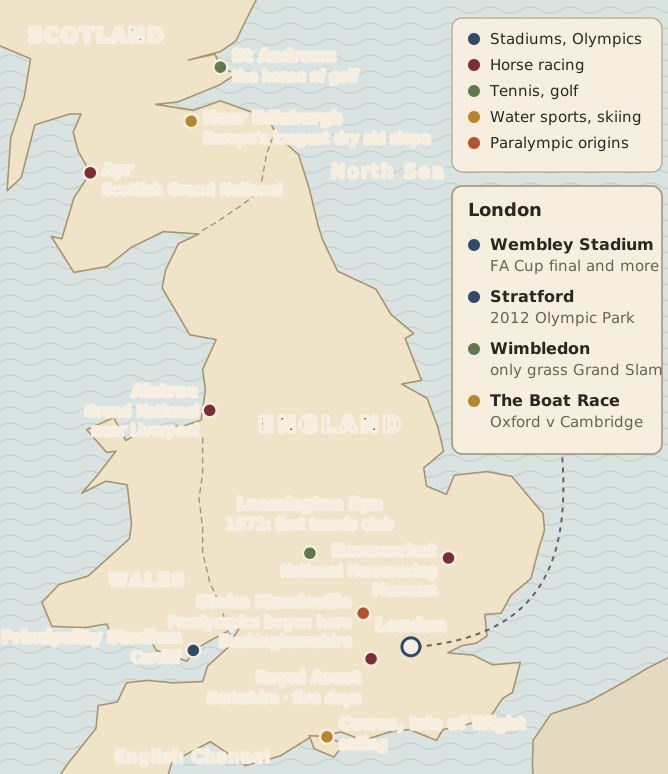
Sporting places mentioned in this chapter. The colours show the type of place: blue for stadiums and the Olympics, dark red for horse racing, green for tennis and golf, gold for water sports and skiing, and orange-red for the birthplace of the Paralympics.
Quiz
Which TWO of these sports began in Britain?
Basketball and volleyball were both invented in the USA at the end of the 19th century. The five sports to remember as British are cricket, football, lawn tennis, golf and rugby.
London hosts the Olympics three times
The UK has hosted the Olympic Games three times, in 1908, 1948 and 2012, and every time in London. For the 2012 Games the main site was at Stratford, in east London. The British team did well in many different sports and came third in the medal table. The Paralympic Games were held in London that year too.
The 1948 Games were nicknamed the "Austerity Games". Britain had only just come through the war, and food and petrol were still rationed. No new venues were built and there was no Olympic village: the men stayed in air force and army camps, and the women in London college halls.
1908London hosts the Olympics for the first time. Rome was supposed to host them, but Italy pulled out and London stepped in
1948London hosts for the second time: the first Olympics after the Second World War, known as the "Austerity Games"
1948On 29 July, the day the Olympics opened, Dr Guttmann holds the first sports contest for wheelchair patients at Stoke Mandeville Hospital
1960The first official Paralympic Games take place in Rome
2012London hosts for the third time, with the main site at Stratford in east London; Britain comes third in the medal table, and the Paralympics are held in London too
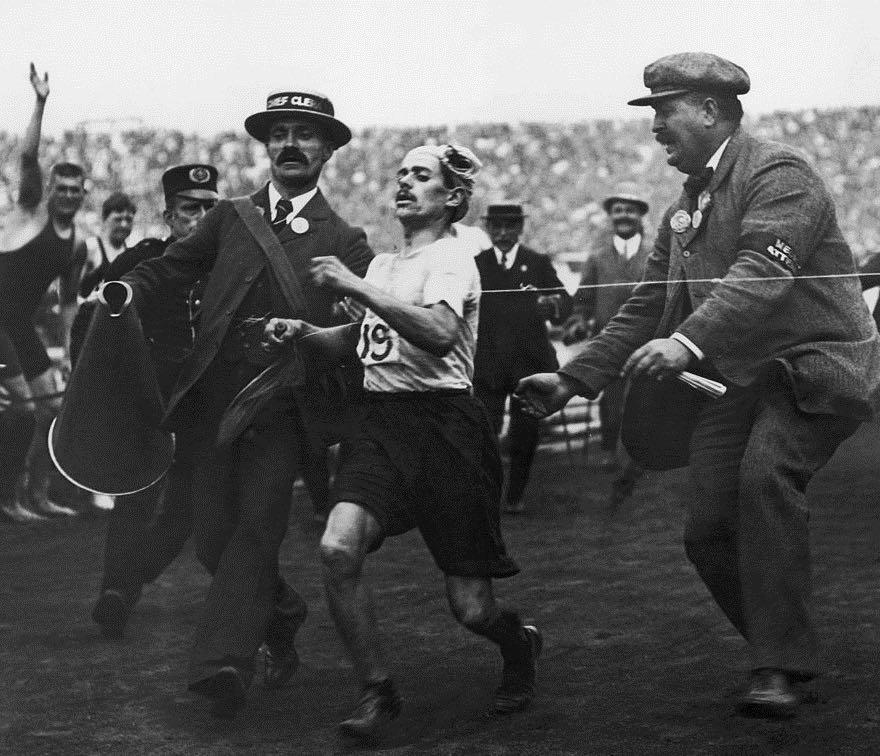
The end of the marathon at the 1908 London Olympics: the Italian runner Dorando Pietri, close to collapse, is helped over the finishing line by officials. He was the first runner into the stadium but fell several times, and was disqualified for getting help; the next day Queen Alexandra, who felt sorry for him, gave him a gilded silver cup. The race had started at Windsor Castle, and because the start and finish were moved to suit the Royal Family, it came to 26 miles 385 yards, or 42.195 km. That odd distance later became the standard length of a marathon all over the world.
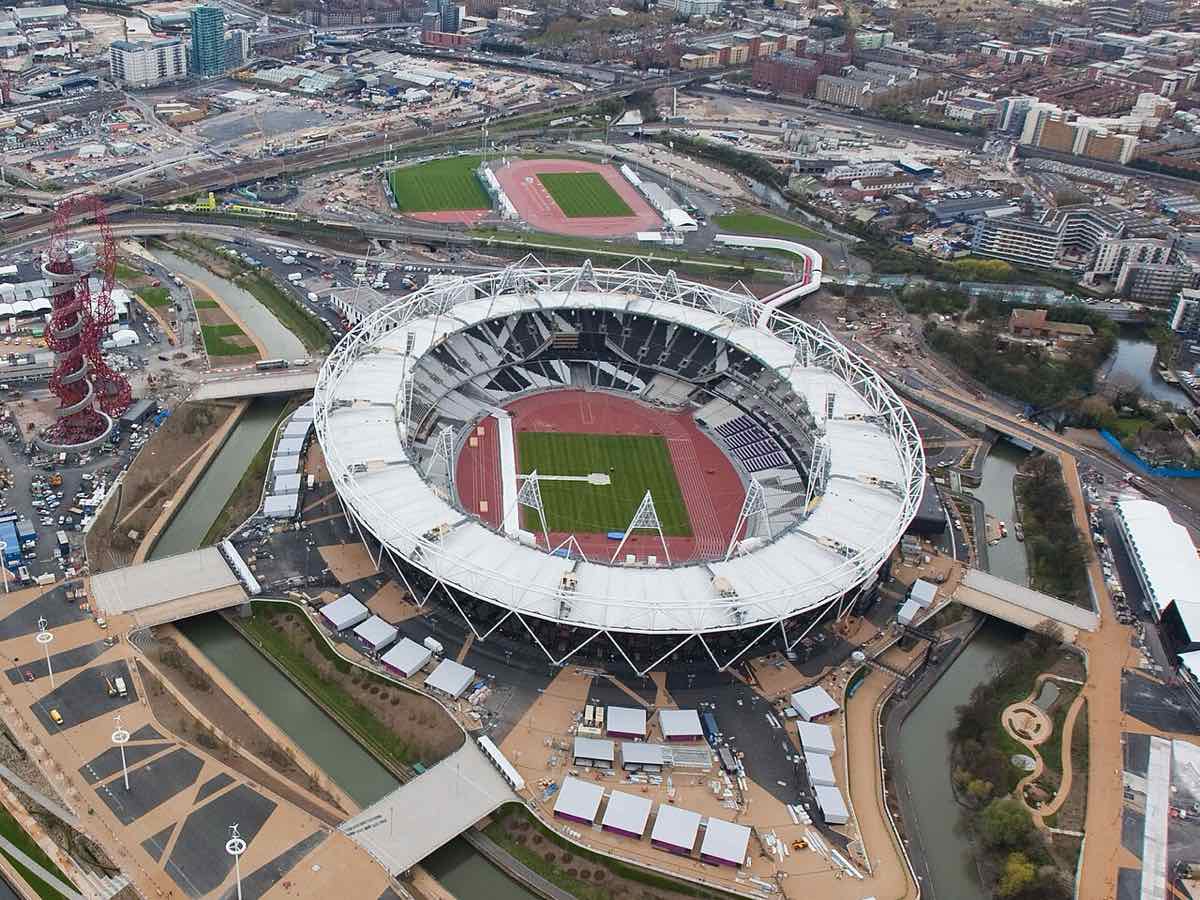
Photographer unknown, public domain, via Wikimedia CommonsThe London Olympic Park at Stratford, east London, in April 2012, just over three months before the opening ceremony.
Photo: EG Focus, CC BY 2.0, via Wikimedia Commons
Where the Paralympics began: Stoke Mandeville Hospital
The Paralympics grew out of the work of Dr Sir Ludwig Guttmann. He was a refugee who had escaped from Germany, and at Stoke Mandeville hospital in Buckinghamshire he cared for patients with spinal injuries.
In those days, people with a spinal injury were often expected to stay in bed and simply wait to die. Guttmann found new ways to treat them, and he encouraged his patients to exercise and to compete in sport. The 1948 archery contest at the start of this chapter was one of his.
Quiz
In which years did the Olympic Games take place in the UK?
All three were in London: 1908, 1948 and 2012. 1896 was Athens (the first modern Olympics), 1936 was Berlin, 2008 was Beijing and 1924 was Paris.
Quiz
Which of the following statements is correct?
The Paralympics began with Dr Guttmann's work at Stoke Mandeville Hospital in Buckinghamshire. London did host the Paralympics in 2012, but they were not the first.
16 sporting stars to know
There are 16 British sporting stars to know (counting the ice dancers Torvill and Dean as one). The test likes to ask who did what in which sport, and it often uses people from the same sport as the wrong answers: two cyclists, for example, or two wheelchair marathon winners. Use the cards below to get to know them first; the full details are in the key facts box after them.
Roger Bannister Running 1954: the first mile in under 4 minutes
Kelly Holmes Running Two Olympic running golds in 2004
Mo Farah Running Born in Somalia; 5,000 m and 10,000 m golds in 2012 and 2016
Jessica Ennis-Hill Athletics Heptathlon: Olympic gold in 2012, silver in 2016
Tanni Grey-Thompson Wheelchair racing 11 Paralympic golds; London Marathon winner 6 times
David Weir Wheelchair racing 6 golds at two Paralympics; London Marathon winner 6 times
Ellie Simmonds Swimming Paralympic golds at three Games; youngest in the 2008 British team
Chris Hoy Cycling Scottish; 6 Olympic golds and 1 silver
Bradley Wiggins Cycling 2012: the first British winner of the Tour de France; 8 Olympic medals
Steve Redgrave Rowing Golds at five Olympics in a row
Ellen MacArthur Sailing 2004: fastest solo voyage around the world
Bobby Moore Football Captain of England's 1966 World Cup winners
Ian Botham Cricket England captain; batting and bowling records
Andy Murray Tennis Scottish; 2012 US Open; Wimbledon champion in 2013 and 2016
Jackie Stewart Motor racing Scottish; Formula 1 world champion 3 times
Torvill and Dean Ice dancing 1984 Olympic gold
Some of these stars gave us famous moments. Bannister ran his mile in 3 minutes 59.4 seconds on 6 May 1954, at the Iffley Road track in Oxford, while he was still a medical student; he later became a neurologist (a doctor for the brain and nerves). After his fourth gold in 1996, Redgrave said that anyone who saw him go near a boat again had his permission to shoot him, but he came back anyway and won a fifth in 2000. At the 1984 Winter Olympics in Sarajevo, Torvill and Dean skated to Boléro, and every judge gave them a perfect 6.0 for artistic impression. And on 4 August 2012, which the British press called "Super Saturday", Ennis (heptathlon), the long jumper Greg Rutherford and Farah (10,000 metres) all won gold in less than an hour.
Quiz
Which British athlete, in 1954, became the first person ever to run one mile in less than four minutes?
It was Roger Bannister. Mo Farah won two long-distance golds in 2012, Steve Redgrave is a rower, and Bobby Moore captained England's football team at the 1966 World Cup.
Quiz
Which TWO of these athletes each won the London Marathon six times?
Tanni Grey-Thompson and David Weir both race in wheelchairs, and each won the London Marathon six times. Memory hook: wheelchair + marathon + six. Mo Farah and Kelly Holmes are Olympic running champions.
Quiz
Which of the following statements is correct?
In 2012 Murray won the US Open, his first Grand Slam singles title; at Wimbledon that year he lost the final. His Wimbledon titles came later, in 2013 and 2016.
Quiz
In which TWO years did Andy Murray win the men's singles title at Wimbledon?
Murray won Wimbledon in 2013 and 2016. In 2012 he won the US Open instead, along with Olympic gold and silver. A memory aid: 2016 was a double year for him, with his second Wimbledon title and a second Olympic gold.
Quiz
Is the statement below TRUE or FALSE?
Sir Chris Hoy is a Scottish racing driver who was Formula 1 world champion three times.
False. Both men are Scottish, so they're easy to mix up. Chris Hoy is a cyclist with six Olympic golds and one silver; the three-time Formula 1 world champion is Jackie Stewart.
Cricket, football and rugby
Cricket: five days and still a draw
Cricket started in England, and today people play it in many countries. A single match can go on for up to five days and still end in a draw. The game's quirky character and complicated rules are thought to show the British at their best, with their strong sense of fair play.
Lots of cricket phrases have become everyday English, and if you live in the UK you're sure to hear them:
rain stopped play
Literally, the game was stopped by rain. Used when something is interrupted by an unexpected problem.
batting on a sticky wicket
Batting on a wet, sticky pitch where the ball bounces in strange ways. Used when you are in a difficult situation.
playing a straight bat
Blocking the ball carefully and correctly. Used for dealing with something in a careful, safe way, without taking risks.
bowled a googly
Bowled a spinning ball that turns the opposite way to what the batsman expects. Used when someone gives you a tricky problem you weren't ready for.
it's just not cricket
Literally, "this isn't cricket". Used when something is unfair or dishonest.
The best-known cricket competition is the Ashes, a series of Test matches between England and Australia.
The name began as a joke. In 1882 Australia beat England in a Test match on English soil for the first time, and a London paper, The Sporting Times, printed a mock death notice saying that English cricket had died, its body would be cremated and the ashes taken to Australia. The next England captain to tour Australia promised to "win back the ashes", and after the series he was given a small urn said to hold a burnt bail (one of the small pieces of wood on top of the stumps). The urn is still kept in the museum at Lord's cricket ground in London.
Football: the UK's favourite sport
Football is the most popular sport in the UK. It has a long history here, and the first professional clubs appeared in the late 19th century.
Leagues: England, Scotland, Wales and Northern Ireland each run their own leagues, with clubs from different towns and cities. The English Premier League has a huge international audience, and many of the world's best players play in it.
Europe: many UK clubs also take on teams from the rest of Europe in competitions such as the UEFA Champions League.
Home teams: many towns and cities have a professional club, and fans are proud to back their local team. Rivalry between clubs, and between their fans, can be fierce.
National teams: each of the four nations has its own national team, which plays in tournaments such as the FIFA World Cup and the UEFA European Football Championships. The only major international tournament England has won is the 1966 World Cup, which the UK hosted. That final was played at Wembley Stadium, where England beat West Germany 4–2 after extra time. The captain who received the trophy from Elizabeth II was Bobby Moore, and today a statue of him stands outside the new Wembley.
Amateur football: every week lots of people play amateur matches in parks all over the UK, and football is a popular community sport.
Rugby: two sets of rules
Rugby began in England in the early 19th century. There are two kinds, each with its own rules: rugby union and rugby league. England, Wales, Scotland and Northern Ireland each have leagues and national teams in both kinds of rugby. Northern Ireland joins with the Republic of Ireland to make one Irish team.
Rugby union's most famous competition is the Six Nations Championship, played by England, Ireland, Scotland and Wales, plus France and Italy.
The best-known rugby league competition for clubs is the Super League.
As for how rugby began, the story goes that in 1823 William Webb Ellis, a pupil at Rugby School, picked up the ball during a game of football and ran with it, and so "invented" the sport. The story was only written down decades later, and many historians think it is just a legend. Even so, the Rugby World Cup trophy is still called the Webb Ellis Cup.
Quiz
The Ashes is a famous series of Test cricket matches between England and which country?
The Ashes is England against Australia. Memory hook: the joke death notice of 1882 said the "ashes" of English cricket had been taken to Australia.
Quiz
Which TWO of these countries take part in the Six Nations rugby union championship?
The six nations are England, Ireland, Scotland and Wales, plus France and Italy from mainland Europe. New Zealand and Australia are strong rugby countries, but they aren't in Europe and don't play in the Six Nations.
Horse racing, golf and tennis
Horse racing: the sport of kings and queens
Horse racing in Britain goes back a very long way: there is evidence of races as far back as Roman times, and the sport has always had close links with the Royal Family. There are racecourses all over the country, and four places are especially worth knowing:
Royal Ascot, in Berkshire: racing over five days, with members of the Royal Family in the crowd. The racecourse was founded in 1711 by Queen Anne, about 10 km from Windsor Castle, and every June the spectators' hats and outfits get almost as much attention as the horses.
The Grand National: run at Aintree, near Liverpool.
The Scottish Grand National: run at Ayr, in Scotland.
The National Horseracing Museum: in Newmarket, Suffolk.
Golf: Scotland's old game
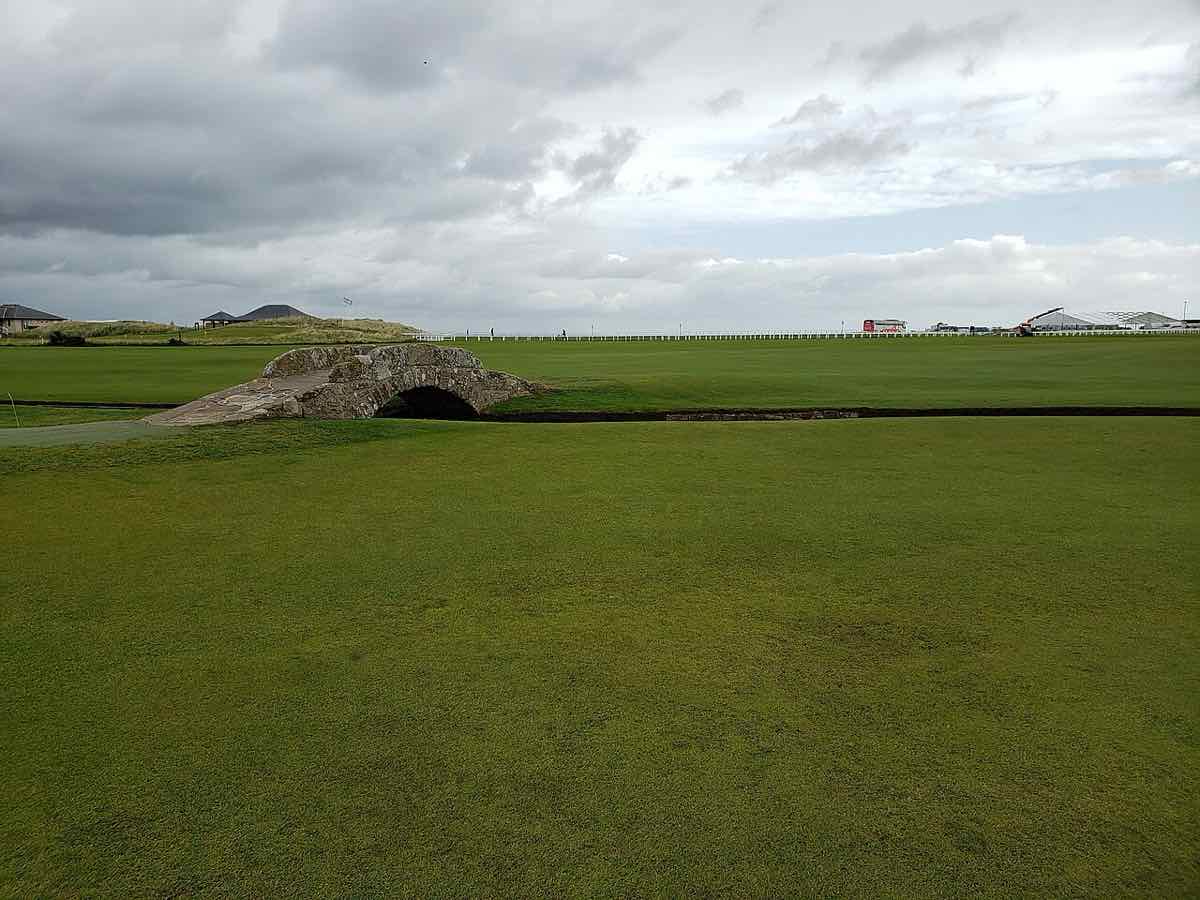
The modern game of golf goes back to 15th-century Scotland. Today lots of people play it, for fun or as professionals, and you'll find golf courses, both public and private, everywhere in the UK. St Andrews, in Scotland, is called the home of golf.
In fact the word "golf" first appears in historical records in a ban. In 1457 King James II of Scotland banned golf and football, because people were playing them instead of practising archery.
The Open Championship is the only one of golf's four "Majors" held outside the United States, and a different course hosts it each year.
The Swilcan Bridge on the 18th hole of the Old Course at St Andrews, a favourite photo stop for golf fans.
Photo: Eddy23, CC BY-SA 4.0, via Wikimedia Commons
Tennis: the grass of Wimbledon
Tennis as we know it today took shape in England towards the end of the 19th century. The first tennis club was set up in Leamington Spa in 1872.
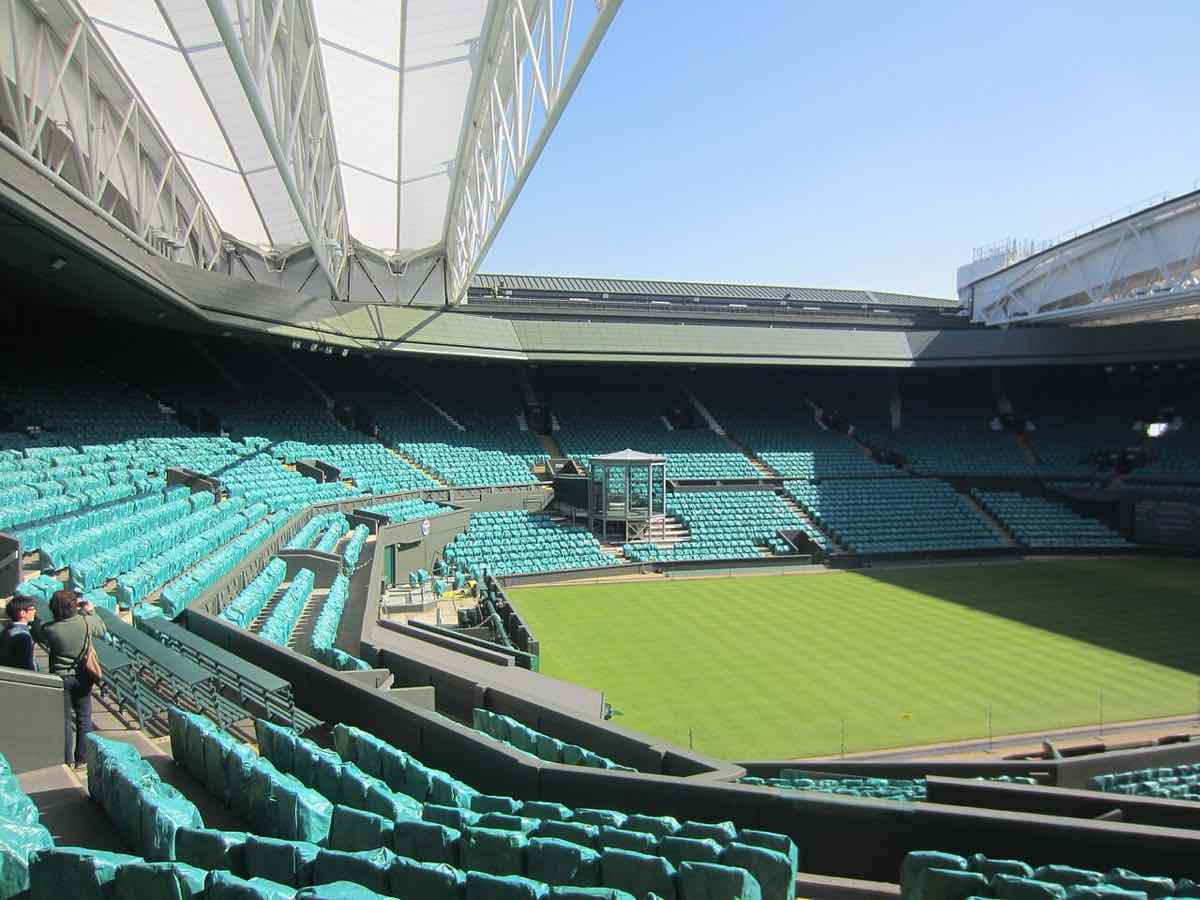
Britain's best-known tournament is The Wimbledon Championships, played every summer at the All England Lawn Tennis and Croquet Club. No tennis tournament in the world is older, and of the four Grand Slam events, it is the only one played on grass.
The club's full name includes "croquet" because it started out as a croquet club. Tennis was added later, and the first Wimbledon Championships took place in 1877. Today a bowl of strawberries and cream is part of any trip to Wimbledon, and the players must follow a rule to dress almost entirely in white.
Centre Court at Wimbledon, photographed in March, outside the tournament season.
Photo: Daniel from United Kingdom, CC BY 2.0, via Wikimedia Commons
Quiz
Where is the Grand National horse race held?
All four options are well-known horse-racing places: Ascot is Royal Ascot, Ayr hosts the Scottish Grand National, and Newmarket has the National Horseracing Museum. The Grand National is run at Aintree, near Liverpool.
Quiz
Is the statement below TRUE or FALSE?
Wimbledon, which is played on grass, is the world's oldest tennis tournament.
True. Wimbledon is the oldest tennis tournament, and the only Grand Slam played on grass. Don't confuse it with the first tennis club, which was set up in Leamington Spa in 1872.
Sailing, rowing, motor racing and skiing
Water sports: a seafaring tradition
Britain is surrounded by sea, and sailing has always been popular, a sign of the country's long history as a seafaring nation.
In 1966–67 the British sailor Sir Francis Chichester became the first person to sail around the world on his own, going round the southern tips of two continents: the Cape of Good Hope in Africa and Cape Horn in South America. When he got home in 1967, Elizabeth II knighted him with the same sword that Elizabeth I had used almost four hundred years earlier to knight Francis Drake, the first Englishman to lead a voyage around the world (see The Tudors).
Sir Robin Knox-Johnston went one better two years later: he sailed alone around the world without stopping once, the first person ever to do so.
There are sailing events all over the UK. The best-known takes place at Cowes, on the Isle of Wight.
Rowing is popular both as a hobby and as a competitive sport. Every year Oxford and Cambridge Universities race each other on the River Thames, and lots of people watch. This Boat Race began in 1829 and is rowed on the Thames in south-west London, from Putney to Mortlake, a distance of about 6.8 km.
Motor racing: since 1902
Britain has a long history of motor sport, for both cars and motorbikes, and car racing began here in 1902. The UK is still a world leader in designing and building motor-sport technology. Every year Britain hosts a Formula 1 Grand Prix, and several British drivers have become Formula 1 world champion. Recent ones include Damon Hill, Lewis Hamilton and Jenson Button. The British Grand Prix is usually held at Silverstone, in the English Midlands, and the first ever Formula 1 World Championship race was held there on 13 May 1950.
Skiing: no snow needed
Skiing is becoming more and more popular in the UK. Lots of people take skiing holidays abroad, but you can also practise on dry slopes around the country, and in winter there is sometimes real snow to ski on. Scotland has five ski centres, and Europe's longest dry ski slope is near Edinburgh.
Quiz
Who was the first person to sail alone around the world without stopping?
Chichester was the first to sail around the world alone (1966/67, with a stop on the way). Two years later, Knox-Johnston made the first solo voyage without stopping. MacArthur made the fastest solo voyage in 2004, and Redgrave is a rower.
Quiz
Every year, students from which two universities race each other in rowing boats on the River Thames?
It's Oxford and Cambridge. Their yearly race on the Thames shows that rowing is popular as a competitive sport as well as a hobby.
All in London; in 2012 the main site was Stratford, east London, and Britain came third in the medal table
Paralympics
Dr Guttmann (a German refugee) and his spinal injury patients at Stoke Mandeville, Buckinghamshire; London also hosted the 2012 Paralympics
1954 Bannister
The first mile in under four minutes
Stewart
Scottish racing driver; Formula 1 world champion three times
1966 Bobby Moore
Captain of England's World Cup winners; England's only international tournament win
Botham
England cricket captain; batting and bowling records
Torvill and Dean
Ice dancing; 1984 Olympic gold; four world titles in a row
Redgrave
Rowing; golds at five Olympics in a row
Grey-Thompson / Weir
Wheelchair athletes; both won the London Marathon six times. Grey-Thompson: 16 Paralympic medals (11 gold), 30 world records. Weir: 6 golds at two Paralympics
Holmes
Two running golds at the 2004 Olympics
MacArthur
Fastest solo voyage around the world, 2004
Hoy / Wiggins
Cycling. Hoy: Scottish, 6 Olympic golds and 1 silver, 11 world titles. Wiggins: first British Tour de France winner (2012), 8 Olympic medals, with golds in 2004, 2008, 2012 and 2016
Farah
Born in Somalia; 5,000 m and 10,000 m golds at the 2012 and 2016 Olympics
Ennis-Hill
Heptathlon: Olympic gold in 2012, silver in 2016
Murray
Scottish; won the 2012 US Open men's singles, the first British man since 1936 to win a Grand Slam singles title; Wimbledon champion in 2013 and 2016; Olympic gold in 2012 and 2016
Simmonds
Paralympic swimming golds in 2008, 2012 and 2016; youngest in the 2008 British team
The Ashes
England v Australia, a series of cricket Test matches
Football
Most popular sport; professional clubs from the late 19th century; Premier League; 1966 World Cup
Rugby
Began in England in the early 19th century; union and league; Six Nations, Super League
Horse racing
Royal Ascot (Berkshire, five days), Grand National (Aintree), Scottish Grand National (Ayr), museum (Newmarket)
Golf
15th-century Scotland; St Andrews; The Open is the only Major outside the USA
Tennis
First club at Leamington Spa, 1872; Wimbledon is the oldest tournament and the only Grand Slam on grass
Sailing / Rowing
Chichester first to sail alone around the world (1966/67), via the Cape of Good Hope and Cape Horn; Knox-Johnston first to do it without stopping; Cowes; Oxford v Cambridge Boat Race
Motor sport
Since 1902; a British Formula 1 Grand Prix every year; Hill, Hamilton, Button
Skiing
Five ski centres in Scotland; Europe's longest dry ski slope near Edinburgh
 Roger Bannister
 Kelly Holmes
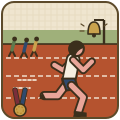 Mo Farah
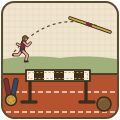 Jessica Ennis-Hill
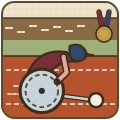 Tanni Grey-Thompson
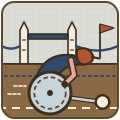 David Weir
 Ellie Simmonds
 Chris Hoy
 Bradley Wiggins
 Steve Redgrave
 Ellen MacArthur
 Bobby Moore
 Ian Botham
 Andy Murray
 Jackie Stewart
 Torvill and Dean