1870–1928
Votes for women: 1918 and 1928
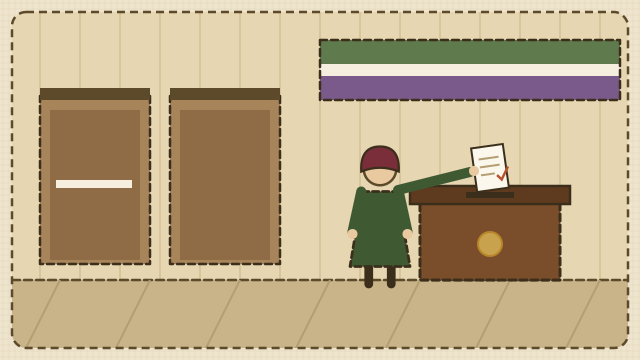
Before 1870, everything a woman earned or owned became her husband's the moment she married. Laws passed in 1870 and 1882 allowed married women to keep what they earned and owned. From the late 1800s into the early 1900s, a growing number of women campaigned and demonstrated for more rights, and above all for the vote. They became known as suffragettes.
Their best-known leader was Emmeline Pankhurst (1858–1928), who was born in Manchester. In 1889 she founded the Women's Franchise League, which campaigned for married women to be able to vote in local elections. In 1903 she helped to start the WSPU (Women's Social and Political Union), the first group whose members were called suffragettes. They protested by breaking the law on purpose (civil disobedience): they chained themselves to railings, smashed windows and set fire to buildings. Many, including Pankhurst herself, went on hunger strike.
The real turning point was the First World War. During the war, huge numbers of women worked in factories, drove ambulances and farmed the land, and they kept the country going. When the war was over they finally won the vote, but in two steps:
Women over 30 could vote and stand for Parliament. Men could vote from the age of 21.
The voting age for women dropped to 21, at last the same as for men.
Pankhurst died in 1928, just a few weeks before women won the vote on the same terms as men.
The first woman elected to the House of Commons, in the 1918 election, never actually took her seat. She was Constance Markievicz from Ireland, a member of Sinn Féin, the party that wanted Irish independence, and she refused to sit in London. The first woman to sit in the Commons was Nancy Astor, elected in 1919.
Quiz
In 1918, women over what age were given the right to vote?
30 in 1918; 21 in 1928, the same as men; and 18 for everyone in 1969. It is best to learn the three ages (30, 21, 18) together with the three years (1918, 1928, 1969).
Quiz
Who was the best-known leader of the suffragettes, the women who campaigned for the right to vote?
Emmeline Pankhurst, born in Manchester in 1858, helped to set up the WSPU in 1903, the first group whose members were called suffragettes. Boudicca led a revolt against the Romans, Florence Nightingale is remembered for her nursing work in the Crimean War, and Jane Austen was a novelist.