The Middle Ages: Magna Carta, the Black Death and the Wars of the Roses
This chapter covers nearly 400 years. You'll meet a document that worked for only ten weeks but went on to change the world, a plague that killed one person in three, a language the nobles ignored for 300 years before it made a comeback, and a war between two roses.
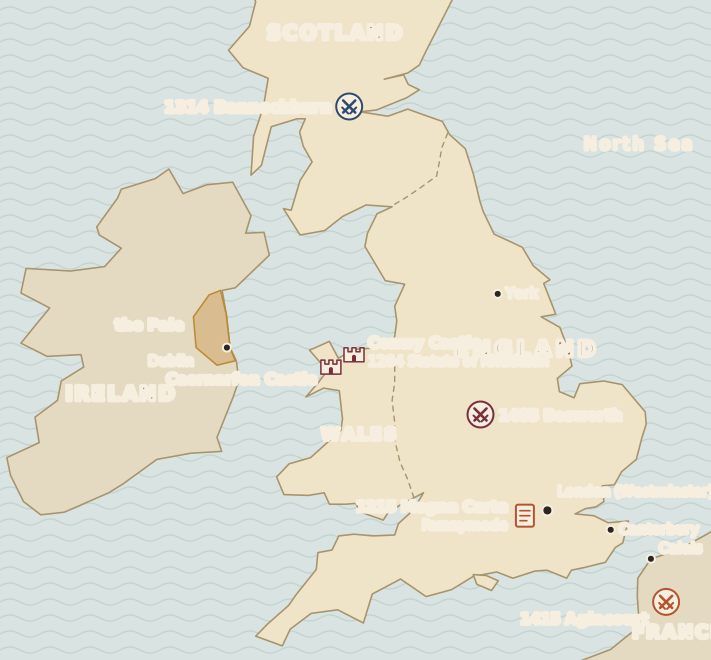
Places in this chapter. ⚔ marks a battle, the castle symbols are castles Edward I built in Wales, and the document symbol is Runnymede, where the king accepted Magna Carta.
Wars without end: Wales, Scotland and Ireland
In the widest sense, the Middle Ages, or the medieval period, stretch across about a thousand years: from AD 476, when the Roman Empire came to an end, until 1485. This chapter picks up the story after the Norman Conquest. England's medieval kings were hardly ever at peace. They fought the lords of Wales, Scotland and Ireland for land, and each of these stories had a different ending.
Wales: a land held down by castles
In 1284 King Edward I issued the Statute of Rhuddlan (a statute is a written law). It put Wales under the rule of the English Crown. To hold on to his new land, Edward built a chain of enormous castles across north Wales, such as Conwy and Caernarvon (spelled Caernarfon today). The last Welsh revolts were put down by the mid-1400s, and after that English law and the English language were brought into Wales.
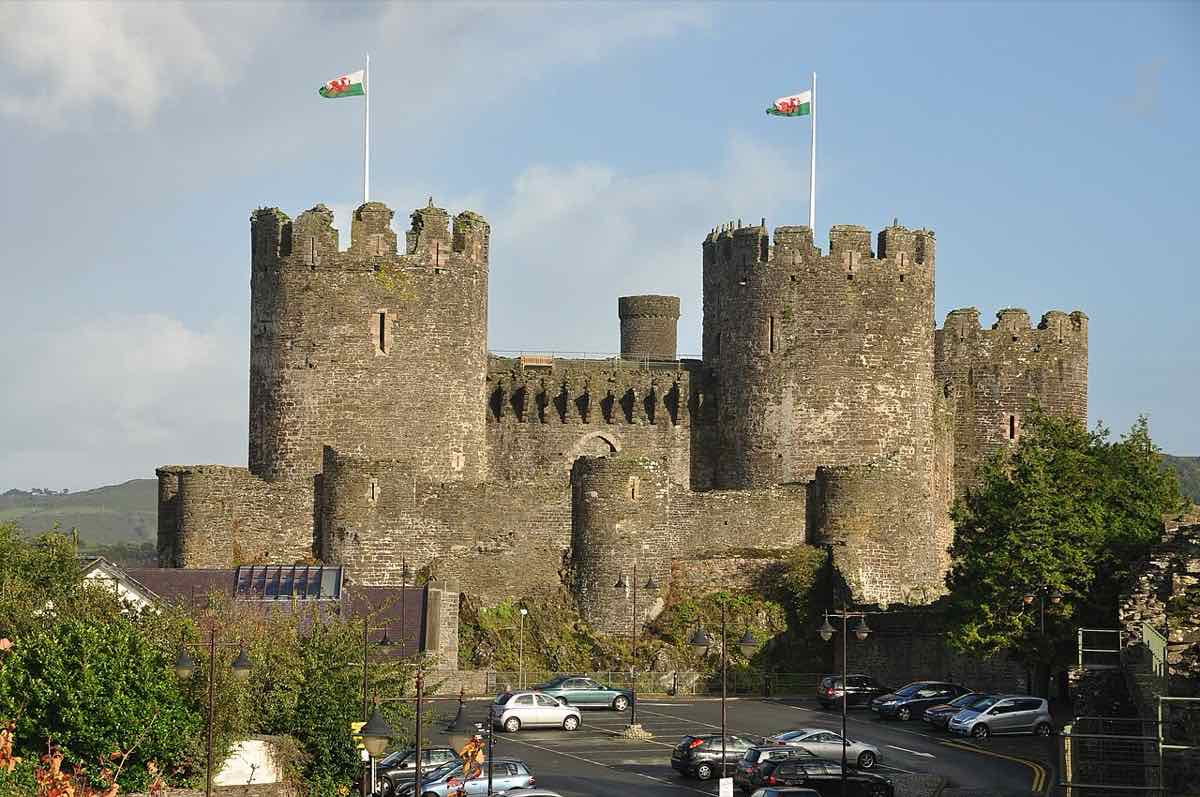
Conwy Castle, built by Edward I. Work on it began in 1283. The whole town is ringed by walls about 1.3 km long, with 21 towers, and you can still walk along the top of them. They even include a row of 12 medieval toilets, which is very rare.
Photo: Nilfanion / Wikimedia UK, CC BY-SA 4.0, via Wikimedia Commons
Scotland: one blow at Bannockburn
England wanted Scotland as well, but it never managed to take it. In 1314 the Scottish king Robert the Bruce beat the army of the English king Edward II at the Battle of Bannockburn. The English never conquered Scotland.
The battle opened with a duel. On the first day, an English knight called Henry de Bohun recognised Robert the Bruce and charged straight at him with a long spear. Robert stepped his horse aside and swung his axe down on the knight's helmet, splitting it in two. The Scottish soldiers were thrilled, and the next day they won.
Ireland: they came to help, and stayed
In the early Middle Ages, Ireland was its own independent country. English troops first arrived there because an Irish king had asked them for help. Then they decided to stay. By 1200 the English were ruling a piece of land around Dublin called the Pale, and in other parts of Ireland some powerful lords agreed that the English king was in charge.
Quiz
In the broad sense, which period of time do the Middle Ages (the medieval period) cover?
The Middle Ages begin in 476, when the Roman Empire fell, and close in 1485, roughly a thousand years in all, though this chapter's story starts after 1066. AD 43 to 410 is when the Romans ruled Britain, 1485 to 1603 is the Tudor period and 1603 to 1714 is the Stuart period.
Quiz
Which battle in 1314 meant that the English never conquered Scotland?
Bannockburn, 1314: Robert the Bruce beat the English. Hastings was in 1066, Agincourt in 1415 and Bosworth in 1485. These four battles are often offered together as answers to one question, so learn each one with its date.
Quiz
Is the statement below TRUE or FALSE?
The Statute of Rhuddlan, introduced by Edward I in 1284, brought Wales under the English Crown.
True. To remember it: in 1284 Edward I locked Wales in with a law and a ring of castles.
Fighting abroad: the Crusades and the Hundred Years War
The English fought overseas too. Many knights joined the Crusades, wars in which Christians from across Europe tried to take control of the Holy Land.
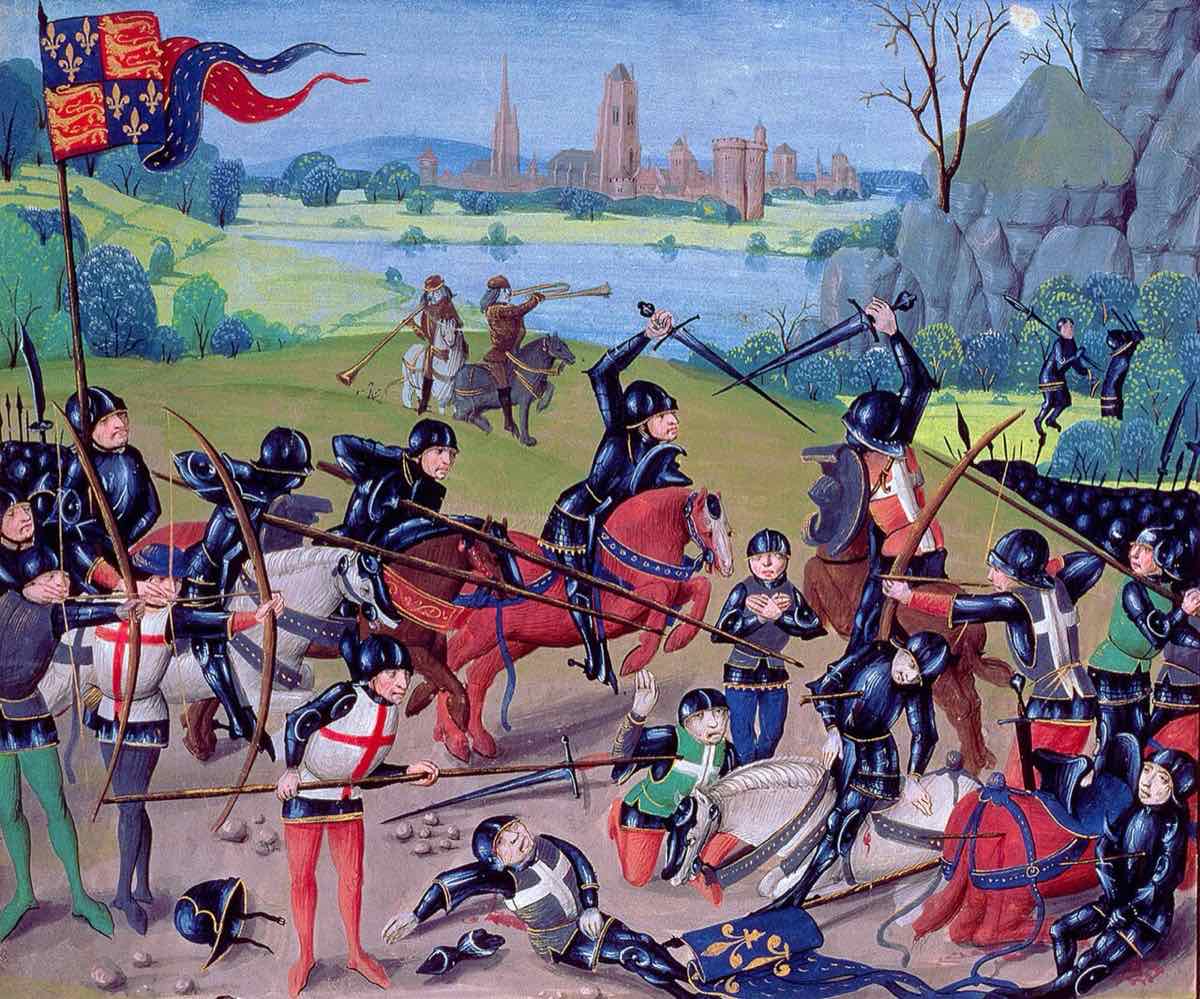
English kings also fought France in the Hundred Years War. Don't be fooled by the name: it really went on for 116 years. Its most famous battle came in 1415 at Agincourt. There, King Henry V won even though the French army was far bigger than his. Even so, by the 1450s the English had more or less pulled out of France.
The Battle of Agincourt in the 15th-century St Albans Chronicle.
Lambeth Palace Library MS 6, public domain, via Wikimedia Commons
Nobody at the time called it the Hundred Years War. French writers only came up with that name in the 19th century, and "the Wars of the Roses" was also named long afterwards; people living through them simply felt the fighting would never stop. You may also have read online that the rude two-finger "V" sign began with English archers, waving the fingers the French supposedly cut off captured archers. It's a popular story, but no record from the time backs it up, so it is most likely a later legend.
Quiz
How long did the Hundred Years War actually last?
It's called the Hundred Years War, but it really lasted 116 years. Questions where the name and the facts don't match come up a lot.
Feudalism: land in return for loyalty
All these wars needed soldiers, and the king found them through the way land was held. In this period, society was built around land. The Normans brought a land system called feudalism. The king handed out land to his lords, and in exchange the lords had to support him when he went to war. Everyone who held land had to supply a fixed number of men to fight. A few peasants owned land of their own, but the majority were serfs. A serf got a small strip of the lord's land to grow food on. In return, he had to work for the lord, and he wasn't free to leave.
The same system grew up in the south of Scotland. But in the north of Scotland and in Ireland, land belonged to members of clans (large, important families).
Quiz
Which of the following statements is correct?
Under feudalism the king gave land to the lords, and the lords sent men to fight for him. A is wrong: only some peasants had their own land. Most were serfs, who had to work for their lord and were not allowed to leave.
The Black Death: one person in three
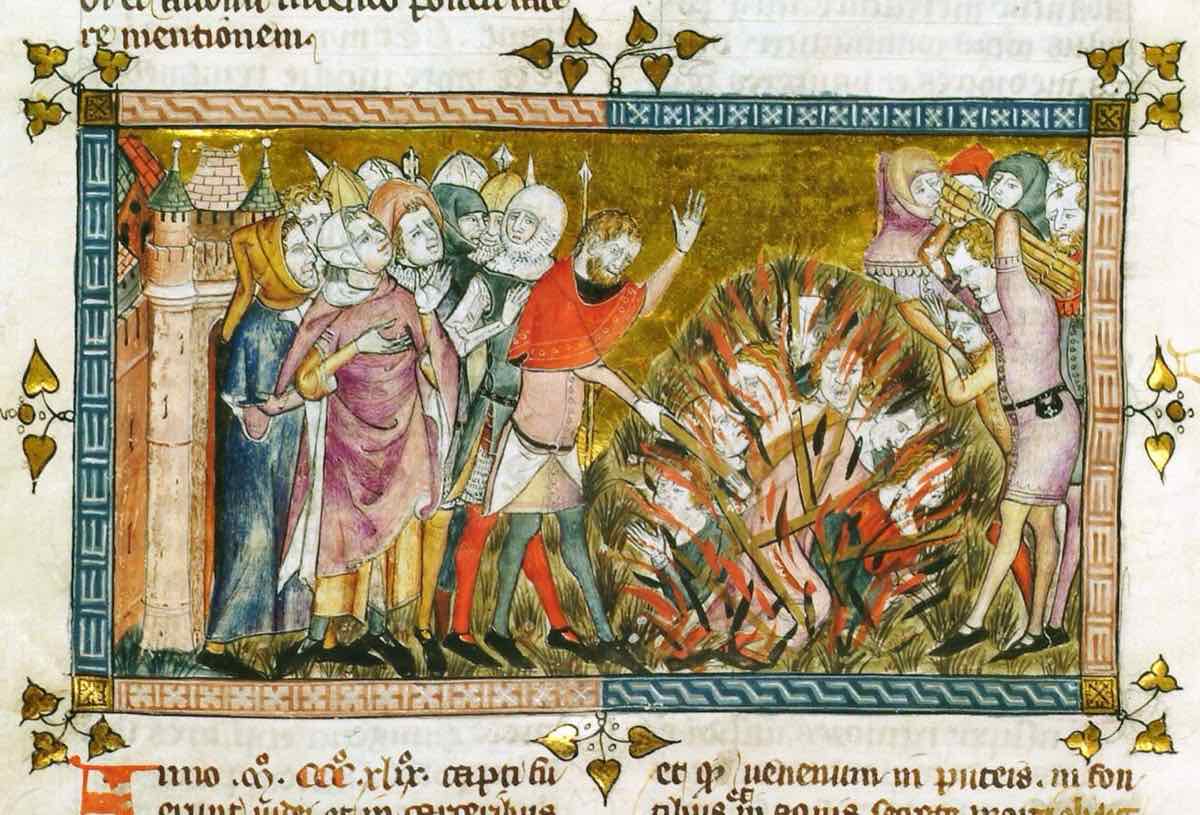
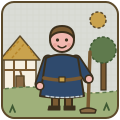
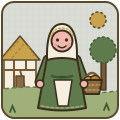
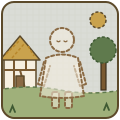
For a long time this order of lords and serfs seemed fixed, but in the middle of the 14th century a disaster shook it. In 1348 a plague arrived in Britain. Later it came to be called the Black Death. Roughly one in three people in England died, and Scotland and Wales lost about the same share. It was one of the worst disasters in British history.
Survived
Survived
Died of the Black Death
People in Tournai, in today's Belgium, bury victims of the Black Death in 1349. It was painted not long after the plague.
Painting by Pierart dou Tielt, public domain, via Wikimedia Commons
With so many people suddenly gone, society changed:
There were fewer mouths to feed, so farmers needed to grow less grain.
There were fewer workers, so peasants started asking for more pay.
New groups in society appeared, like people who owned big estates. They were later known as the gentry.
Many people moved from the countryside into the towns. The towns grew richer, and a strong middle class developed.
Quiz
Approximately what proportion of the population of England died in the Black Death of 1348?
About one in three. The usual traps are "one half" and "one quarter". Picture three people standing in a row, with one of them missing.
Magna Carta: the king must obey the law too
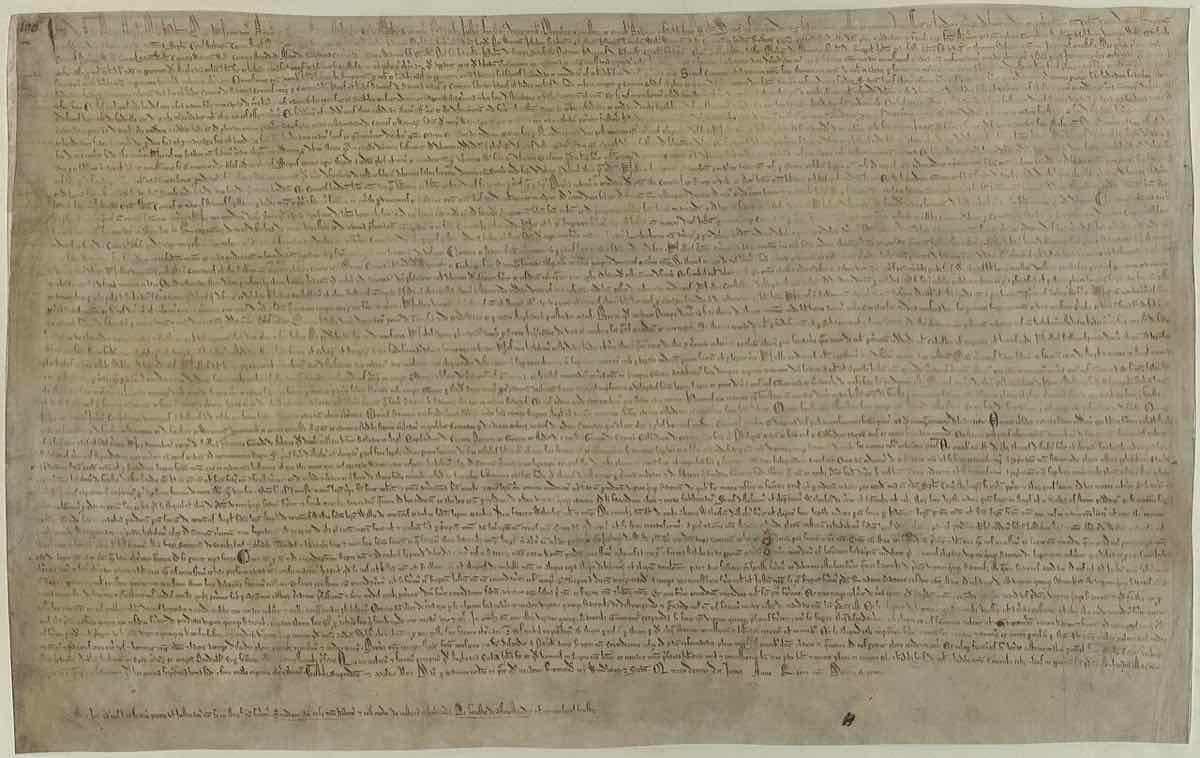
Lords owed the king soldiers, but they also expected him to respect their rights. To see how that idea was first written down, we need to go back more than a century before the Black Death. In 1215 King John fell out badly with his nobles. (There has only ever been one King John, which is why he has no number after his name.) He kept raising taxes and losing wars, and in the end the nobles had had enough. At Runnymede, a meadow beside the River Thames west of London, they made him accept a document called Magna Carta. The name is Latin for "Great Charter". Until then, almost nothing officially limited what a king could do.
The big idea behind it was simple: even the king has to follow the law. It protected the nobles' rights and stopped the king from raising taxes, or making and changing laws, just as he pleased.
An original 1215 Magna Carta, kept at the British Library. The whole text is in Latin, written on a single sheet of parchment (animal skin prepared for writing on).
British Library, Cotton MS Augustus II.106, CC0, via Wikimedia Commons
In practice, Magna Carta lasted only about ten weeks. That August the Pope declared it invalid, and the king and the nobles were soon at war again; later kings issued several new versions, and only slowly did it become one of the foundations of English law. King John never actually signed it, either: his royal seal was attached instead. Only four copies from 1215 survive, two in the British Library and two belonging to the cathedrals of Lincoln and Salisbury.
The birth of Parliament
Kings had always had a circle of advisers, including powerful nobles and leaders of the Church. Whenever the king needed money, he called them together for a meeting. That is how Parliament began. Over time it divided into two parts, or "Houses":
House of Lords
Nobles, great landowners and bishops
House of Commons
Knights (usually smaller landowners) and rich people from the towns
Only a tiny number of people could vote for members of the House of Commons, though. Scotland's Parliament was made up of three groups, called the Estates: the lords, the commons and the clergy (church leaders).
In this period the idea that judges should be independent of the government also started to take shape. In England, judges settled cases by following earlier decisions and old traditions, and this built up into the common law. In Scotland the law was "codified", which means it was written down as a set of rules.
Quiz
What did the Magna Carta establish in 1215?
The heart of Magna Carta is that the king must obey the law too. Votes for all adults only came in the 20th century; England and Scotland started sharing a parliament in 1707; and it was Henry VIII who broke the English Church away from Rome.
Quiz
In the Middle Ages, who sat in the House of Commons?
A describes members of the House of Lords. The Commons was made up of knights (smaller landowners) and rich people from the towns.
English makes a comeback: Chaucer and Caxton
In the last chapter you saw that after the Norman Conquest the nobles spoke French while the peasants spoke Old English. Three hundred years later the situation had turned round. By 1400, government papers in England were written in English, and the royal court and Parliament now chose English over French.
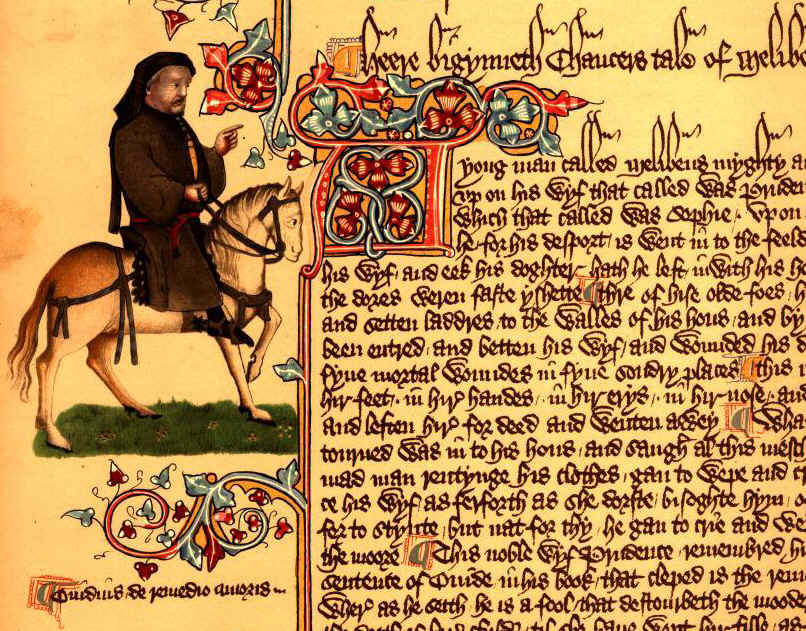
The most famous writer of the time was Geoffrey Chaucer. He wrote a collection of poems in English called The Canterbury Tales. In it, a group of pilgrims (people making a religious journey) travel together to Canterbury, and to pass the time on the road they take turns telling stories.
Writing wasn't Chaucer's day job. He was a royal official in charge of the king's building works, and when he died in 1400 it was this job that earned him a grave in Westminster Abbey. Later, more and more poets were buried close to him, and that part of the Abbey became the famous Poets' Corner.
Chaucer in the Ellesmere manuscript from the early 15th century, riding a horse just like one of his own pilgrims.
Unknown artist, public domain, via Wikimedia Commons
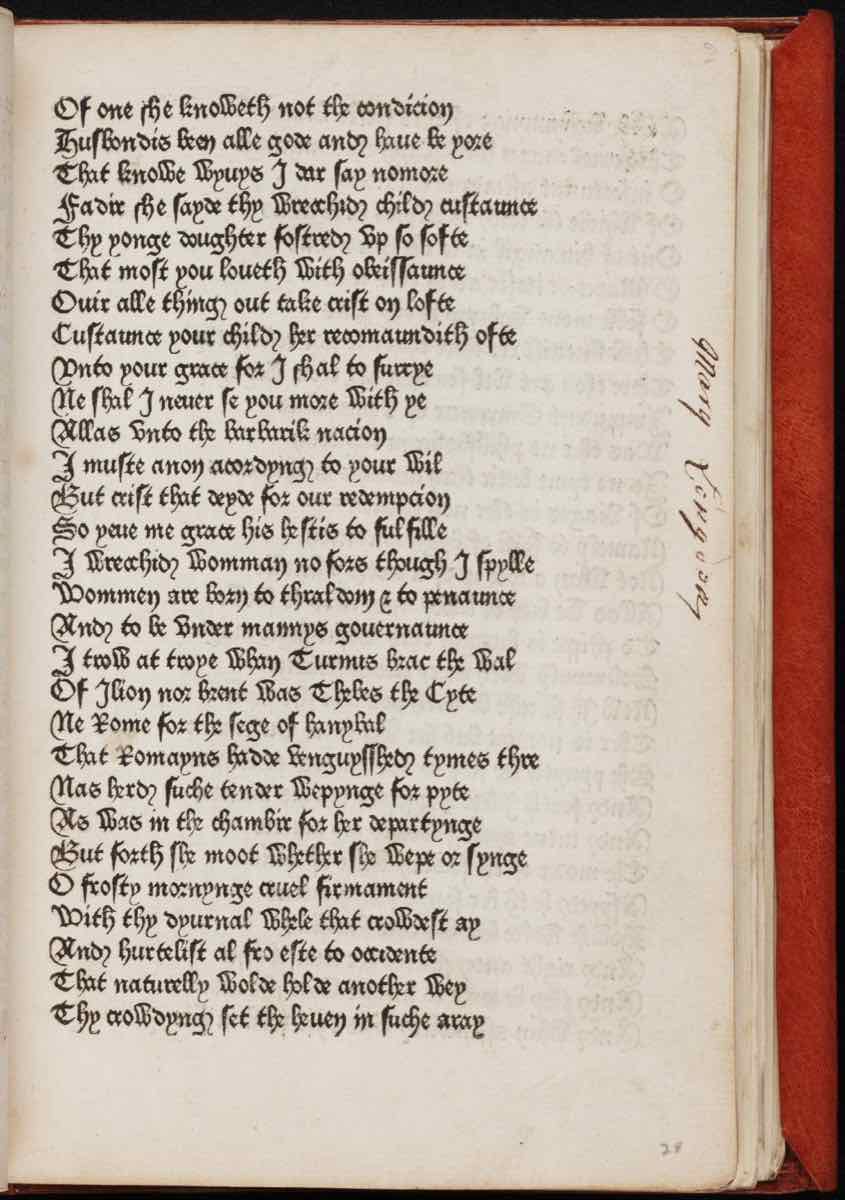
Later, William Caxton became the first person in England to produce books with a printing press, and The Canterbury Tales was one of the very first books he printed. Before this, every book had to be copied out by hand, word by word. The printing press meant that books in English could at last be made in large numbers.
A page from the edition of The Canterbury Tales that Caxton printed at Westminster in London (about 1477).
Beinecke Library, Yale University, public domain, via Wikimedia Commons
In Scotland, many people still spoke Gaelic, while the Scots language was also growing. The poet John Barbour wrote a long poem in Scots called The Bruce, which tells the story of the Battle of Bannockburn.
Castles, cathedrals and skilled workers from abroad
Lots of castles were built in the Middle Ages, and some of them are still in use, such as Windsor and Edinburgh. Great cathedrals went up too, like Lincoln. Their windows were often made of stained glass that told stories from the Bible and about the saints. York Minster is a well-known example.
England made a lot of money by selling wool abroad. It also drew in skilled workers from other countries: weavers from France, engineers from Germany, glass makers from Italy, and people from Holland who knew how to build canals.
Quiz
Who wrote The Canterbury Tales, a collection of poems about pilgrims travelling to Canterbury?
Chaucer wrote it; Caxton printed it. The two names both start with C and are easy to mix up. A trick to keep them apart: "Chaucer" sounds a little like "author", and he was the author.
Quiz
Is the statement below TRUE or FALSE?
In England, the first person to produce books on a printing press was William Caxton.
True. Caxton brought printing to England and set up his press at Westminster in London.
The Wars of the Roses: red and white become one rose
Losing the war in France left England's nobles angry and divided, and the king, Henry VI, was weak and at times mentally ill. In 1455 a civil war broke out between two noble families, each of which wanted the English crown:
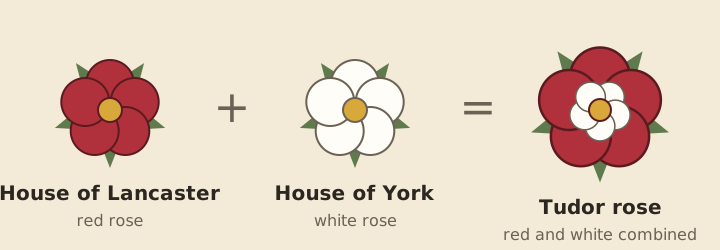
the House of Lancaster, whose symbol was a red rose
the House of York, whose symbol was a white rose
This war is known as the Wars of the Roses. At the Battle of Bosworth Field in 1485, the Yorkist king Richard III was killed. The leader of the Lancaster side, Henry Tudor, took the throne as Henry VII.
Richard III was buried in a hurry in a monastery church in Leicester, and over the centuries people forgot exactly where. In 2012 archaeologists found his skeleton under a car park in the centre of Leicester, and in 2015 he was buried again, this time in Leicester Cathedral.
Henry VII was a smart man. He married Elizabeth of York, Richard III's niece, so the two rival families became one. He became the first monarch of the House of Tudor. His family badge showed a white rose sitting inside a red one, and it was called the Tudor rose. It told everyone that York and Lancaster were now on the same side.
Bosworth is often taken as the end of the Middle Ages in England. Henry VII's family, the Tudors, would rule for more than a hundred years and give the country a new church, as the next chapter tells.
The Tudor rose put the roses of two enemy families together, as a sign that the civil war was over.
Quiz
In the Wars of the Roses, which family's symbol was the red rose?
Lancaster was the red rose and York the white rose. Stuart and Windsor are royal families from later times.
Quiz
Which TWO statements about the Battle of Bosworth Field in 1485 are correct?
The king who died was Richard III, and the winner, Henry Tudor, became Henry VII. Bosworth ended the Wars of the Roses, not the Hundred Years War.
Chapter summary
AD 476–1485
The Middle Ages in the broad sense; this chapter tells the story from 1066 onwards
1215 Magna Carta
King John was forced to accept it: the king must obey the law too
1284 Rhuddlan
Edward I put Wales under the English Crown and built castles such as Conwy and Caernarvon
1314 Bannockburn
Robert the Bruce beat the English; Scotland was never conquered
the Pale
The area around Dublin that the English ruled in Ireland
Feudalism
The king gave lords land in return for soldiers in war; most peasants were serfs who could not leave
1348 Black Death
About a third of England's people died; then came higher wages, the gentry and a middle class
Parliament
Lords: nobles, great landowners, bishops. Commons: knights and wealthy townspeople
Hundred Years War
Really lasted 116 years; Henry V won at Agincourt in 1415
1400 English
By 1400, English was used for official documents and preferred at court and in Parliament
Chaucer / Caxton
Chaucer wrote The Canterbury Tales; Caxton was the first in England to print books
1455–1485 Roses
Lancaster red, York white; after Bosworth, Henry VII took the throne; the Tudor rose
 Survived
 Survived
 Died of the Black Death